Tehran rebuffs Macron's Strait of Hormuz pitch, drawing a line around a chokepoint
Iran's foreign ministry has publicly dismissed Emmanuel Macron's offer of French help to clear mines from the Strait of Hormuz, framing any outside role in the waterway as foreign intervention.
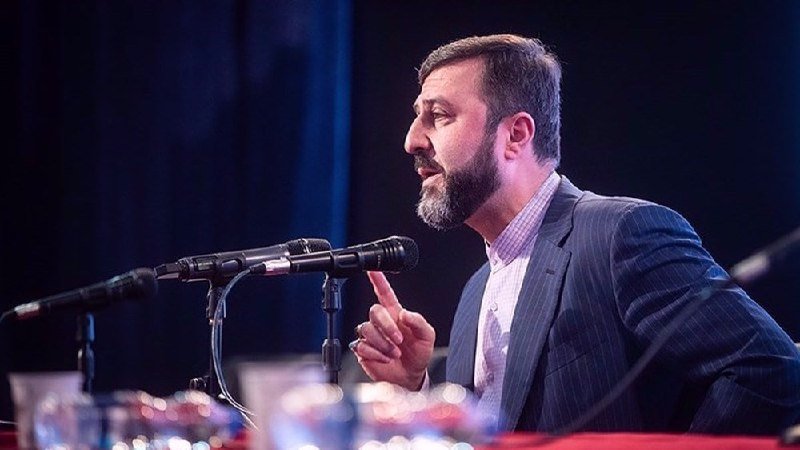
Iran's foreign ministry drew a sharp public line around the Strait of Hormuz on 30 June 2026, rejecting a French offer to help clear mines from the waterway and warning Paris against any role in managing the chokepoint through which a significant share of global seaborne oil transits. Foreign Ministry spokesman Esmaeil Baghaei dismissed foreign intervention in the strait in remarks carried by Iranian state media, while Deputy Foreign Minister Kazem Gharibabadi followed up with a separate statement accusing French President Emmanuel Macron of intervening in a matter that falls inside Iran's regional remit, according to reporting summarised by The Cradle and Press TV.
The exchange is small in word count and large in signal. It is the first time Tehran has publicly engaged a sitting French president on the specific question of mine-clearing inside the strait, and the first time it has done so in language that casts the European offer as intrusion rather than partnership. The Strait of Hormuz sits between Iran and the Arabian peninsula, narrowing to about 33 kilometres at its tightest point, and is the principal maritime outlet for Gulf crude. Any move that displaces Tehran's stewardship of the corridor, even on a humanitarian technicality like de-mining, is treated by the Islamic Republic as a sovereignty question first and a logistics question second.
What was proposed, and what was refused
Macron's offer, as reported by Politico and relayed by the War and Warfare witness feed, was framed as a French contribution to international mine-clearing operations in the strait. The Iranian response rejected the framing before engaging the substance. Gharibabadi's statement, dated Monday 30 June and carried by The Cradle, accused Macron of exceeding his mandate, and Baghaei's separate briefing held the line at a more institutional register, telling reporters that Iran considers any foreign role in the management of the strait as intervention. The two statements together form a coordinated rebuff: one personalised, one procedural.
There is no public confirmation from Élysée or Quai d'Orsay of the precise scope of the French offer as relayed by Politico, and the Iranian state-aligned coverage does not quote the original Macron remarks in full. That asymmetry matters. Iranian outlets have an interest in presenting the French position as maximalist, and Paris has not, in the materials available to this publication, published a detailed white paper on what French mine-clearance assets would do in the strait. The dispute, in other words, is being conducted partly over a text that neither side has yet put on the record in its entirety.
Why Iran reads the offer as intrusion
The Iranian position is consistent with a doctrine the foreign ministry has signalled repeatedly: the security architecture of the Persian Gulf is a regional matter, and outside powers, whether Western fleets, European mine-hunters, or multilateral coalitions, are guests at most and trespassers at worst. The same briefing on 30 June that handled the Macron file also addressed Iran-Iraq relations, with Baghaei holding "all those who aided Saddam Hossein to conduct chemical attacks" responsible and praising Iraq for standing with Iran during the 1980-88 war, a reminder that the foreign ministry's regional frame extends well beyond the strait and is anchored in a long memory of Western involvement in the region.
The structural reading is straightforward. The Strait of Hormuz is the chokepoint that gives Iran its principal non-conventional lever against both Gulf Arab states and Western energy consumers. A foreign mine-clearing presence, even a benign one, would in Tehran's view normalise a model in which the strait's security is subcontracted to extra-regional navies. That is a precedent the Islamic Republic will not set, regardless of who is offering the help or how technical the mission sounds. Iranian state media's choice to lead with "intervention" rather than "cooperation" is the giveaway: the language is doing the diplomatic work of closing the door before any negotiation can begin.
The European angle
France's interest in the strait predates this episode. Paris has maintained a naval presence in the Persian Gulf through Combined Task Force 150 and bilateral arrangements with Gulf states, and Macron has previously floated the idea of a European maritime mission in the region as a complement to American and British-led operations. A French mine-clearing offer sits inside that trajectory: a way for the European Union's most military-capable member state to demonstrate utility in a theatre where European strategic autonomy is otherwise thin.
The Iranian rebuff puts Paris in an awkward position. Refusing to escalate is the easy course; doubling down risks drawing Tehran into a wider argument about European security posture in the Gulf at a moment when Iran is also engaged in separate, slow-moving talks with the United States. The most likely French response, judging from past European behaviour in the Gulf, is a low-decibel restatement of the offer followed by quiet deferral to American diplomacy. That is also the path that least assists Iran's argument that Europe is acting as a freelance security actor in the region's most sensitive waterway.
What remains uncertain
The public record on 30 June is unusually thin for a story with this much strategic weight. We do not have a verified text of the original Macron remarks; the Politico report, as relayed by the witness feed, is the proximate source for the French offer, and the Iranian rebuttals are being read against that secondary rendering. We do not have a confirmed list of the mines that would be cleared, the agency or contractor that would carry out the work, or the legal basis France would invoke. We do not have a comment from the Élysée or the French foreign ministry in the source materials reviewed for this article. And we do not have a reaction from Gulf Arab states, the United States, or the European External Action Service, all of whom have standing interests in the strait's security regime.
The honest reading is that this is the opening exchange of a longer exchange. Tehran has set the terms of refusal; Paris must now decide whether to accept them quietly or to insist, in which case the file moves into EU foreign affairs councils and the UN Security Council. The next 72 hours, ending with the 3 July 2026 round of wider Iran-related diplomacy, will tell us which way the wind blows.
Desk note: Monexus has relied on Iranian state-aligned channels (Press TV, The Cradle) and the witness-feed relay of a Politico report as the primary source material for this article, in line with our standing practice of treating regional outlets as legitimate primary sources for their own diplomatic posture. Western wire confirmation of the French offer was not available in the source feed at the time of writing, and the article reflects that gap rather than papering over it.
Wire provenance
This editorial synthesis draws on the following public wire/social posts:
- https://t.me/presstv/
- https://t.me/thecradlemedia/
- https://t.me/presstv/
- https://t.me/wfwitness/