Tehran keeps the Strait of Hormuz off the table — and the diplomatic channel quiet
Iran's foreign ministry rejects outside mediation in the Strait of Hormuz and denies any Doha meeting with US officials — a posture that hardens the shipping-risk discount while keeping the political channel technically open.
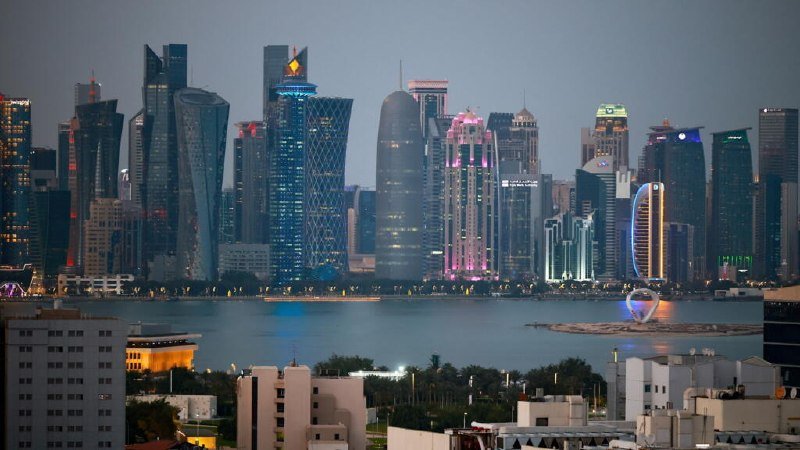
At 17:00 UTC on 30 June 2026, Iran's Foreign Ministry spokesman Esmaeil Baghaei walked back the chatter that had rippled through Gulf diplomatic circles for the previous 48 hours. There would be no meeting with American officials in Doha, he said. The visit was about Qatar, and Qatar only — specifically, the release of Iranian funds that Doha has been holding under sanctions-era restrictions. The denial landed on a day when Tehran was already signalling, in two separate midday statements, that it had no intention of letting the Strait of Hormuz become a multilateral file, and that the channel to Washington, such as it is, runs through politics, not military planners.
The picture that emerges is a regime choosing to manage two contradictions at once: keeping the world's most consequential oil chokepoint off the agenda of outside powers, while leaving the door open — narrowly, and on Iranian terms — to talks with the United States. Both messages arrived within roughly two hours of each other on Tuesday afternoon, and both were delivered by the same spokesperson. That simultaneity is the story.
What Tehran actually said
Three statements, all from Baghaei, all on 30 June, set the tone. The first, attributed by Press TV at 17:00 UTC, denied any US meeting in Doha and framed the trip around frozen Iranian assets held in Qatar. The second, circulated at 15:37 UTC via the unusual_whales wire, was a flat rejection of "outside interference" in the Strait of Hormuz. The third, timestamped 15:17 UTC on the same feed, insisted that contact between Tehran and Washington "remains political, not military" — a phrase that simultaneously reassures and warns.
Read together, they amount to a layered position: nothing about Hormuz is negotiable with foreigners; nothing about the bilateral channel is being militarised; nothing in Doha is a back-channel to Washington. Each layer narrows the room in which an outside actor — Washington, Brussels, the Gulf states — can operate.
Why Hormuz keeps coming back
The Strait is not a metaphor. Roughly a fifth of global seaborne oil passes through it, and any credible threat to its functioning translates, within hours, into a tanker-insurance surcharge and a measurable kink in the forward crude curve. Tehran has, in past episodes, treated the chokepoint as leverage — most recently during the 2019 limpet-mine incidents and the 2023–24 seizure cycle that ran alongside Huthi Red Sea attacks. The cost of those episodes was borne by shippers, reinsurers and importing states, not by the Iranian budget.
The "no outside interference" line is therefore a refusal to internationalise the chokepoint, which is to say a refusal to let the issue migrate from bilateral containment to multilateral framework. It is also, implicitly, a refusal to let external navies frame themselves as guarantors of freedom of navigation in a body of water Tehran considers internal to its security perimeter. That posture has economic consequences: shippers price in tail risk even when the rhetoric is calm.
The political, not military, channel
The third line — that contact with Washington stays political — is doing more work than it looks. It tells the Israeli, Saudi and Emirati listening posts that any back-channel is not a prelude to coordinated escalation; it tells the US negotiating team that the file is not being routed through IRGC counterparts; and it tells domestic hardliners that the foreign ministry is not conceding a security channel. In effect, it freezes the gradient of escalation: no progress, but no drift toward confrontation either.
That is a sustainable equilibrium only as long as the underlying disputes remain inert. The frozen-funds file in Doha is a known, bounded item — releasing restricted balances against verified humanitarian-trade guarantees is something Qatar has facilitated before. It is also small enough that it cannot, on its own, carry the bilateral relationship.
Stakes and what remains unresolved
If the trajectory continues, the winners are the shippers and brokers who price the Hormuz risk premium into contracts, the Iranian foreign ministry which retains ownership of the channel, and Qatar which positions itself as indispensable middle-man. The losers are the importers who absorb the surcharge, the US negotiating team whose leverage is constrained by Tehran's framing rules, and any external maritime coalition that finds the door shut.
The sources do not specify whether the Doha fund-release track is making progress, whether any third-party state has proposed a multilateral Hormuz framework, or whether the US side accepts the "political, not military" framing as a sufficient constraint. They also do not say what would constitute, for Tehran, a breach of the political-only line. Those are the variables to watch in the next 72 hours.
This piece foregrounds the framing Iran itself put on record on 30 June 2026, including a denial that the Doha visit includes any US meeting — a claim that runs against some of the Gulf-circulated speculation of the previous 48 hours, but which the available wire material treats as the operative position of the Iranian foreign ministry.
Wire provenance
This editorial synthesis draws on the following public wire/social posts:
- https://t.me/presstv/