Israel's Washington problem isn't Netanyahu — it's the architecture of the alliance
A former Israeli negotiator's diagnosis that the US relationship is 'bleeding' is forcing a rethink that goes deeper than one prime minister.
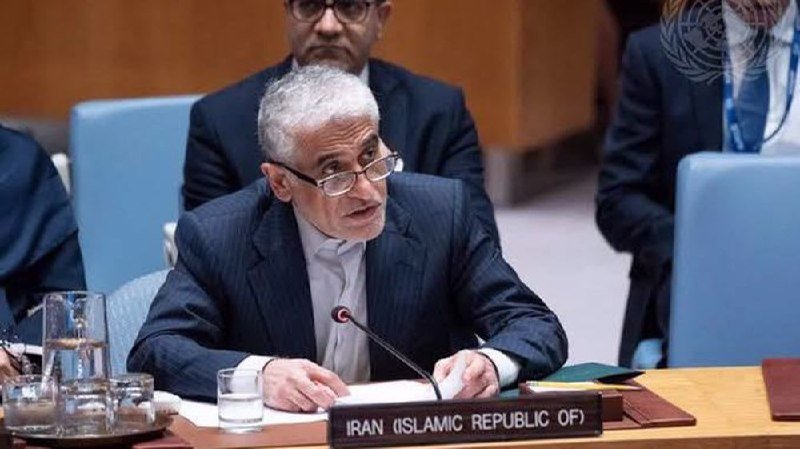
On 30 June 2026, Daniel Levy — a former Israeli peace negotiator now president of the US/Middle East Project (USMEP) — laid out a diagnosis of the American relationship that is more uncomfortable than the usual cable-news framing suggests. In remarks carried by Clash Report, Levy argued that Israel is now trying "to stem the bleeding in the US," and that the question of whether or not the government has to deal with Prime Minister Benjamin Netanyahu specifically affects how the alliance recalibrates itself. The implication is sharper than it sounds: the Israel-America relationship is not merely a Netanyahu problem, it is an architecture problem.
Levy's framing matters because it comes from inside the Israeli policy mainstream — not from its critics. A former negotiator in the Oslo process and an architect of the Geneva Initiative, Levy is the kind of figure Israeli governments have historically listened to. When he says the country "sees only two acceptable outcomes in the region — collapsing states that pose no threat, or states dependent on [Israel]," he is describing a strategic doctrine, not a fringe view. And when he notes that "even Netanyahu has acknowledged that direct Congressional aid for Israel is bad politics," he is conceding that the domestic American ceiling on the relationship has fallen — a structural shift, not a passing mood.
A different aid channel, the same aid logic
Levy's most actionable point is procedural. The administration, he argues, is "shifting" away from the route of direct Congressional appropriations for Israel — the traditional mechanism — and toward executive-branch authorities, weapons stockpiles, and supplemental funding streams that bypass the appropriations committees. The political logic is obvious: bipartisan support for Israel is no longer something a member of Congress can take for granted. Younger Democrats and a non-trivial slice of post-2024 Republicans now treat a "yes" vote on a standalone Israel aid package as a measurable political cost rather than a freebie.
The substantive logic has not changed. The aid still flows; the weapons still arrive; the diplomatic cover at the UN still holds. What has changed is the plumbing. When you move money through executive authorities and off-the-shelf deliveries rather than through named appropriations, you trade democratic visibility for speed. That is a meaningful trade-off, and it is one the Israeli national-security establishment — whatever its complaints about Netanyahu — actively prefers. Levy is signalling that Israel's institutional preferences and the Netanyahu government's preferences have converged here, even when they diverge on almost everything else.
The "acceptable outcomes" doctrine
The second leg of Levy's argument is harder to dismiss. A regional posture that accepts only "collapsing states that pose no threat, or states dependent on [Israel]" describes a neighbourhood engineered for Israeli security rather than for the sovereignty of its neighbours. Strip the rhetoric away and you are left with a maximalist reading of the Camp David Accords template — Egypt and Jordan, plus a customs union with a Palestinian Authority hollowed out of independent agency.
Levy is not endorsing this doctrine. He is reporting it as the consensus view inside Israeli strategic circles. That distinction is the whole ballgame. A realist critique of US Middle East policy can either assume that Israeli leaders are stumbling toward this maximalism out of fear and Netanyahu's coalition arithmetic, or it can assume that this is what the Israeli security establishment actually wants and the political leadership is just the loudest salesman. Levy is gently pushing readers toward the second reading. If he is right, then the question is no longer "will the next Israeli government be different" — it is "which mechanisms can the United States use to slow the slide toward a region of dependencies."
What the architecture buys Washington
The US has reasons of its own to prefer the new plumbing. Executive-branch aid channels are harder for hostile members of Congress to block case by case; they convert a recurring political fight into a series of bureaucratic decisions; and they allow the White House to bundle Israel with other regional priorities (Gulf defence, Red Sea shipping, Iran containment) in a way that named Israel-only appropriations never could. In other words, the shift is not just an Israeli adaptation to American politics — it is an American adaptation to American politics.
The cost is that the aid relationship becomes less legible. Journalists and outside analysts can no longer point to a line item in a defence appropriations bill and ask what it bought. They have to track Foreign Military Financing notifications, emergency drawdown authorities, and presidential determinations — instruments that historically receive less sustained scrutiny. That opacity is, for both governments, a feature.
The stakes inside the alliance
Two things follow. First, the public fights that have defined the relationship over the past two years — campus protests, conditioning language in supplemental bills, the slow erosion of the automatic majority for Iron Dome funding — are not the disease. They are the symptom of a deeper shift that is now being institutionalised. Levy's diagnosis is that the alliance is being rewired precisely so that those fights matter less.
Second, and more uncomfortable, the doctrine Levy describes cannot survive transparency. A US-Israeli relationship built on collapsing neighbours and dependent clients is one thing when it is debated openly on the floor of the Senate; it is quite another when it is executed through executive authority and bundled with Gulf defence packages. The same opacity that insulates the alliance from Congressional weathering also insulates it from public accountability. That is a trade-off the Israeli strategic mainstream appears willing to make. Whether American democratic politics — never mind the Palestinians, the Lebanese, the Iranians — is willing to make it for much longer is the question Levy is really asking.
The sources do not specify what the administration's preferred replacement mechanism is in operational detail, and Levy does not name specific figures inside the National Security Council. What the record does show, on 30 June 2026, is that a former Israeli negotiator of standing believes the architecture is being rewritten — and that the rewrite is happening because, in his words, the bleeding must be stemmed.
Desk note: This piece leads with an Israeli establishment voice (Levy, USMEP) rather than the usual US Congressional or White House framing, on the view that the most revealing signal about the alliance today comes from inside the Israeli policy mainstream. The structural argument — that the relationship is being rewired around executive-branch plumbing — is developed from Levy's own framing, not from Western think-tank commentary.
Wire provenance
This editorial synthesis draws on the following public wire/social posts:
- https://t.me/ClashReport
- https://t.me/ClashReport
- https://t.me/ClashReport