A Lebanese village, an unexploded munition, and the slow arithmetic of post-ceasefire casualties
One man killed by a leftover Israeli munition in Touline on 30 June 2026 is a small data point in a larger pattern the wire services keep filing on the back pages.
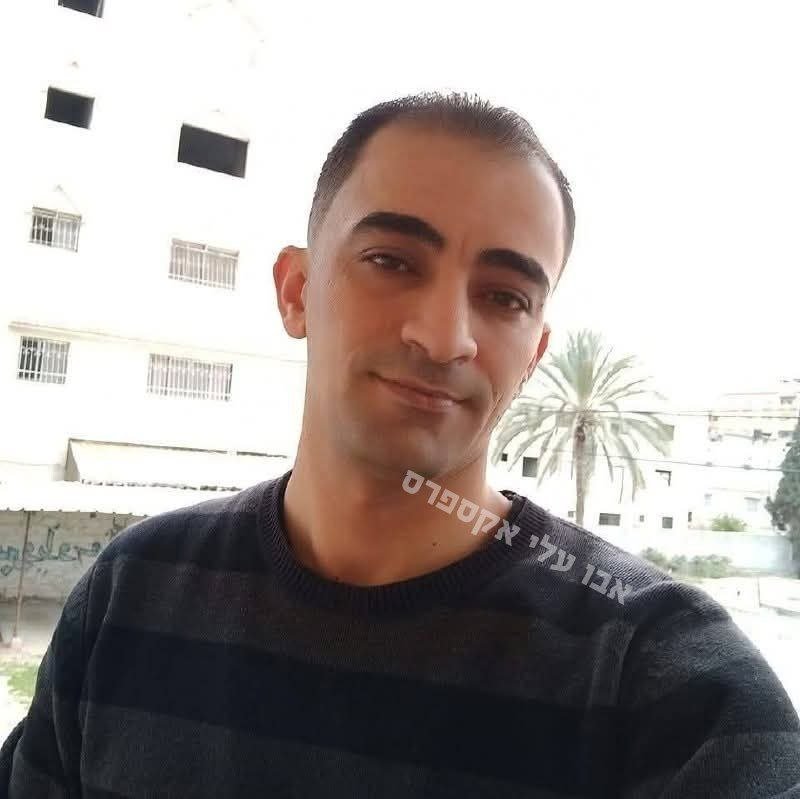
A villager in Touline, in south Lebanon, was killed on 30 June 2026 by an Israeli munition that had failed to detonate during the war and was still sitting where it fell. The Cradle Media identified the dead man as Mohammad Awala. There is no announcement from the Israeli military, no back-and-forth of statements, and no spokesperson quoted on the record — only a single line of reporting on a single death in a single village.
That is the problem. Post-ceasefire casualty lists are built out of exactly these lines, and the arithmetic they add up to is harder to ignore than any single one of them. Lebanon's south was heavily bombed; the ordnance that did not explode on the day it was dropped does not stop being lethal when the guns go quiet. The reporting on Awala is the kind of dispatch that, multiplied across weeks and villages, produces the totals that the international community eventually has to address — and the kind of dispatch that, on its own, gets almost no airtime.
The reporting that does exist
The Cradle's wire is short, dated, and sourced. It says an unexploded Israeli munition killed Awala earlier the same day, in the southern Lebanese village of Touline. That is the entire factual claim. There is no body count, no follow-up from Reuters or AFP in the thread, no casualty figure to cross-check against, and no Israeli confirmation. What there is, is a name, a place, a category of weapon, and a date — the minimum a newsroom needs to know a person died, and the maximum a Hezbollah-aligned regional outlet can credibly say without naming a military source.
That asymmetry is worth naming. When a rocket lands in northern Israel, the global wire cycle moves within minutes: location, intercept data, casualty toll, prime minister's office statement, IDF spokesperson briefing. When a leftover munition kills a Lebanese villager weeks after a ceasefire, the same global wire cycle typically treats the death as a footnote, if it appears at all. The information gap is not a function of evidence. It is a function of whose casualty is treated as news.
The structural pattern beneath the headline
Unexploded ordnance is one of the predictable aftershocks of an air campaign, and the south Lebanon campaign was, by any honest accounting, an extensive one. International demining and cluster-munition monitors have documented for two decades how the residue of an air war kills more civilians after a ceasefire than during it, particularly in agricultural villages where residents return to fields, orchards, and rubble-strewn lots before clearance teams arrive. The pattern is well known; the response to it, in southern Lebanon as in Gaza as in parts of Ukraine, is consistently slower than the need.
What makes a single Awala-level report politically uncomfortable is that it forces a question the prevailing framing would rather not answer: if the state that fired the munitions accepts a degree of responsibility for post-conflict civilian harm — as it routinely does in doctrine and in international clearance operations elsewhere — what does that responsibility look like in south Lebanon, where diplomatic relations are hostile and no joint clearance mechanism exists? The answer, in practice, has been that the burden falls on Lebanese civilians, on UN agencies working with limited budget, and on a small set of regional outlets willing to file the names.
Counterpoint, and its limits
The honest counter-read is that munitions failure rates, clearance timelines, and post-conflict civilian casualty figures are matters for technical investigation, not for editorial inference from a single Telegram wire. It is true that a single line of reporting cannot establish a pattern. It is also true that Israeli authorities have, in other post-conflict contexts, supported or participated in clearance operations, and that south Lebanon's clearance posture is shaped by Hezbollah's continued presence in the area as much as by anything else. Both of these are real qualifications.
What they do not do is dissolve the underlying arithmetic. Clearance is slow; the munitions are still there; the residents have come back. The plausible reading of a single death by an unexploded Israeli munition in a south Lebanese village in late June 2026 is, structurally, a death that was foreseeable the day the munition was dropped and that the international community has not yet built a credible instrument to prevent.
Stakes, in plain language
The stakes are not abstract. They are measured in names filed by regional outlets that the global wire does not amplify, in clearance budgets that have not been raised, in returning villagers who walk into the same fields the bombs fell on, and in a press cycle that treats one kind of casualty as headline and another as background. If the trajectory continues, the totals will eventually become undeniable — and the question of who is responsible for the slow accumulation will be answered, by then, by something other than a wire dispatch.
Desk note: Monexus framed this as a structural story about post-ceasefire ordnance and the information asymmetry around Lebanese casualties, rather than as a one-day incident report. The wire cycle around Awala's death is sparse; the pattern the death sits inside is not.
Wire provenance
This editorial synthesis draws on the following public wire/social posts:
- https://t.me/s/TheCradleMedia
- https://t.me/s/thecradlemedia