Lively's $8m fees bid turns the cost of Hollywood litigation into the headline
Blake Lively's request for $8m in legal fees from Justin Baldoni reframes the It Ends With Us dispute as much about the price of defending oneself as about who told the truth.
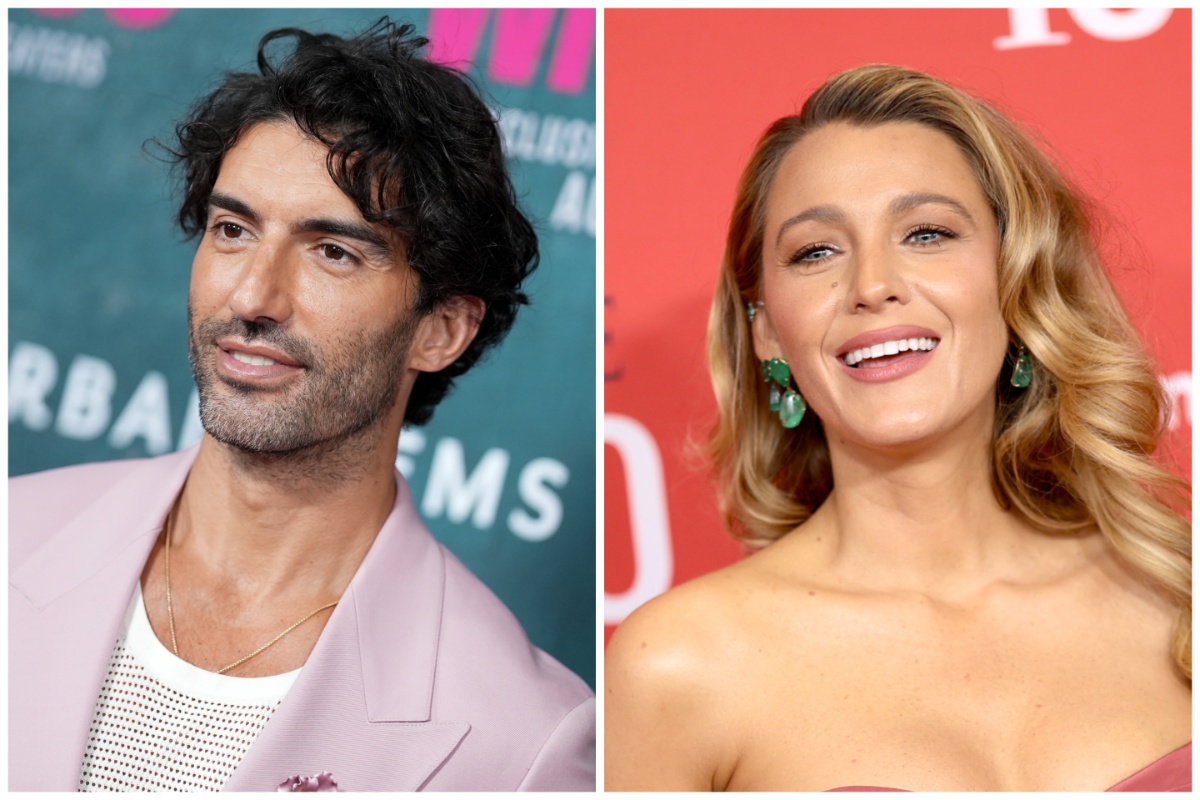
On 30 June 2026, Blake Lively filed a motion asking a federal judge to award her roughly $8 million in attorneys' fees and costs — the bill she says she ran up defending herself against the defamation countersuit Justin Baldoni and his production company, Wayfarer Studios, lodged against her in 2024 and have continued to litigate since. Her lawyers characterised the Baldoni side's litigation conduct as "scorched-earth," a phrase now doing the work of a legal argument. The fee motion is not a final ruling on who was right or wrong on the set of It Ends With Us; it is an argument that the price of being sued should itself become part of the verdict.
The dispute has spent more than a year as a story about harassment allegations, internal smear campaigns, and competing narratives over what happened during the production of a studio film. Lively's latest filing repositions it as a story about the cost of discovery — who pays for the depositions, the document review, the months of legal labour required to fight a Hollywood defamation case to its conclusion. In doing so, she is drawing a line that runs through every celebrity suit of the last decade: the question is no longer only who wins, but who can afford to fight, and who gets reimbursed for the privilege of being accused.
From harassment claims to fee-shifting
Lively's original complaint, lodged in late 2024, accused Baldoni of orchestrating a retaliatory public-relations campaign against her after she raised concerns about on-set conduct. Baldoni's response was a $400 million defamation countersuit against Lively, along with claims against her husband, Ryan Reynolds, and her publicist, Leslie Sloane. That countersuit was widely read at the time as a deterrent — a price tag designed to make the next actress think twice before filing.
Now Lively is asking the court to flip the economics. Under federal civil-procedure rules, a prevailing party can in some circumstances recover reasonable fees, and Lively's team is arguing that Baldoni's litigation tactics — what her filing described as "scorched-earth" conduct — meet the standard for sanctions or fee-shifting. The $8 million figure is a tally of what her side spent just pushing back.
The Variety report on the 30 June filing frames it bluntly: Lively "asked a judge to award her $8 million in attorneys' fees and costs for having to defend against Justin Baldoni's defamation suit." The motion lands at a moment when the underlying claims are still unresolved, which is itself part of the strategy. A fee award can be sought even before a final merits ruling in some procedural postures, and asking for it now puts pressure on the Baldoni side to settle or risk a separate adverse finding on top of any loss on the merits.
The "scorched-earth" framing
The phrase "scorched-earth tactics" carries weight in American civil litigation because it is the kind of language courts recognise. It refers to a pattern — abusive discovery, scorched-document production, depositions designed to exhaust rather than illuminate — that some judges treat as sanctionable conduct under their inherent authority and under rules governing discovery abuse. Lively's lawyers are not arguing that Baldoni should lose his case because he filed it. They are arguing that the way he has fought it has cost her $8m she should not have had to spend.
There is a counter-reading worth setting out. Baldoni's camp has consistently denied orchestrating any smear campaign and has framed his countersuit as a defence of his reputation against what he characterised as a coordinated effort to destroy his career. From that vantage point, an aggressive defence is not abuse; it is the exercise of legal rights. Discovery in a $400m defamation case is by nature expensive, and the fee request can be read as an attempt to re-litigate the underlying dispute through a costs motion rather than on the merits.
Both readings can be true simultaneously, and that is precisely the structural problem the filing exposes. American civil procedure gives judges wide discretion on fees, and that discretion tends to be exercised through the lens of who behaved reasonably at each stage of the case. The same set of depositions can look like diligent fact-finding to one side and harassment to the other.
What $8m actually buys in a case like this
Fee awards in Hollywood-adjacent litigation have become their own story. In 2023, a jury in a separate federal case ordered Marilyn Manson to pay roughly $500,000 in fees and costs to his accuser, Evan Rachel Wood, after the court found his counterclaims were frivolous — a fraction of what Wood's team reported spending. In the Depp v. Heard arbitration, the eventual settlement did not include a published fee award, but the per-day billings on that file ran into the high six figures. The Lively request, at $8m, sits in the upper range of what celebrities and their counsel publicly seek from one another, and well above the typical fee-shifting outcome in a non-celebrity case.
Three things tend to drive the number up. First, defamation cases require extensive factual development — every text message, every email, every PR retainer is potentially discoverable. Second, the public posture of the parties multiplies the work: statements to the press must be vetted against the record, and counter-statements must be drafted. Third, the underlying entertainment-industry context — studio emails, talent-agency communications, marketing-department strategy documents — pulls in third parties who must be either joined or deposed, multiplying cost.
Whether Lively ultimately recovers anything close to $8m is a separate question. Judges routinely reduce fee requests, and Baldoni's side will have an opportunity to challenge both the rate and the hours billed. The motion's significance is less the dollar figure than the framing: it tells the court, and the industry, that Lively intends to treat the litigation conduct itself as the story.
Stakes beyond the courtroom
The filing lands inside a Hollywood labour environment that has spent two years reckoning with on-set conduct, with the It Ends With Us dispute functioning as one of its highest-profile flashpoints. Studios are watching. So are the law firms that handle talent-side work, which typically charge by the hour and therefore benefit from long, document-heavy litigation. The fee motion is, among other things, a signal to those firms that their clients may come to expect the same kind of aggressive cost-recovery posture at the end of a case.
For Baldoni, the immediate calculus is uncomfortable even if the merits of his case are strong. A successful countersuit that ends with a fee award running against him would convert a legal win into a financial loss. For Lively, the calculus is the inverse: even a partial fee award, or a meaningful reduction of Baldoni's claims on a fees motion, would validate the strategy of litigating the litigation itself.
There is a structural pattern worth naming plainly. High-profile American civil disputes increasingly resolve not on the underlying facts but on procedural posture — motions to dismiss, anti-SLAPP rulings, fee-shifting applications. The party with deeper pockets can usually outlast the other side long enough to force a settlement on cost grounds rather than truth grounds. A fee motion, when it works, is one of the few tools that runs the economics in the opposite direction. Whether it works here will turn on findings about Baldoni's conduct that the public record does not yet disclose.
What remains unresolved
The sources do not yet specify which judge will rule on the fee motion, on what timetable, or how the Baldoni side's response will frame the underlying discovery conduct. Both camps have made competing public statements for months, and the fee filing is the latest move in a sequence that has not produced a merits ruling. The court will need to make findings — about the proportionality of specific discovery requests, about the relevance of specific depositions, about whether any specific filing crossed the line from zealous advocacy into abuse — before any dollar figure moves.
What is clear on the morning of 30 June 2026 is that the Lively–Baldoni fight has become a test case for a narrower question than it began with. It is no longer only about what happened on a film set in 2023 and 2024. It is about what it costs, in concrete legal dollars, to defend oneself against a Hollywood defamation suit — and who, in the end, is asked to pay that bill.
This article treats the dispute as a procedural and economic story rather than a trial-of-public-opinion story, drawing on the filing date and the figure reported in coverage on 30 June 2026. Monexus will update once the court rules on the fee motion.