Machado's return is the opposition's strongest card — and Maduro's weakest hour
Opposition leader María Corina Machado says she will cross back into Venezuela to stand with quake victims. Five days after twin tremors, the government is losing the basic contest of presence.
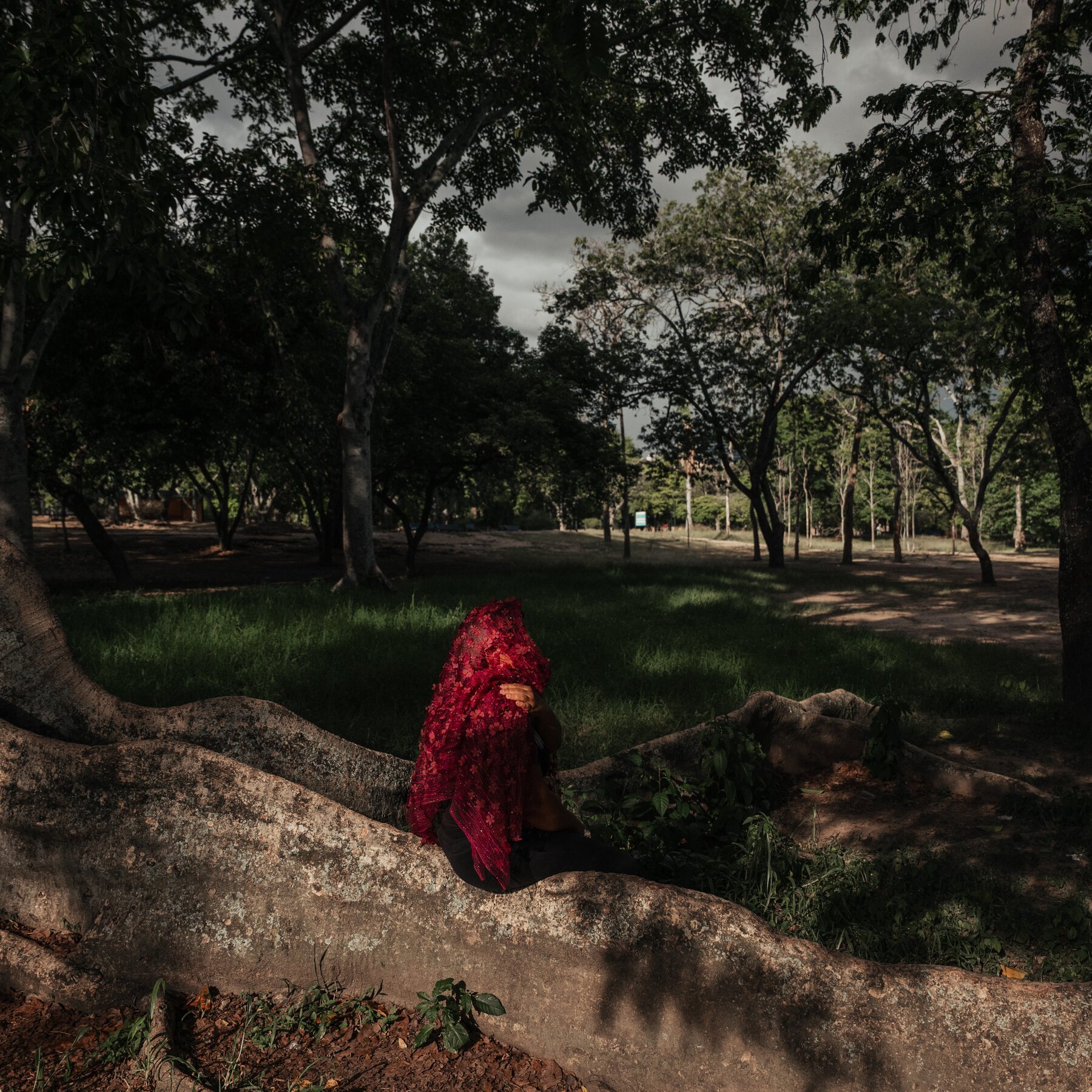
Five days into Venezuela's worst natural disaster in years, the country's most recognisable opposition figure has decided the political stage she belongs to is no longer abroad. María Cor Machado, winner of the 2025 Nobel Peace Prize, announced on 30 June 2026 that she will travel back into Venezuela to accompany victims of the twin earthquakes that struck the country on 25 June, as the official death toll has climbed past 1,000 and frustration over the absence of state assistance has begun to outpace even the government's own messaging.
The move is more than a gesture. It is a calculated wager that the space the Maduro government cannot fill — physical, visible, on-the-ground solidarity with people who have lost homes, family members and access to basics — can be filled by someone willing to take the personal risk of returning. In a country where crossing the border in the other direction remains the default instinct of the professional class, a high-profile re-entry is itself a piece of political theatre.
A government out of sight
Reuters reported from Caracas on 30 June at 02:42 UTC that frustration is rising across Venezuela over the absence of government help in the worst-hit areas, that miracle rescues are becoming rarer, and that the toll has now passed the symbolic 1,000 mark. The reporting matches a separate bulletin from Al Jazeera moments earlier, dated 30 June 2026 at 02:41 UTC, that the United Nations is procuring 10,000 body bags in anticipation of a further rise in fatalities — a logistical step that, in any disaster zone, signals that the search phase is ending and the recovery phase is beginning.
Those two bulletins, separated by one minute, capture the picture the government has spent the past four days trying to displace: that state capacity on the ground is thin, that international agencies are stepping into roles national authorities usually perform, and that the optics of authority — the minister at the rubble, the convoy on the road — are not being delivered at the pace the moment demands.
The opposition's only move
Machado's calculation is straightforward. Since the disputed 2024 presidential election, the opposition's leverage inside Venezuela has been compressed: exiled leaders, frozen assets, a Nobel that conferred moral authority but not territorial access. A natural disaster resets the terrain. It creates a window in which an opposition figure returning is not framed as a provocateur by domestic audiences but as a citizen responding to a national emergency.
The risk is non-trivial. Re-entering Venezuelan territory means accepting the protection, or the vulnerability, of the state's security apparatus. It means handing the government a sequence of potential provocations it can choreograph, or footage it can edit. But the alternative — staying outside while UN agencies procure ten thousand body bags — is a slower, more dignified kind of defeat.
What the framing contests
The Carac-based wire line, anchored by Reuters and amplified by Al Jazeera, foregrounds two facts. First, that the government response has been visibly inadequate relative to the scale of the disaster. Second, that the formal humanitarian channel — the UN procurement, the eventual international aid convoys — is being activated precisely because national capacity is overstretched.
The government's counter-frame, which has appeared across Venezuelan state media, emphasises mobilisation of the armed forces, the activation of civil defence structures, and the framing of the disaster as an imperial political opportunity to be neutralised. That frame asks readers to weight official announcements over wire reporting. On the available evidence from 30 June — two wire reports, one opposition statement, no independently verified figure below or above 1,000 dead — the wire line holds better. It cites identifiable international actors performing verifiable actions; the government's preferred narrative does not, in the materials available to this publication, displace the basic observation that five days in, help is not arriving fast enough.
A second contest is over the meaning of Machado's return itself. The Caracas wire has not yet editorialised her announcement; the framing of it as a humanitarian or a political act will be set in the next 48 to 72 hours. The structural reality is that in any post-disaster environment, the actor who arrives first, stays longest, and visibly shares risk acquires legitimacy that cannot be conferred by foreign awards or diaspora press conferences. That is the prize Machado is reaching for. It is also the prize the government cannot afford to let her keep.
Stakes over the next ten days
If Machado crosses the border and reaches the worst-affected zone in the next 48 to 72 hours, the visual record will be harder for Caracas to spin: a Nobel laureate in a disaster zone, a government that must either tolerate her presence or be seen to obstruct humanitarian access. Either outcome advances the opposition's claim that Venezuela is a country being governed against its own interest.
If she is detained, barred from travel, or repelled, the international framing of the disaster shifts decisively toward a government in crisis and an opposition that tried to come home. Reuters and Al Jazeera will report whichever outcome lands, and the body-bag procurement now underway will sit in the background of the visuals either way.
The narrower, concrete stakes are humanitarian: water, shelter, medical triage, heavy equipment for rubble clearance, and the dignified management of the dead. The UN's 10,000 body bags are not a political statement; they are a logistics request. Everything above the logistics — Machado's return, the government's narrative control, the opposition's claim to a stake in the country's future — sits on top of that baseline, and will rise or fall depending on what the next week delivers on the ground.
This publication framed the disaster against the wire line because the wire line cites identifiable international actors performing identifiable actions. The government's preferred frame, where it appeared in the materials reviewed, was not independently corroborated at the point of publication.
Wire provenance
This editorial synthesis draws on the following public wire/social posts:
- http://reut.rs/4b0MKp7
- http://reut.rs/4b0MKp7