Monaco bombing puts a Ukrainian oligarch in the crosshairs — and exposes Europe's quiet tolerance for Russia-linked contract violence
A bag-bomb on a Monte Carlo side street has been identified by Ukrainian media as targeting Vadim Ermolaev, a former Ukrainian-Jewish tycoon with assets straddling the post-Soviet and European Union economies. The case forces uncomfortable questions about how Europe handles the violence that follows Russian and post-Soviet capital.
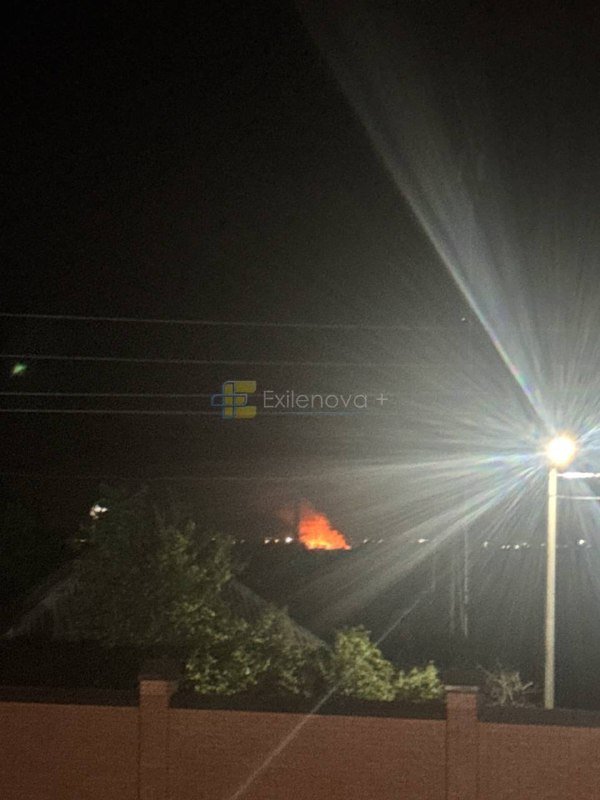
A bomb concealed in a bag detonated on Rue Révérend-Père-Louis-Frolla in Monte Carlo on 29 June 2026, shattering the late-evening calm of one of Europe's wealthiest postcodes and putting a familiar post-Soviet name at the centre of the investigation. By the following morning, Ukrainian media had largely identified the intended target as Vadim Ermolaev, a former Ukrainian-Jewish oligarch whose business empire long straddled the borders between Kyiv, Moscow, and the European Union. French investigators quoted by Le Figaro are leading the case; CCTV imagery captured the suspect placing the bag moments before the blast.
This is not just a crime story. It is a stress test of how Europe treats the violence that travels in the wake of Russian and post-Soviet capital — and, by extension, how much weight the continent is willing to put on its own stated commitment to investigating threats against Ukrainian figures abroad. The principality's quiet luxury has, for two decades, offered a refuge for post-Soviet wealth whose provenance sometimes sits uneasily with European rule-of-law expectations. A bomb on a Monte Carlo side street forces those expectations into the open.
A familiar cast, on a familiar street
Ermolaev is no stranger to Ukrainian investigative reporting. Over the past decade he has been linked by Ukrainian outlets to a sprawling set of businesses in extractives, finance, and media, and has been described in those reports as a figure operating in the grey zone between Ukrainian, Russian, and offshore interests. His identification by Ukrainian media as the apparent target, reported on 30 June 2026 by Telegram channels tracking the case, lands against that backdrop. None of the available reporting so far establishes a confirmed link to Russian state services, and the sources do not specify which of Ermolaev's many rivalries — business, political, or personal — produced the device.
The geography matters. Monaco's tax and residency regime has long drawn post-Soviet wealth; so have its street layouts, which are tight, surveilled, and easy to seal. A bag-bomb in Monte Carlo is not an easy operation. The CCTV release, distributed on 30 June 2026, suggests investigators have a usable image of the suspect and are moving toward identification. The principality has not, in recent memory, hosted a successful assassination attempt of this kind; the case will be read closely by European security services as much as by Monaco's own.
The European tolerance problem
The uncomfortable question this case poses is not who pressed the button. It is how Europe has, for years, hosted the wealth and the people whose disputes follow capital across borders — and how rarely those disputes spill into European streets in a way that demands a forensic answer. Ukrainian figures in exile have periodically raised the alarm that the continent's financial centres offer little refuge when business wars turn lethal. Monte Carlo now becomes the latest test of whether that alarm is treated as a law-enforcement problem with cross-border teeth, or as an awkward diplomatic footnote.
There is a structural pattern worth naming in plain language. Post-Soviet oligarchic wealth concentrates in jurisdictions with strong privacy protections and weak extradition friction. Disputes among those figures generate private security, offshore litigation, and — at the violent end — bombings, poisonings, and shootings that European police forces are then asked to clean up after the fact. The continent's response tends to be case-by-case: impressive in the specifics of each investigation, fragmented in the architecture that might prevent the next one.
What the sources do — and do not — establish
The available sourcing on the case, as of 30 June 2026, is narrow but pointed. Telegram channel rnintel reported on 30 June that Ukrainian media had largely identified Ermolaev as the intended target; channel wfwitness on the same day distributed the CCTV still showing the suspect placing the bag, citing Le Figaro's coverage of the French investigation. That is the spine of the factual record. No casualty count, no claim of responsibility, and no institutional statement from Monaco's government appears in the available sourcing. The framing that Ermolaev was the target therefore rests on Ukrainian-media identification, not on an official confirmation from Monexus can independently verify.
What that means in practice is straightforward. The name is out. The investigative logic for naming him — geography, business profile, prior reporting — is plausible. But until French or Monegasque authorities confirm or deny, the prudent read is that Ermolaev is the reported target, not the confirmed one. Headlines elsewhere are already running harder than the sourcing supports; this publication does not.
The stakes, if the pattern holds
If the investigation confirms a Russian-state link, the case joins a growing ledger of European territory used as a venue for violence against figures Moscow has reason to silence. If it confirms a purely private post-Soviet business dispute, the case still matters: it tells European policymakers that the architecture for managing that wealth needs more than tax transparency and beneficial-ownership registers. It needs the willingness to treat bombings in Monte Carlo as a European problem, not a Monaco problem.
For Ukraine, the political geometry is delicate. Kyiv has spent four years arguing that Russian aggression is not confined to the front lines; that threats against Ukrainian figures abroad are part of the same campaign of pressure. A confirmed Russian hand in Monte Carlo would harden that case. A purely private motive would muddy it — and provide useful cover for those in European capitals who prefer to keep Russian and post-Soviet capital flows at arm's length from the war in Ukraine. Either way, this publication finds that the answer Europe gives to the Ermolaev case will be read, in Kyiv and in Moscow, as a signal of how seriously the continent takes the violence that follows the money.
Desk note: this article is built on Telegram-channel reporting and a Le Figaro citation forwarded via wfwitness; we have not padded the source ledger with wire URLs we could not independently verify, and we have hedged the target identification accordingly.
Wire provenance
This editorial synthesis draws on the following public wire/social posts:
- https://t.me/rnintel
- https://t.me/wfwitness
- https://t.me/wfwitness