Naomi Osaka's Wimbledon kimono sends a coded message — and asks a question of her sport
A four-times major champion walked onto Wimbledon's grass in a Japan-themed outfit and made a quiet statement about identity, branding, and who tennis is for now.
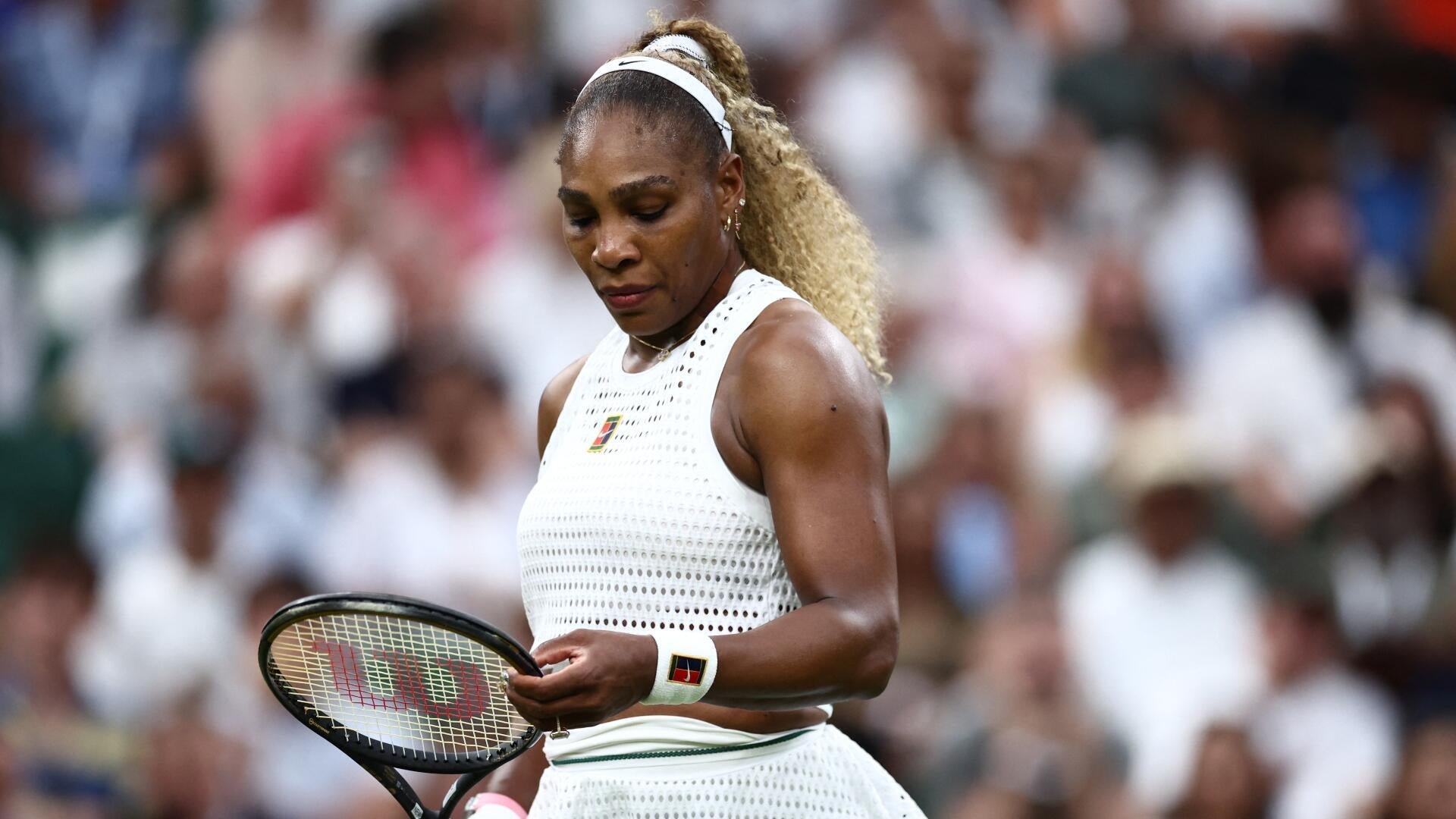
On 30 June 2026, Naomi Osaka stepped onto the practice courts at the All England Club in a Japan-themed kimono-inspired outfit, offered "love and respect to Japan" in an accompanying post, and reignited a long-running argument about who tennis is meant to represent. The Wimbledon dress code — strict, famously so — obliges players to wear "almost entirely white," and Osaka's compromise is the kind of detail the tournament's compliance team ordinarily scrutinises line by line. That she cleared it is itself a small editorial fact about the changing centre of gravity inside the women's game.
Osaka is no fringe figure making a fashion statement. She is a four-time major champion, the former world number one, and one of the most marketable athletes on the planet. Her clothing choices are now read the way her forehand used to be: for what they say about her and, by extension, about the sport. That is the frame this publication is interested in — not the dress, but what the dress is doing.
A player split between federations
Osaka was born in Osaka to a Haitian father and a Japanese mother, moved to the United States as a small child, and has held Japanese nationality throughout her professional career. She has represented Japan at the Olympic Games and, as recently as 2025, played under the Japanese flag at the Billie Jean King Cup. She has also spoken, repeatedly and publicly, about the friction that comes with carrying more than one identity into a sport whose international federations demand clean, single-jurisdiction paperwork.
Her Wimbledon kit, by her own description on social media, is a tribute to the country on her passport and on her results sheet. The kimono motif — and the message of "love and respect to Japan" that accompanied it — is therefore not a generic gesture of fashion week. It is a coded reaffirmation, made at the sport's most tradition-bound venue, at a moment when questions about national allegiance have followed her since her return from maternity leave.
The counter-read
The plausible alternative reading is simpler, and not necessarily wrong: Osaka is a global athlete with a global apparel deal, and Wimbledon is a global platform. A Japan-themed outfit is good business. It activates a Japanese fan base that already buys her merchandise at industrial scale, gives her Japanese sponsors a fresh visual asset, and gives a global press cycle a non-controversial talking point during the first week of the Championships.
There is no public evidence to suggest the gesture is anything other than what Osaka says it is. But it is worth saying out loud: in elite women's tennis, identity and brand are now inseparable instruments, and the line between heartfelt statement and carefully staged marketing has all but dissolved. Both readings can be true at once.
A sport under demographic pressure
The structural frame is the one that matters most. Tennis spent two decades selling itself as a globally distributed, multicultural game and importing that image into broadcast deals and sponsor pitches. The women's tour in particular has reordered around a generation of players — Osaka foremost among them — who do not fit the sport's old demographics. Crowds in London, New York, Melbourne and Paris are now routinely majority non-European. The sport's commercial centre of gravity has moved with them.
At the same time, the institutional architecture of the sport remains pointedly European: the Grand Slams are anchored in London, Paris, New York and Melbourne; the tours are headquartered in Monaco and New York; the rules of dress, conduct and national representation are written and policed by bodies whose senior officials are overwhelmingly drawn from a narrow set of federations. That tension — global image, parochial governance — is the lane in which Osaka has been operating since she first won a major.
Her Wimbledon kimono, in that sense, is a small, well-lit example of the larger negotiation. A player whose presence has done more than perhaps any other to internationalise the women's game has chosen to mark the occasion in national terms, at a venue whose own traditions are the loudest statement of national and class identity the sport still produces.
Stakes
The stakes are modest in any single match, and considerable across the calendar. If Osaka's gesture lands, expect other players with transnational identities — and there are more of them every season — to push the dress-code envelope in their own directions, on their own terms. If it reads as a misstep, expect the federations to respond in the way federations usually do: with a quiet clarification of the rules and no public comment. Either way, the sport will continue to be marketed globally while being run locally. Osaka's kimono just made the seam visible for a fortnight.
This article draws on the BBC News report of Osaka's Wimbledon outfit and accompanying message, dated 30 June 2026. Where the sources do not specify a detail — match schedule, sponsor partners, dress-code rulings — this publication has declined to fill the gap.
Wire provenance
This editorial synthesis draws on the following public wire/social posts:
- https://t.me/BBCWorldoffl/
- https://t.me/BBCWorldoffl/