Netanyahu's open-ended Gaza settlement hint and the steady drumbeat of fire
As Netanyahu floated a deliberately vague line about Gaza settlement, Israeli gunboats shelled the Gaza City shoreline ninety minutes later. The two events are not separate stories. They are the same instrument played in two registers.
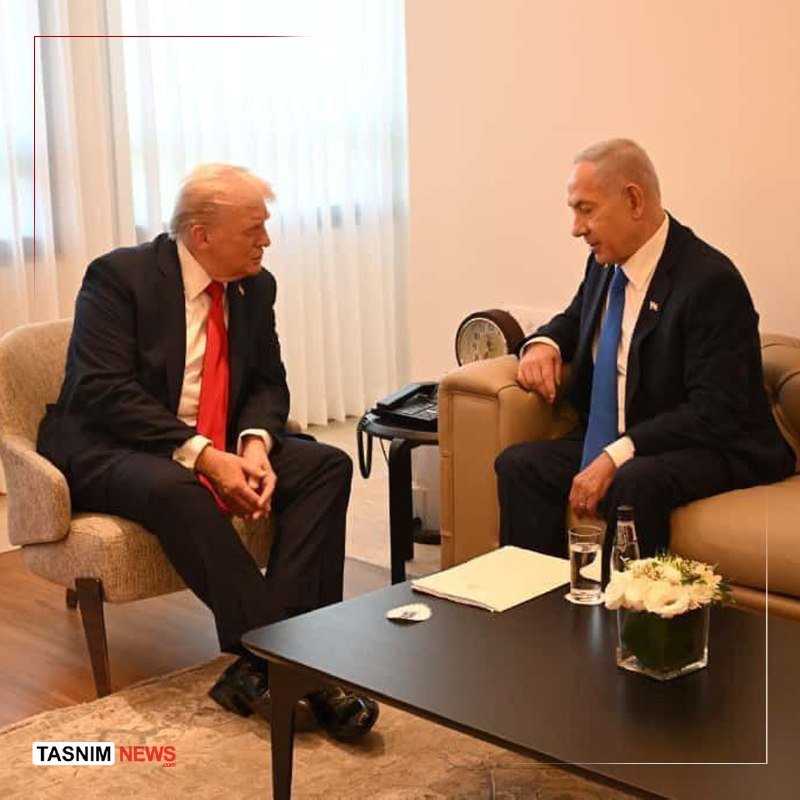
Within ninety minutes on 2 July 2026, Israeli naval vessels shelled the shoreline of Gaza City and Prime Minister Benjamin Netanyahu let slip a phrase about Gaza settlement that now threatens to outrun him. The sequence is not subtle. By 21:19 UTC, Al-Alam Arabic was carrying Palestinian accounts that Israeli gunboats were firing intensely into the sea off Gaza City; by 21:21 UTC, Jahan Tasnim, an Iranian outlet, reported a wider barrage of naval fire across the Gaza City shoreline. The same news cycle carried Netanyahu's suggestion that Israel might, eventually, allow some form of return to Gaza under conditions that have not been specified, will not be specified soon, and may not survive contact with his coalition.
The temptation is to treat the two stories as separate: one is a battlefield dispatch from the Mediterranean coast, the other is a parliamentary remark with no executable content. Read them together, they are the same story. The prime minister's rhetoric and the navy's shells share a single operating logic. Israel is signalling that Gaza's future is being decided without its residents at the table, and that any future that involves return will be grudging, conditional, and partial. The fire on the water is the punctuation. The speech is the sentence.
The political wording matters more than it looks
Netanyahu's phrasing, as carried across regional wires in late June, was characteristically elastic. He did not announce a policy of settlement. He did not promise reconstruction. He held open the option of return in language that committed him to nothing operational, a move designed to satisfy a White House audience that wants a credible day-after plan while keeping his governing partners on board. The settlement hint functions as a placeholder. It signals willingness to discuss, which is the currency of diplomatic engagement, without binding the government to a course of action that any of its members would have to defend in cabinet.
That is precisely why the remark has travelled. A placeholder read by Washington as movement can be read by Tel Aviv as green light, and read by Cairo and Doha as something to negotiate around. The same words do different work for different audiences, which is the point of issuing them. But it also means the remark carries more political weight than its content deserves, and it is being filled in by events on the ground before the cabinet has agreed on what it means.
The drumbeat at sea
The naval fire on the evening of 2 July did not arrive in a vacuum. Israeli forces have, throughout the war, treated the Gaza coastline as a secondary front: tunnelling interdictions, suspected arms movements by sea, and periodic bombardments of beach areas that the IDF has described as militant staging grounds. The 21:19 and 21:21 UTC dispatches follow that pattern. What is new is the visibility of the fire in the same news cycle as the political hint. When a navy guns the shore of a city whose population is being asked, in another capital, to imagine eventual return, the optic does the prime minister's work for him in directions he cannot control.
Palestinian reporting of the bombardment, transmitted through Al-Alam Arabic and amplified by Iranian state-aligned outlets, frames the fire as a deliberate provocation timed to underscore who holds the keys. That framing is not neutral, and it should be sourced as such. But it captures something the IDF briefing room does not address: that the gap between diplomatic language and kinetic language is no longer being managed. The two are now running in parallel, and the diplomatic language is losing the race.
The coalition arithmetic behind the open-ended hint
The settlement remark is best understood as a coalition-management device. Netanyahu's government includes partners for whom any talk of Gazan return is anathema and partners for whom the absence of such talk is anathema. The phrase he used is narrow enough to satisfy the first group (no commitment, no timeline, no number of returnees) and broad enough to keep the second group from open revolt. It is a parliamentary instrument, not a policy. The problem with parliamentary instruments is that they leak. Once uttered, a phrase can be repeated back to the prime minister by foreign ministers, by donors, by hostages' families, and by gunboats.
What we are watching is the slow substitution of governing language for governing. The cabinet is not deciding what Gaza's day-after looks like. The cabinet is deciding what it can say about Gaza's day-after without collapsing. In that gap between saying and doing, the navy, the air force, and the settlement movements in the occupied West Bank are doing the actual deciding, and their work points in a direction that no minister will own.
The stakes by July
By the end of June, the regional picture had hardened around three observation points that the open-ended hint does not resolve. First, Washington's patience with Israeli ambiguity on the day-after is finite, and a phrase that can be read as movement in one meeting is read as stalling in the next. Second, Egypt and Qatar, the two mediators with skin in the game, are now negotiating against a domestic Israeli politics that has not stabilised, which means every round of talks begins from a moving baseline. Third, the people of Gaza are living through the consequences of the open-ended hint in real time, on a coastline that is being shelled while their political leaders are being invited to discuss return in capitals they cannot enter.
The fire and the phrase will continue to be reported as separate stories. They are not. They are the same instrument played in two registers, and the gap between them is the policy.