Netanyahu's Permanent-War Frame and the Dangers of Normalising It
A June 30 Netanyahu address frames the Middle East as a never-ending contest of strength. The line is now the operating doctrine of an Israeli government with no apparent exit.
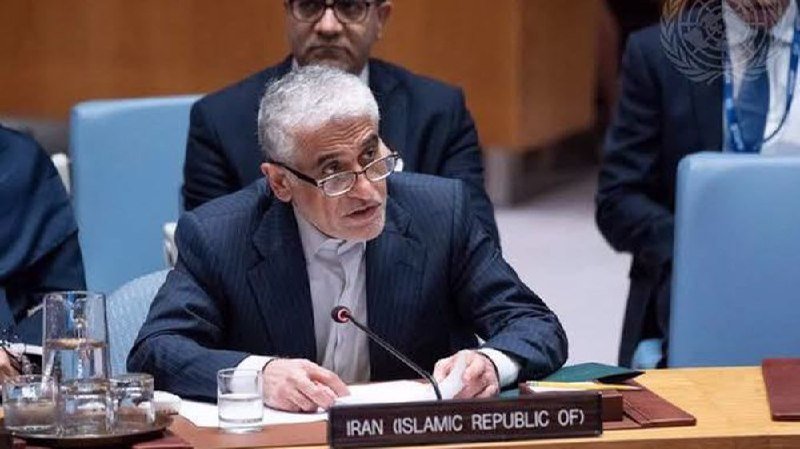
On 30 June 2026, Israeli Prime Minister Benjamin Netanyahu told a domestic audience, in remarks circulated by the Telegram channel Clash Report at 19:11 UTC, that "the war is never over" and that, in the Middle East and the wider world, "you must be very strong." The line was delivered as exhortation, almost secular sermon. It was also, in plain terms, a definition of the political horizon: an Israeli state permanently mobilised, with no off-ramp on offer. The Iranian state-aligned outlet Fars News amplified the same address a half-hour later (19:39 UTC), casting Netanyahu as the principal vector of West Asian instability.
Two state-adjacent readings of the same sentences — one amplifying, one warning — tells you most of what is wrong with the frame. It is being normalised on both sides of the aisle simultaneously. Inside Israel, the rhetoric is offered as civic instruction. Outside, it is offered as proof of regional menace. Both treatments assume the words are reasonable. They are not.
The doctrine behind the slogan
The claim that war in the Middle East is a permanent condition is not a weather report; it is a budgeting choice. Governments that adopt that frame fund accordingly: long-cycle procurement, indefinite reserve duty, a security cabinet that meets in wartime configuration as a default. Israeli politics has, in fits and starts, held a competing frame — that the conflict had to be ended, by treaty, by partition, by mutual recognition. That frame has lost. What remains is permanent mobilisation.
The political cost of that posture is being paid by Israelis, by Palestinians under bombardment and occupation, and by every neighbour absorbing the spillover. It is also being exported. When a prime minister tells his citizens that survival is contingent on continuous strength, he is telling the region's diaspora, its refugees, and its foreign ministries the same thing. The conversation in Cairo, Amman, Riyadh, Doha and Ankara about what Israel is no longer recalibrates around the words of an opposition; it recalibrates around the words of the man in charge.
When rhetoric becomes procurement
Permanent-war framing has a procurement tail, and it is not metaphorical. Defence budgets framed as enduring shift the political economy of an arms-dependent state: homegrown industry becomes structural, rather than cyclical; intelligence agencies become permanent features of the cabinet table; emergency regulations, even when not formally invoked, persist as drafted text. Once a state has priced itself for permanent mobilisation, the political cost of negotiating any genuine arms-control or de-escalation agreement rises sharply. Every minister who would de-escalate must overcome not only the prime minister's rhetoric, but the lobby of contractors, reservists and security veterans whose livelihoods now depend on the words remaining true.
This is the mechanism by which rhetoric becomes policy. It is not unique to Israel — the same dynamic shapes Gulf monarchies, the Iranian Republican Guards, and parts of the American defence establishment. But it is the dynamic this address activates.
The region's other actors read this too
Iranian state-aligned coverage, including the Fars News item in this thread, presents Netanyahu as the proximate cause of West Asian instability. That reading is selective — it omits the role of the Iranian regime itself in arming, funding and directing proxy forces across Lebanon, Syria, Iraq and Yemen — but it is not wrong about Israeli agency. Both capitals now tell their publics a story in which the other side is the permanent threat and the home side is permanently responding. The two stories interlock. There is no exit clause in either narrative.
The structural problem is that the absence of an off-ramp gives smaller and mid-sized regional states — Jordan, Lebanon, the UAE, even Saudi Arabia post the early-2020s thaw — little room for the kind of quiet, transactional de-escalation that ended some of the Cold War's hottest proxy fronts. They are pricing themselves for an indefinitely hostile neighbourhood because their larger neighbours are.
Stakes and what remains uncertain
If the permanent-war frame holds through 2027, the costs are predictable: a heavier Israeli defence outlay, a Palestinian civilian population under indefinite military pressure, accelerated proliferation among Gulf and Turkish militaries, and an Iranian regime whose own war-economy flourishes in the same conditions. Israeli security is not enhanced by this frame; it is, in the longer run, degraded by it — a state that cannot demobilise is a state that cannot afford a peace. The sources available for this article do not specify casualty counts, displacement figures or specific procurement line-items tied to Netanyahu's 30 June remarks; readers following the regional situation should consult wire reporting for any figures.
The honest reading is also the uncomfortable one: two governments, each telling its people the war is endless, each pointing to the other as the reason, is a configuration with no automatic brakes. The question worth asking is not who fired the latest rocket. It is who, in either capital, has the standing to declare the war over.
Desk note: Monexus treats the Netanyahu remarks as Israeli state-of-record speech, sourced to Clash Report's verified Telegram broadcast, and treats the Iranian framing in Fars News as regional counter-coverage rather than as independent fact. Where the two readings diverge, this piece names both rather than collapsing them.
Wire provenance
This editorial synthesis draws on the following public wire/social posts:
- https://t.me/ClashReport
- https://t.me/FarsNewsInt