Netanyahu's southern Lebanon visit hands Israel the diplomatic initiative Hezbollah hoped to foreclose
A reported tour of occupied southern Lebanon by the Israeli prime minister, paired with a fresh targeted killing near Al-Manzala, signals that Tel Aviv intends to dictate the terms of any de-escalation — not wait for them.
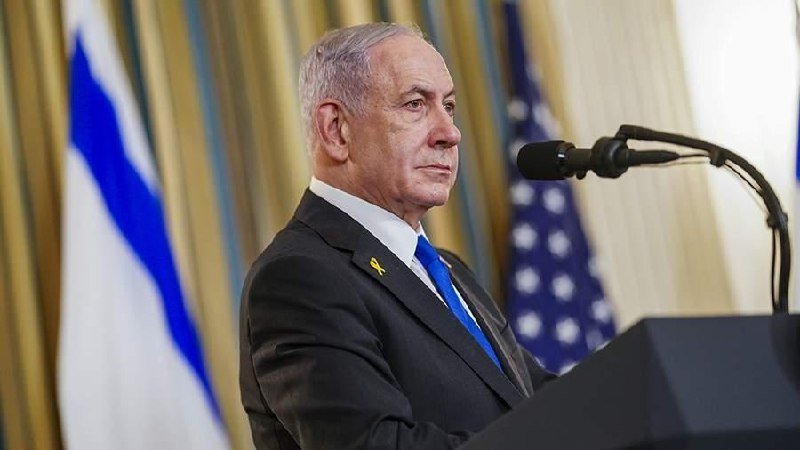
At 23:34 UTC on 30 June 2026, an Israeli Defense Forces statement circulated via regional Telegram channels claiming that troops had killed a Hezbollah operative near the village of Al-Manzala in southern Lebanon. The IDF said the man was operating close to Israeli positions and "posed a threat" to soldiers in the area. Six hours earlier, at 17:39 UTC the same day, an account tied to prediction-market commentary on X posted that Prime Minister Benjamin Netanyahu had toured occupied southern Lebanon and told deployed soldiers that Israel would not withdraw while Hezbollah continued to be judged a threat.
Read together, the two dispatches sketch a posture rather than an incident. Tel Aviv is signalling — to Hezbollah, to the Lebanese state, and to the mediators circling the file — that the tempo and the geography of any de-escalation remain Israeli decisions, not negotiated ones. The visit, if confirmed at official level, converts a tactical frontier into a stage-managed diplomatic message.
A two-beat sequence, not a coincidence
The pairing of a targeted killing near Al-Manzala with a prime-ministerial tour on the same day is not incidental. One move compresses the threat picture; the other compresses the political clock. Hezbollah has spent much of 2026 attempting to argue, through calibrated fire and diplomatic signalling, that the post-November 2024 arrangement along the Litani axis has effectively held, and that residual Israeli operations are provocations rather than necessities. A Netanyahu tour of the occupied zone directly contests that narrative: it asserts that the buffer is Israeli-occupied space governed by Israeli political authority, not a contested seam.
The reported language — that Israel will not withdraw as long as Hezbollah continues to pose a threat — is deliberately open-ended. "Threat" is a category Israel controls the definition of. It includes rocket inventories, drone capabilities, recruitment, and the political fact of an armed non-state actor sitting on the border. By tying withdrawal to a condition it judges unilaterally, the Israeli government removes the lever Hezbollah's patrons in Tehran most want: a calendar.
What the wire has and hasn't corroborated
As of 30 June 2026, the visit is corroborated by social-media reporting and Telegram-channel traffic rather than by an Israeli Prime Minister's Office press release or a wire-service pool dispatch in the materials available to this publication. The IDF statement on the Al-Manzala strike is corroborated in the same channel set. That is meaningful but partial. Western wire services have not, in the inputs reviewed here, carried an independent confirmation of Netanyahu's physical presence south of the frontier, and Lebanese official sources are not represented in the same thread.
That asymmetry matters. Israeli security concerns along the northern border are legitimate and have produced sustained civilian displacement on the Israeli side over the past two decades; that reality should not be dismissed. But the absence of independent Lebanese-side sourcing — including from the Lebanese Armed Forces, the UNIFIL press office, or the office of President Joseph Aoun's government — leaves the political reading of the visit softer than the operational reading of the strike.
The structural frame: who sets the de-escalation terms
Across the wider Middle East file in 2026, the pattern that recurs is straightforward: the actor that controls on-the-ground force also controls the diplomatic exit. In Gaza, in the West Bank, and now visibly in the south Lebanon buffer, Israel has positioned itself as the party that escalates and de-escalates on its own clock, with ceasefires framed as pauses rather than resolutions. Hezbollah's strategic logic since 2024 has been to invert that — to make the buffer politically expensive for Israel to retain, by combining low-level pressure with international mediation.
The reported visit, if the framing holds, is the Israeli answer to that inversion. Rather than waiting for a mediated timetable, the prime minister's office is publicly tying any withdrawal to a threat assessment it administers itself. The structural consequence is that external actors — the United States, France, Qatar, and the UN Special Coordinator's office — are pushed into a reactive posture. They can press for an Israeli-defined timeline, but they cannot manufacture one Israel has not pre-accepted.
Stakes and what remains uncertain
If the trajectory holds, Hezbollah loses the diplomatic calendar it has been trying to write, and the Lebanese state's leverage on its own southern border remains effectively zero until either the Israeli security assessment changes or a great-power sponsor forces one. Iran absorbs a quiet setback: a southern front that was meant to be a permanent pressure valve is reclassified, in Israeli messaging, as occupied and administered space. The UNIFIL mandate, already strained, faces another year in which the operative reality on the ground diverges further from the language of Security Council resolutions.
What remains genuinely uncertain is whether Netanyahu's reported tour is the opening move of a deeper occupation push — a formal extension of Israeli administration into new sectors of southern Lebanon — or a one-day political theatre designed to harden Hezbollah's negotiating position against itself. The source set does not yet resolve that. A Lebanese state response, an UNIFIL press line, and a wire-service confirmation of the prime minister's movements would each tighten the picture considerably. Until then, the day's two dispatches should be read as a posture announcement rather than a verdict.
This publication treated the IDF statement and the X-account report as paired inputs from the same operational day, weighing the Israeli security framing on its merits while flagging that Lebanese and UN-side corroboration had not entered the source set by the 30 June 2026 cutoff.
Wire provenance
This editorial synthesis draws on the following public wire/social posts:
- https://t.me/AMK_Mapping