Netanyahu leans on a Trump endorsement as the Gaza war grinds past its second year
A Channel 14 interview and a White House call, both surfacing in the same 24 hours, suggest the Israeli prime minister is seeking political cover at home as much as backing in Washington.
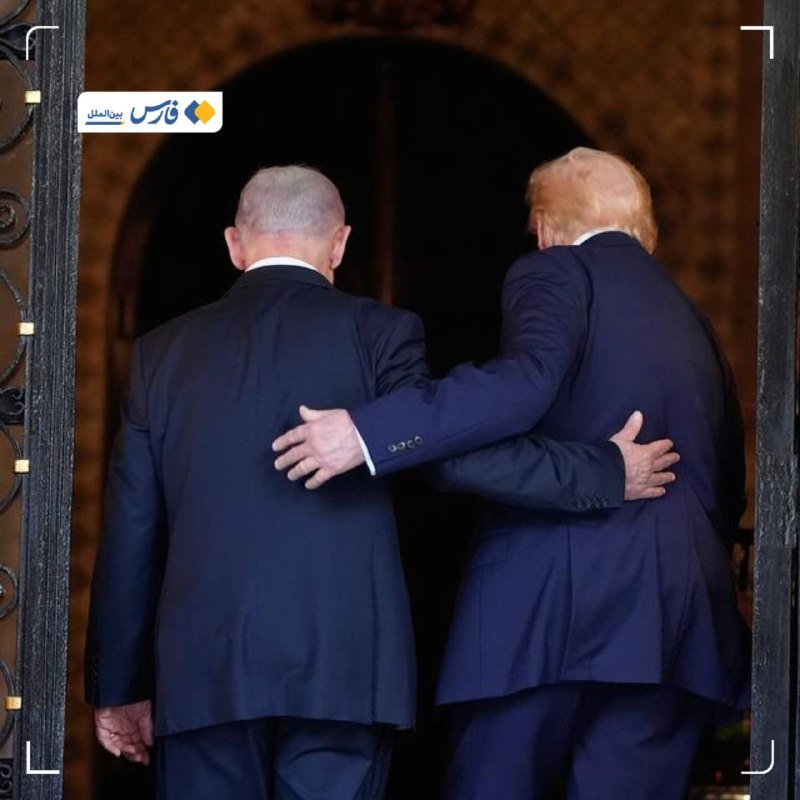
Two exchanges between Benjamin Netanyahu and Donald Trump surfaced within ninety minutes of each other on 30 June 2026, and read together they sketch a relationship that is warmer in tone than in substance. In a phone call, the Israeli prime minister told the US president that he had asked him, "How do you keep going? How do you endure this?" — to which Netanyahu replied, according to a transcript circulated by the Telegram channel Clash Report at 20:19 UTC: "We have a people unlike any other. It's impossible to defeat us." Less than an hour earlier, in an interview with Israel's Channel 14, Netanyahu had been more candid about the friction, telling the station that his relationship with Trump was "very good" but that "there are differences in views," as relayed by Iran's Fars News at 19:46 UTC.
The juxtaposition is the story. Netanyahu is publicly performing closeness with the White House at the precise moment he is privately acknowledging disagreement with it, in a war that has now entered a third calendar year. The Israeli political system has begun to price that contradiction, and the prime minister appears to be managing it as much through atmospherics as through policy.
The phone call as performance
The exchange captured by Clash Report has the cadence of a stage-managed moment. A presidential question about endurance is the kind of remark a White House communications shop scripts for an ally under domestic strain — the suggestion being that the United States recognises the pressure on its partner and is offering moral support rather than strategic guidance. Netanyahu's answer, in turn, answers in register: a people "unlike any other," impossible to defeat.
That kind of language has a long lineage in Israeli public discourse, particularly after October 2023. What is new is the audience. The call was not leaked but distributed, which means it was meant to circulate inside Israel as much as in Washington. Channel 14, the right-wing outlet that hosted the separate interview, has been a sympathetic platform for the coalition throughout the war; the framing of the Trump call as a moment of solidarity reads, in context, as material for the domestic news cycle.
The Channel 14 admission
The Channel 14 interview, summarised by Fars News, is the more analytically interesting of the two exchanges because it concedes the disagreement. "There are differences in views" is the kind of formulation an Israeli prime minister uses when he wants to signal to his coalition partners, his far-right finance minister, and his settler-bloc allies that he has not surrendered Washington's red lines. It also signals to Washington, through a controlled leak to a friendly outlet, that the prime minister is choosing his words carefully.
The combination — an effusive Trump call distributed publicly, and a candid Channel 14 interview admitted privately — points to a leader signalling in two directions at once. That is a familiar posture in coalition politics, and it is the posture Netanyahu has occupied for most of the war.
What the Iranian frame adds
The fact that the most candid read of Netanyahu's words arrived via Fars News is itself worth noting. Iranian state-aligned outlets have a strong interest in depicting the US-Israel relationship as fractured, and they will frame any disagreement as a strategic split rather than a tactical disagreement between close allies. The channel's editorial line is not the channel's evidence: Fars is reporting Netanyahu's words, not vouching for their strategic significance.
The corrective is to read what Netanyahu said, not why Fars is interested in his saying it. The prime minister described a "very good" relationship with real "differences in views." That is the language of alliance management, not alliance rupture. The structural pattern here is not the United States and Israel diverging; it is the United States and Israel negotiating publicly about issues on which they have always negotiated publicly — the pace of operations in Gaza, the scope of any deal on hostages held in the territory since the October 2023 attacks, the architecture of a post-war political settlement.
What this leaves open
What the publicly available material does not yet establish is the substance of the "differences." The Channel 14 interview, as relayed by Fars, gives no specifics. The Trump-Netanyahu call gives none either. The reader is left with atmospherics and an Israeli prime minister who is, simultaneously, telling his base that the American president understands him and telling his cabinet colleagues that the American president does not always agree with him. Both can be true; the art is in the sequencing.
What is clear is that, more than thirty-one months into a war that began with the deadliest single attack on Israeli civilians in the country's history, the bilateral relationship is being managed in public with unusual theatrical care. Whether that is the prelude to a diplomatic move — a hostage framework, a ceasefire, a more explicit American framework for the war's endgame — or simply the routine maintenance of an alliance under stress, the materials published on 30 June do not say.
What can be said is that the Israeli prime minister is buying himself political space at home by performing closeness in Washington, and buying himself political space in Washington by conceding disagreement at home. The strategy is legible; the outcome is not.
Desk note: Monexus treats Israeli security concerns and Palestinian civilian harm as first-order facts that must be weighed against one another on the evidence, not blended. This piece reads the diplomacy through the public statements themselves; the underlying military and humanitarian situation is reported separately by wire services and is not summarised here.
Wire provenance
This editorial synthesis draws on the following public wire/social posts:
- https://t.me/ClashReport
- https://t.me/FarsNewsInt
- https://x.com/s_m_marandi/status/...
- https://en.wikipedia.org/wiki/2023_Hamas_attack_on_Israel
- https://en.wikipedia.org/wiki/Israeli%E2%80%93Palestinian_conflict