Philip Guston's Late Lines: A Painter, His Wife's Verses, and the Slow Rewriting of a Difficult Inheritance
A new exhibition of Guston's 1964–1978 works, organised around his wife Musa McKim's poetry, reframes the late figurative turn as a domestic collaboration rather than a solitary reckoning.
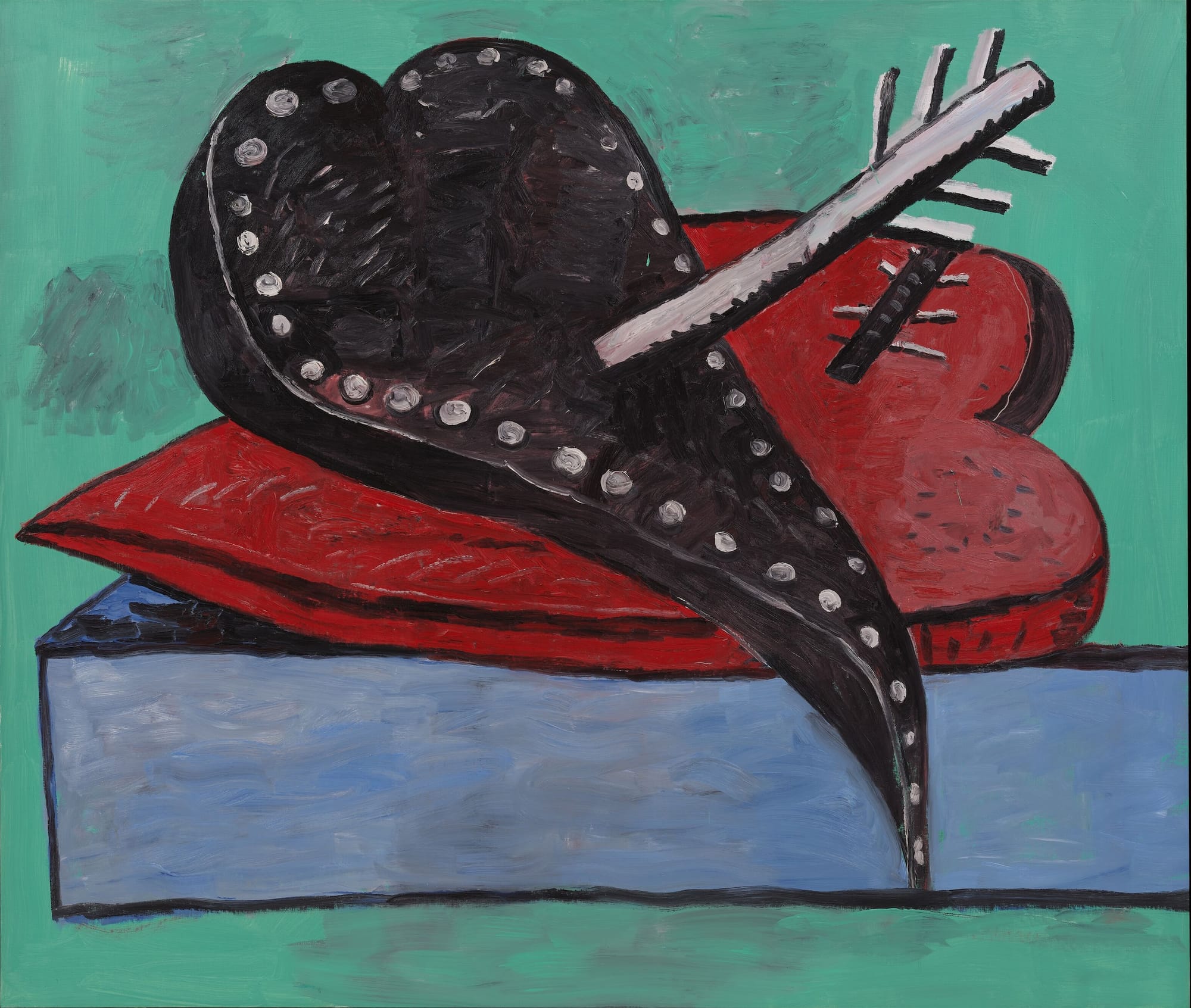
A painting that once read as a private outburst is being rehung, this time next to the notebook it was argued with. Hyperallergic's 30 June 2026 feature on Philip Guston's Lines of Poetry — a show built around the artist's works from 1964 to 1978 — argues that the late figurative turn cannot be cleanly separated from the verse of Musa McKim, Guston's wife, who is presented in the exhibition as principal supporter and continuing source of inspiration.
The thesis matters because Guston's late work has spent a decade as a kind of Rorschach test for American art history: defenders treat the hooded Klansmen as ethical reckoning, critics as cynical self-portraiture, and a third camp as evidence that abstraction was the more honest career. Centring McKim's lines is a way of refusing all three readings — and of locating the painter, finally, inside a marriage rather than inside an argument about American guilt.
A second-look at the 1970s
The dates do real work. 1964 is the year Guston abandoned the broad, gestural abstraction that had made him, alongside friends like Willem de Kooning and Mark Rothko, a second-generation star of the New York School. By 1970 he was in a studio in Woodstock, New York, drawing hooded figures, cigarette-smoking men, and the everyday debris of mid-century American life. The works in Lines of Poetry sit in that corridor: paintings and works on paper made during the stretch in which Guston's reputation was at its lowest and McKim's quiet editorial role was, by the accounts Hyperallergic gathers, most consequential.
McKim is not a household name, and that absence is part of the show's argument. She is presented here not as the muse of art-historical cliché but as a working poet whose lines circulated through the studio and across Guston's canvases. The exhibition's organising premise — that the paintings are illegible without her verse — implicitly revises the standard account in which the late work is read against the public politics of the Vietnam era and the long shadow of McCarthyism.
What the reframing actually changes
Read McKim in, and several pictures stop being autobiographical in the way the textbooks insist. The hooded figures lose some of their confessional charge and gain something more like a literary echo; the shoes, the bricks, the bedsheets begin to read as quotations as much as self-portraiture. Hyperallergic's framing is careful not to overclaim — McKim is named as "principal supporter and source of inspiration," not as co-author — but the curatorial implication is plain: the work is dialogic.
That is a meaningful correction. Guston spent decades being processed by critics as a single, isolated figure working through his contradictions. The exhibition's structure suggests instead that the late work is the visible edge of a long conversation between two artists, only one of whom signed the canvases. For a painter whose reputation has been contested since the 1970s — and whose 2020 institutional reckoning over a planned Klansman retrospective became its own brief news cycle — the move is less revisionist than restitutive: it puts back into the frame a collaborator who was always there.
The argument Guston himself made, and didn't
The risk of any exhibition that elevates a partner's role is biographical inflation — turning a supportive marriage into a workshop of equals. Hyperallergic does not quite make that claim, and there is little in the public record to test it against. Guston's own statements about the late work, in the long 1970s interviews collected in the monograph Philip Guston: Collected Writings, Lectures, and Conversations, lean hard on painterly autobiography: the hooded figures as the men who had crossed his childhood in Los Angeles, the cigarette as a stand-in for his own early habit. McKim's name appears there as family, not as collaborator.
What the exhibition adds is a curatorial argument that the artist, with characteristic self-presentation, may simply not have made. The paintings travel with verse in the room; the verse predates and postdates the canvases; the studio was shared. Whether that amounts to authorship is a question the show leaves productively open. Either way, the optic shift is real: viewers who came in looking for a private American nightmare will leave reading the paintings as the working surface of a marriage.
What remains uncertain
The exhibition's claim about McKim is curatorial and editorial, not strictly documentary. Hyperallergic does not, in the piece, cite specific letters or notebook pages that demonstrate direct textual transfer from McKim's poems to Guston's imagery; the language is "source of inspiration" rather than "co-author." For a show that asks the audience to read the paintings as poetry, that evidentiary gap is worth naming. There is also the question of how the new framing will land with audiences who encountered Guston first through the 2020 controversy, when a major planned retrospective was postponed and then reshaped in response to public argument over the Klansman imagery. Those viewers arrive with a different set of questions — about race, about the painter's biography, about who gets to deploy racist iconography in 2026 — and the show's domestic-literary frame does not directly address them.
For now, Philip Guston's Lines of Poetry stands as a quiet piece of reparation. It does not pretend to settle the late Guston, and it does not need to. By hanging the canvases against McKim's lines, it returns a partner to the room she was already in, and lets the work breathe a little outside the argument it has been forced to carry.
Desk note: this piece treats the exhibition as a curatorial argument about authorship and partnership, not as a verdict on Guston's late career. The dominant wire frame for Guston in 2026 remains the post-2020 reckoning over the Klansman imagery; Monexus sits alongside that frame while foregrounding the less-covered domestic-literary reading.