Qalibaf's blockade claim lands against a familiar Lebanese pattern
Iran's parliament speaker says the US naval blockade has ended. Lebanese reporting and past ceasefires suggest the proof will be in whether the bombs stop.
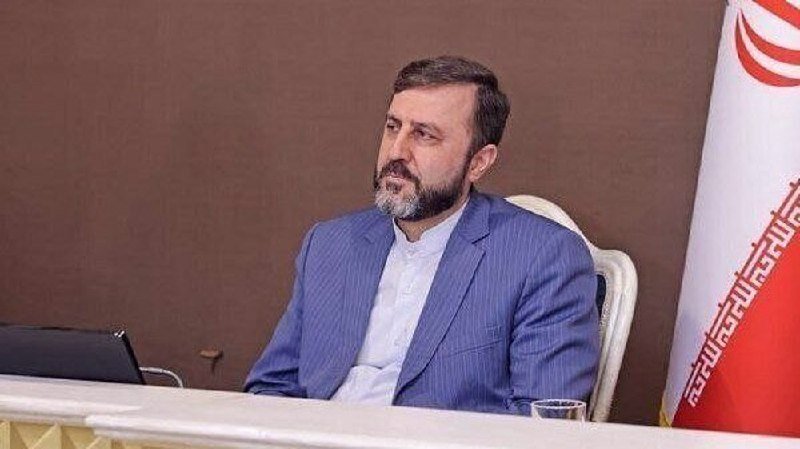
On 30 June 2026, Iran's parliamentary speaker said the American naval blockade had "completely ended." Within the same hour he warned that negotiating with Washington meant dealing with "a reneging enemy, who will move against us at any moment he has the opportunity." Two messages in the space of minutes: deal struck, deal fragile.
The claim matters less for what it announces than for what comes next. Tehran is presenting the blockade's end as a result of "field strength and diplomacy" — language that fuses military pressure and negotiated settlement in a single sentence. The pattern is familiar from previous rounds: a public declaration, an unverified on-the-ground reality, and a clock that starts ticking on whether the next round of strikes comes in days or weeks.
The claim itself
The speaker, Muhammad Baqir Qalibaf, framed the end of the blockade as the product of combined coercion and negotiation. He simultaneously referenced an American "commitment, according to the memorandum of understanding, to stop the war on Lebanon and guarantee its sovereignty," while characterising Washington as an adversary that reneges when convenient. The contradiction is not an accident. It tells Iranian audiences that Tehran extracted concessions, and tells the broader region that Iran does not trust those concessions to last.
Reporting that surfaces a blockade's end at the speaker's podium typically precedes operational confirmation by hours or days. The first real test is traffic: which ships are moving through which straits, under which flag, with which insurance rates. None of that is verifiable from a press conference.
The Lebanese counterweight
Qalibaf's third declaration — that "the scale of the attacks on Lebanon is no longer comparable to what it was before the Swiss talks" — places the burden of proof squarely on Beirut and the Lebanese diaspora, the constituency most directly exposed to whether the bombing continues.
Lebanese reporting over the past several rounds of escalation has been consistent on a single point: declarations of progress in third-party capitals rarely produce an immediate ceasefire on the ground. The gap between mediation language and strike tempo is the metric that actually counts for civilians under bombardment. If Qalibaf's framing is accurate, that gap should narrow visibly within a week.
Why the framing is doing work
"Field strength and diplomacy" is not a description. It is a positioning statement aimed at multiple audiences simultaneously. For domestic Iranian opinion, it vindicates the posture of refusing concessions under pressure. For regional actors, it signals that Tehran views the blockade as a lever it can withstand long enough to force a rollback. For Washington, it serves as both an off-ramp and a warning: an off-ramp because something has been conceded; a warning because the speaker immediately characterised the concession as a tactic the US will abandon.
That dual register is the structural frame. When a counter-party publicly credits both military pressure and diplomacy for a result, it is trying to lock in a narrative before the facts on the water can be checked. Whoever controls the narrative in the first 72 hours after such an announcement usually controls the political interpretation of what followed.
What remains unresolved
The sources do not specify which memorandum of understanding Qalibaf is referring to, who signed it, or what its operative clauses are. They do not confirm whether the blockade refers to a formal interdiction regime, a de facto naval posture, or the political pressure of fleet positioning. "The American naval blockade" is a phrase with a moving meaning depending on which actor is using it.
The most plausible alternate reading is straightforward: that Iran's leadership is announcing a partial easing, an interim understanding, or a confidence-building measure that falls short of a formal end to whatever posture triggered the crisis. That reading is consistent with Qalibaf's own warning about US reliability. A formal end would not need that warning.
The stakes sit in Lebanon first. A genuine end to the blockade, paired with a real reduction in strike tempo, would mark one of the rare diplomatic outcomes of this conflict cycle that has produced a verifiable change in the daily experience of civilians. A symbolic announcement followed by resumed operations would deepen the gap between political language and ground reality that already defines coverage of the region. The next seventy-two hours will tell readers which one they are watching.
This publication framed the announcement through the speaker's own positioning language rather than through wire headlines alone, on the view that the contradiction between "blockade ended" and "reneging enemy" is itself the news.
Wire provenance
This editorial synthesis draws on the following public wire/social posts:
- https://t.me/s/alalamarabic
- https://t.me/s/alalamarabic
- https://t.me/s/alalamarabic
- https://t.me/s/alalamarabic