Qalibaf's Switzerland optics and the limits of Iran's diplomatic reach
Tehran's parliament speaker frames the Swiss talks as Lebanon-first, then walks back any live negotiation. The contradiction is the message.
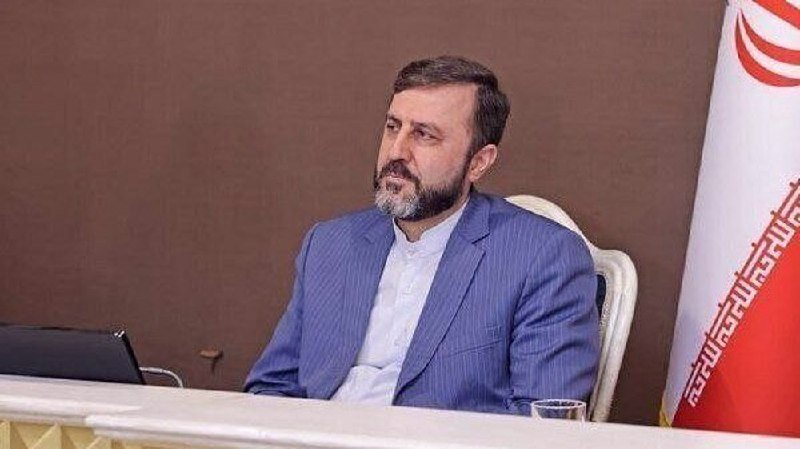
On the evening of 30 June 2026, Iran's parliament speaker Mohammad Bagher Qalibaf used a televised interview to draw two concentric circles around the same trip. The outer circle, relayed by the Fars news agency, was Lebanon: the Switzerland talks were, in his telling, conducted with the situation in Lebanon as the first-priority topic. The inner circle, broadcast via Tasnim's English wire, was narrower and procedural: negotiations ran only up to the signing of a memorandum of understanding, and there are, Qalibaf insisted, no negotiations underway now. The two statements were issued within minutes of each other. The contradiction between them is the story.
The point of the dual delivery is not diplomatic nuance. It is signalling. By elevating Lebanon to "first priority" while denying that any negotiation is live, the Iranian side preserves the appearance of regional statesmanship without committing to a position its counterparts could pin down. The framing lets Tehran claim credit for engaging, and for restraint, simultaneously.
A memorandum, not a negotiation
The Tasnim transcript, published at 18:47 UTC on 30 June, is unambiguous on the limits of what Switzerland produced. The work was bounded by the MoU, and the work is now over. That is a meaningful constraint on the Western wire characterisation of any "Iran deal": if Iran's own speaker defines the outcome as a memorandum, not a framework, then anything described in capital letters elsewhere is the diplomatic equivalent of an option premium, not a contract.
It also cuts against the assumption that Switzerland was a venue for back-channel substance. The Iranian account presents it as a bounded, document-finishing exercise, the kind of thing that produces a piece of paper Tehran can wave at a domestic audience and a regional one. Whether Western interlocutors read it the same way is the open question.
Lebanon as the regional lever
The Fars framing, by contrast, is almost entirely about Lebanon. Fars reported Qalibaf saying that media focus on attacks inside Lebanon is "okay" in itself — implying that visibility of the conflict serves Iran's narrative interests — but should be balanced by what he described as the broader story. Read carefully, the statement is not a comment on Lebanese civilian harm. It is a comment on whose framing of Lebanon wins: the one that shows strikes and casualties, or the one that shows Iran's diplomatic activity on Beirut's behalf.
The structural point is familiar. Lebanon has long functioned inside Iranian regional rhetoric as a moral and political justification — a site where Iranian posture can be defended as responsive, defensive, allied. When Tehran's speaker names Lebanon first in a Switzerland debrief, he is restocking that rationale, not describing a negotiating outcome.
What "no negotiations now" really means
The strongest counter-read of the day's messaging is that Qalibaf was performing for an internal audience as much as for external ones. The assertion that no negotiation is live is also a way of foreclosing commitments the parliament has not endorsed. Iran's Majles has a long tradition of treating the executive's diplomatic gains as bills that come due later, and the speaker's job is to remind viewers who holds the gavel.
The Western wire frame, by contrast, tends to read Iranian statements as either maximalist threats or imminent breakthroughs. Qalibaf's dual message sits uncomfortably in either column. It is neither escalation nor concession. It is positioning.
Stakes, and what remains unclear
If the trajectory holds, Tehran retains the ability to claim regional activism without paying the price of binding agreement. Lebanon stays useful as a rhetorical anchor. The MoU in Switzerland sits on the shelf. The risk is that counterparties who wanted a live channel read the "no negotiations now" line as closure, and the next crisis finds Tehran again without a table.
What this publication cannot resolve from the day's wire alone is whether Western participants in the Switzerland talks share Iran's description of the deliverable. Tasnim and Fars are the named outlets in the available record; their framing is the framing on the page. Until an external counterpart's reading of the same MoU is verified independently, the Iranian account is the only ledger we have — and it is, by design, the one that lets Tehran hold all the cards face-up.
Desk note: Monexus has carried Qalibaf's dual messaging through Iranian state-linked wires rather than laundering it through Western paraphrases, which would have flattened the contradiction. The interesting analytical move is what gets said in the same hour by the same speaker to two audiences — and what that says about how Iran's diplomacy is actually conducted.
Wire provenance
This editorial synthesis draws on the following public wire/social posts:
- https://t.me/farsna
- https://t.me/tasnimnews_en