Rubio and Vance, Reading From Different Scripts on Iran
Tehran's speaker is pointing at a split in Washington's Iran file. Whether that split is tactical or structural is the question that actually matters.
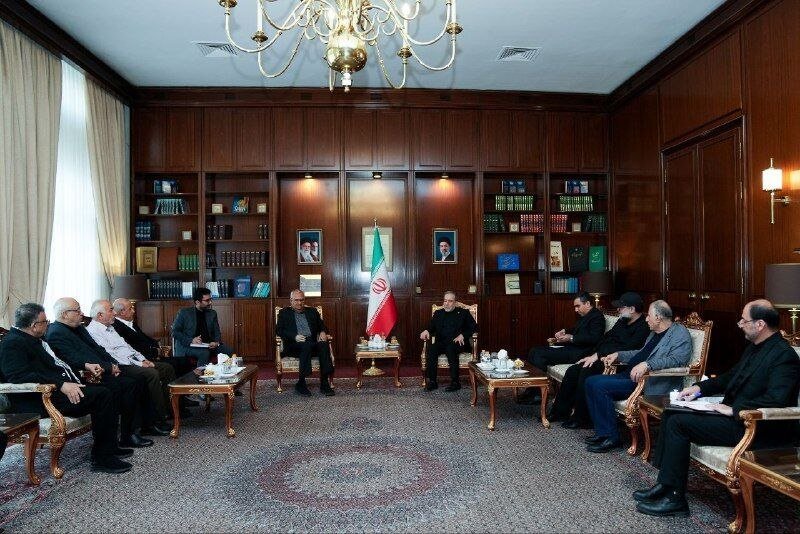
On 30 June 2026, Iran's parliament speaker Mohammad Bagher Ghalibaf did something unusual in the choreographed theatre of US-Iran signalling: he pointed, on the record, at a disagreement inside the Trump administration. "You can see that Marco Rubio is pursuing one approach, while JD Vance is pursuing another," Ghalibaf said in remarks relayed by the Telegram channel Clash Report at 19:55 UTC. Less than fifteen minutes later, Fars News International carried a clip of Vance himself, the US vice president, telling an interviewer that Washington demands "lasting and verifiable commitments" from Tehran on the nuclear file.
The two messages are not contradictory in their words. They are contradictory in their posture. One American official is publicly named as taking a different line from another. The other American official restates maximalist terms. Tehran, in other words, is being invited to read the White House the way an opposition researcher reads a divided government — looking for the weakest link in the negotiating team and the strongest voice in the foreign policy shop, then pricing the gap.
Reading the Rubio line
Rubio, in his current role at the State Department, is widely read as the maximalist on the Iran file: tight sanctions, no enrichment tolerance, scepticism of any framework that lets Tehran retain a civil nuclear programme with dual-use potential. He speaks for the constituency — domestic and Gulf — that believes the 2015 Joint Comprehensive Plan of Action failed because it conceded too much on enrichment and sunset clauses. Ghalibaf's framing flatters that reading.
Reading the Vance line
Vance's interview, aired 30 June 2026 at 19:40 UTC per Fars, is not the language of a negotiator preparing to walk away. "Lasting and verifiable commitments" is a phrase that presupposes a deal architecture: there must be commitments to be verified, and they must be framed in a way that survives the next administration. The vice president of the United States does not reach for that vocabulary unless he believes his principal wants a deliverable, not a collapse.
What Tehran actually wants from the gap
Ghalibaf's tactic is the classic Iranian move: surface the internal American disagreement, reward the harder line publicly, and quietly engage the softer one. The Iranian negotiating playbook assumes that any US administration eventually privileges the dealmaker over the ideologue once the cost of non-deal becomes visible. Tehran's interest in naming Rubio is therefore not hostility to him specifically; it is an attempt to harden the public position of the line Vance is currently softening. If Vance is forced to publicly outflank Rubio, the deal he is privately pursuing becomes harder to close.
Why this is the story, not the photo-op
Western commentary tends to treat these moments as atmospherics — a colourful aside in a slow news week. They are not. The substantive question is whether the US negotiating position is unified enough to hold together under Iranian pressure designed to split it. If it is not, the deal collapses and the war option becomes the residual policy. If it is, the Rubio line is the floor and the Vance line is the ceiling, and the gap between them is the deal.
What remains genuinely uncertain, and what the public sources do not resolve, is which of the two lines is closer to the president's own preference at this moment. The Iranian readout assumes Vance is the lead. The structural incentives on Rubio's side assume he is the floor. Until the White House settles that question out loud, every Iranian move, and every Gulf move, will be calibrated to the gap.
Stakes
If the Vance line wins, Tehran gets sanctions relief, an enrichment programme under tighter constraints than 2015, and a quiet climbdown on ballistic-missile cooperation with Moscow. If the Rubio line wins, Tehran gets the slow strangulation it has been managing since 2018, a hardened Israeli posture as a tail-risk, and a domestic political bill it can defer but not avoid. The middle ground, where most deals live, requires the administration to behave as if it has one Iran policy. Tuesday's messaging suggested it does not.
Monexus framed this as a structural story about an administration's internal coherence on a live negotiating file, rather than as atmospherics. The wire coverage tends to treat Iranian statements about US splits as boilerplate; this publication reads them as the most accurate free commentary on American policy one is likely to find.
Wire provenance
This editorial synthesis draws on the following public wire/social posts:
- https://t.me/ClashReport
- https://t.me/FarsNewsInt