Moscow claims NATO–Ukraine weapons programme targets Russian air bases
The Russian Foreign Ministry says NATO and Ukraine are jointly developing weapons to destroy Russian airfields deep inside Russian territory — a claim Kyiv's allies have not confirmed and which fits a familiar Kremlin information-warfare pattern.
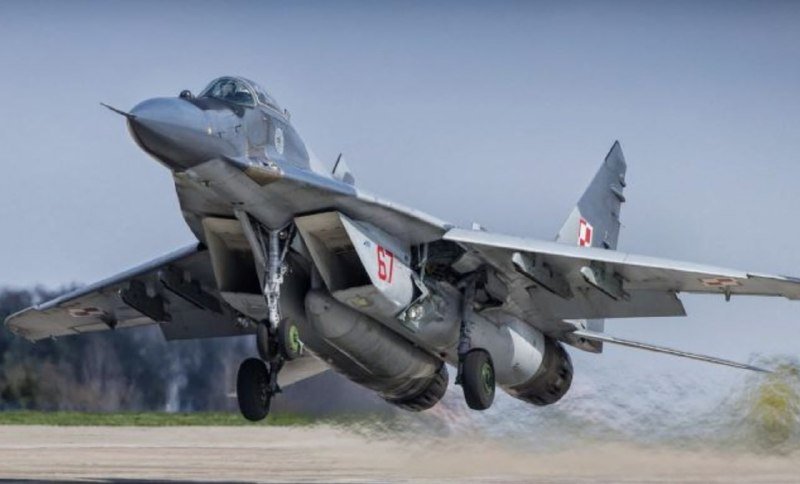
On the evening of 29 June 2026, Maria Zakharova, the spokeswoman of the Russian Ministry of Foreign Affairs, accused NATO of working with Kyiv to develop weapons capable of destroying Russian air bases, including those on territory far from the front line in Ukraine. Her comments, reported by Iranian and Russian-aligned Telegram channels in the early hours of 30 June, frame the alliance as an active co-developer of long-range strike systems rather than a supplier of off-the-shelf munitions.
The claim is the latest in a long-running Russian information campaign that recasts Western military aid to Ukraine as direct NATO participation in offensive operations against Russia. It lands at a moment when European NATO members and the United States are debating whether to lift restrictions on the use of donated long-range weapons, a policy question that has been moving in slow, contested increments throughout 2025 and 2026.
What Moscow actually said
According to Telegram channels Tasnim News and Fars News International, both citing Russian state media coverage of Zakharova's evening briefing, the Foreign Ministry spokeswoman accused NATO of turning Ukraine into a testing ground for advanced weapons intended to strike deep into Russian territory. The Tasnim dispatch, timestamped 03:11 UTC on 30 June 2026, summarised her allegation as a programme specifically aimed at destroying Russian air bases, including installations far behind the front. A separate English-language post on the X account @sprinterpress, timestamped 04:35 UTC the same day, attributed a more detailed formulation to Zakharova, describing the alleged cooperation as the joint creation of weapons designed to attack fixed Russian aviation infrastructure.
No specifics were offered in any of the three dispatches about the weapons system itself — its name, its manufacturer, its range, its platform, or the NATO member state alleged to be leading the work. The Russian Foreign Ministry has, in past statements of this kind, declined to provide documentary evidence when challenged by Western reporters.
Why the framing matters
The accusation does two things at once. In operational terms, it prepares a Russian domestic and international audience for the possibility that strikes against sovereign Russian military infrastructure, including airfields used by strategic and tactical aviation, will be presented not as a Ukrainian act of self-defence but as a NATO act of war. In legal and political terms, it lays the rhetorical groundwork for escalation, including possible retaliatory strikes against NATO member-state territory or against delivery systems and staging areas located in countries bordering Ukraine.
The framing is consistent with a Russian information strategy that treats Ukraine's Western partners as combatants rather than backers. Coverage of the conflict that defers to Russian Foreign Ministry language tends to adopt that framing; coverage that does not, tends to characterise the same weapons transfers as defensive assistance to a country under full-scale invasion. The wire material available on 30 June 2026 does not adjudicate between those readings.
What the open sources do not tell us
Three things are conspicuously absent from the claims circulating on 30 June. First, no specific weapons system is named. Second, no NATO official, no NATO headquarters press officer, and no Ukrainian defence ministry spokesperson is on the record confirming any such joint development programme. Third, no evidence — documentary, photographic, or technical — has been offered publicly to substantiate the allegation.
That is not unusual. Russian allegations of NATO involvement in offensive operations in Ukraine have appeared at intervals since 2022 and have rarely been backed by verifiable evidence on the public record. They function as signalling: they tell Western publics, third-country governments, and domestic Russian audiences what Moscow intends to argue if a given event occurs, rather than describing something that has already happened.
Counter-narrative and structural read
Kyiv's Western partners have, in public statements throughout 2025 and 2026, described their weapons transfers as defensive. The relevant framing in allied capitals — London, Berlin, Paris, Washington — is that Ukraine has a right under the UN Charter to defend its territory and that long-range strike capabilities are a legitimate means of degrading the military infrastructure being used against Ukrainian cities and civilians. From that vantage, the allegation that NATO is co-developing weapons with Ukraine is, at most, an exaggerated description of routine intelligence, targeting, and integration work that accompanies any modern arms transfer between allies.
What is genuinely new, if anything, in Zakharova's statement is the explicit elevation of the threat from air bases rather than from ground formations, command nodes, or logistics hubs. Russian tactical aviation, operating from airfields hundreds of kilometres from the line of contact, has been a persistent enabler of glide-bomb and cruise-missile strikes against Ukrainian cities. A Western policy debate about enabling longer-range Ukrainian strikes on those airfields would, by Moscow's account, cross a threshold.
The structural pattern here is familiar. An incumbent power frames a defensive move by a smaller invaded state, and the states supporting that invaded state, as an aggressive act aimed at the incumbent's sovereign territory. The same template has been used to describe Western-supplied artillery, Western-supplied air defence systems, and Western-supplied tanks. In each case, the equipment is said to be escalating the war; in each case, the equipment enters the battlefield as a counter to documented Russian operations against Ukrainian civilian and military targets.
What we verified and what we could not
Verified through the source items: that Maria Zakharova, in her capacity as Russian Foreign Ministry spokeswoman, made the allegation in the evening of 29 June 2026; that the allegation concerns a joint NATO–Ukraine programme to develop weapons aimed at Russian air bases deep inside Russian territory; that the allegation was carried by Iranian state-adjacent outlets Tasnim and Fars News International and by an English-language X account, with timestamps ranging from 03:11 to 04:35 UTC on 30 June 2026.
Not verified through the source items: the existence of any specific weapons system under joint development; the identity of any NATO member state allegedly participating; confirmation or denial by NATO headquarters, by any allied defence ministry, or by the Ukrainian defence ministry; any technical detail on range, payload, or platform. The sources also do not record a direct Russian Foreign Ministry press release URL on the open web; the claim has been verified only through third-party Telegram and X reposts of Russian state media reporting. Readers should treat the underlying allegation as a Russian government framing rather than an independently corroborated factual finding.
Stakes
If the framing holds in Russian public discourse, it normalises the characterisation of any future strike on a Russian air base as a NATO aggression, regardless of the system that delivers it. That has implications for escalation management, for the risk calculus in allied capitals about authorising longer-range Ukrainian operations, and for the diplomatic space in which any future negotiation would occur. It also sharpens the rhetorical line Moscow is drawing in advance of decisions expected later in 2026 by NATO members on long-range strike policy.
The most likely near-term consequence is rhetorical rather than operational: a further tightening of Russian public messaging around NATO as a co-belligerent, and a parallel effort to mobilise third-country audiences — including in the Global South and in non-aligned European states — against any allied decision to enable deeper strikes. What remains genuinely uncertain is whether the allegation points to a specific, imminent operational decision by Kyiv and its backers, or whether, as on previous occasions, it is being deployed to shape the information environment before such a decision is taken.
Desk note: Monexus treated this as a Russia-origin claim rather than a confirmed Western or Ukrainian action, led with the Russian Foreign Ministry attribution, and explicitly flagged the absence of allied confirmation in line with our standing editorial compass on the war.
Wire provenance
This editorial synthesis draws on the following public wire/social posts:
- https://t.me/tasnimplus
- https://t.me/FarsNewsInt