The court, the constitution, and the country: parsing a 6–3 week at the Supreme Court
In a single 24-hour window the justices blocked a presidential redefinition of birthright citizenship and upheld state-level bans on transgender athletes in school sports. The pair of rulings exposes how a conservative supermajority is choosing its terrain.
Lead
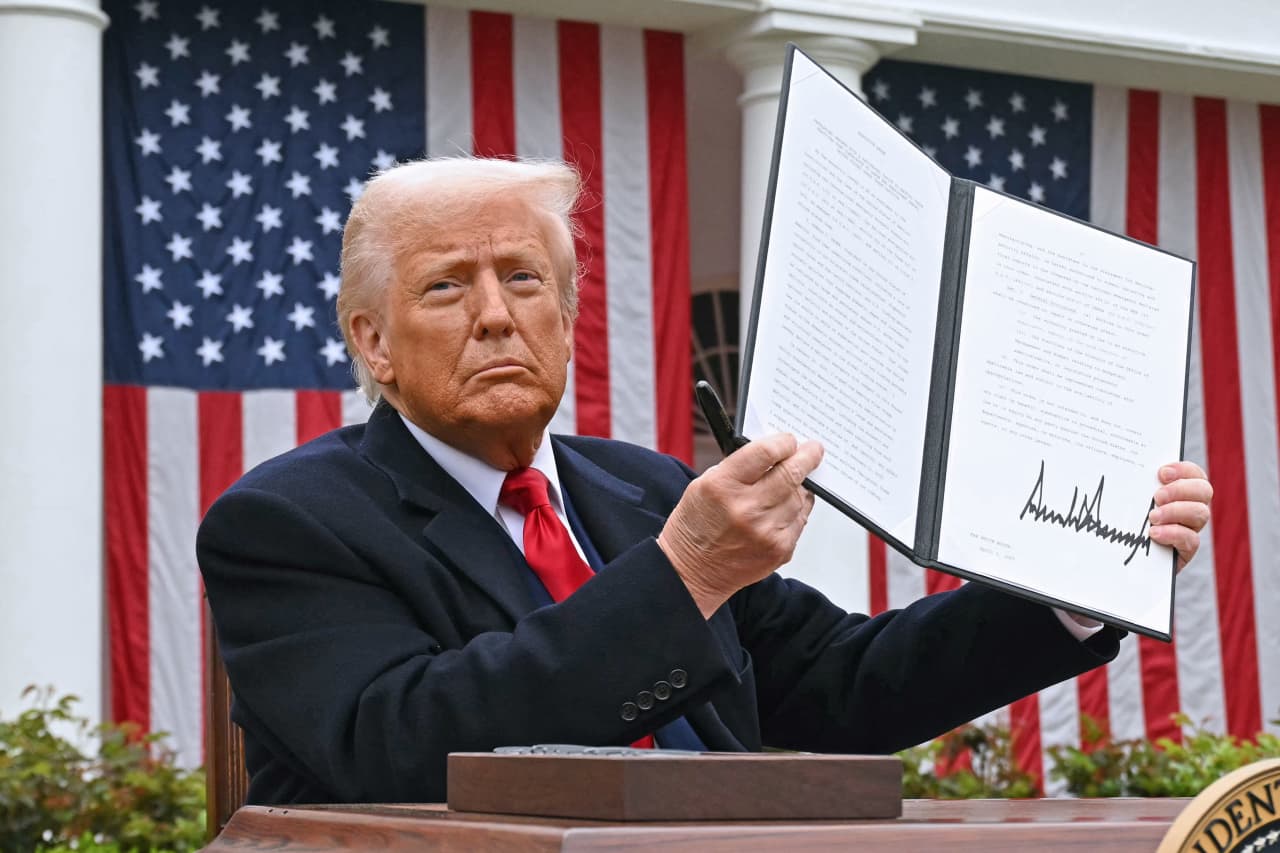
In the span of a single Washington afternoon on 30 June 2026, the United States Supreme Court issued two of the most politically charged rulings of its term. According to channels monitoring the decisions in real time, the justices struck down President Donald Trump's executive order narrowing the constitutional definition of birthright citizenship in a 6–3 vote, and, hours earlier, upheld state-level bans on transgender athletes competing in girls' and women's school sports. The pair of decisions — one a defence of the constitutional status quo, the other a defence of state-level discrimination — landed within roughly forty minutes of each other on the wires that run from Capitol Hill to every newsroom and trading floor in the country.
The juxtaposition is unusually clarifying. The court that has spent three years dismantling regulatory agencies, gutting affirmative-action programmes, and narrowing federal enforcement powers just told the executive branch that it cannot unilaterally rewrite the Fourteenth Amendment. The same court told the country's school boards that biology, as state legislatures have chosen to define it, can decide who runs the 400 metres at a state championship meet. Read together, the rulings sketch the boundaries of a 6–3 supermajority that is far more selective about its constitutional maximalism than its critics suggest — and far less predictable than its defenders hoped.
Nut graf
The week's decisions reward neither the right's most expansive constitutional vision nor the left's worst fears about the court. They do something more instructive: they reveal a conservative supermajority that uses textualism where it constrains the executive, uses federalism where it constrains Congress, and reserves its solicitude for state action when state legislatures are writing rules the federal government has chosen not to write. The court is not, in other words, the monolithic ideological project its critics describe. It is a court with a method. The method, applied consistently, produces results that are neither politically stable nor ideologically tidy — and that is precisely why both flanks of American politics should now be reading the opinions more carefully than the headlines.
What the birthright ruling actually said
According to the OSINT channels that first carried the decision at 14:51 UTC on 30 June 2026, the court held 6–3 that children born on United States soil to parents who are unlawfully present, or lawfully but temporarily present, are citizens by birth under the Fourteenth Amendment, and that the executive order attempting to exclude them is unconstitutional. Reporting from Disclose.tv's wire, mirrored by Clash Report and the OSINT aggregator RNIntel, indicates the majority found the order exceeded the president's authority and conflicted with the citizenship clause's text and original understanding. (The full opinion text, as of this writing, is being parsed by the constitutional bar; the initial wire summaries do not specify which justice wrote which portion.)
The political arithmetic matters more than the legal reasoning, at least for now. Six justices — enough to overturn a federal appellate ruling and to declare a presidential action unconstitutional — refused to extend the executive's immigration writ into a domain Congress has not legislated on since 1866. The Trump administration's order had attempted to redefine the phrase "subject to the jurisdiction thereof" to exclude children whose parents were not permanent residents or citizens. That redefinition has been a long-running project of the immigration-restrictionist right for forty years; the court, on this day, declined to make it the law of the land.
That the ruling landed 6–3 rather than 5–4 is itself a signal. The two conservative justices who have been most openly sceptical of presidential overreach in other contexts appear to have joined the four-justice liberal wing in this instance. Reports aggregating the live readouts describe the ruling as a repudiation of the order, not a narrow procedural punt — the court reached the merits and resolved the constitutional question.
What the athletes ruling actually said
Approximately thirty-seven minutes earlier, at 14:14 UTC, the same court issued a separate ruling that, in its political valence, pointed the other direction. According to the Polymarket account that first surfaced the headline, the court "officially upheld state bans on transgender athletes competing in girls' & women's school sports." The decision ratifies the wave of state-level statutes — passed overwhelmingly in red states, with bipartisan support in a handful of purple ones — that define sex for the purposes of school athletics by reference to biological markers established at birth or at a specific stage of puberty.
The text and scope of the ruling were still being read at the time of writing. The wire summary does not specify whether the court grounded its decision in Title IX, in the Equal Protection Clause, in the Spending Clause doctrine that governs federal funding conditions, or in some combination of the three. The choice of doctrinal hook will determine how far the ruling travels: a Title IX holding cabins the result to federally funded educational programmes; an Equal Protection holding could, in principle, be deployed against private employers, prison systems, and any other context in which sex-based classifications are challenged.
The political pattern, however, is unmistakable. The same supermajority that told the executive branch it cannot unilaterally redefine citizenship told state legislatures that they have wide latitude to define sex in the contexts they regulate. This is the federalism logic the conservative legal movement has cultivated since the 1990s, and it is now being deployed to discipline the centre-right on cultural questions where the executive's preferred posture — which had been reluctant on this file — has outrun the federal judiciary's appetite for nationally uniform rules.
What both rulings reveal about the court
The cases sit on opposite ends of the political spectrum and yet share a single structural feature. In neither instance did the court accept the federal government's invitation to impose a uniform national rule. In the birthright case, the court preserved the federal constitutional floor against an executive attempt to lower it. In the athletes case, the court preserved state-level ceilings against a would-be federal mandate. The methodological constant is a preference for leaving the deciding institution — federal courts on constitutional text, state legislatures on policy detail — where the constitution and Congress have placed it.
That is a deeply unfashionable way to read a 6–3 conservative supermajority. The right's loudest voices spent two years arguing that the court was on the verge of recognising a sweeping theory of executive removal power over independent agencies, an aggressive reading of the major questions doctrine, and a robust programme of deregulatory constitutionalism. The left's loudest voices spent the same window describing the court as a captured institution that would ratify whichever provocation the executive placed before it. Neither frame survived contact with the actual opinion releases on 30 June 2026.
A more accurate read is this: the court is operating a doctrinal separation of powers. Where the executive claims authority it does not have, the court cuts it back. Where Congress has been silent and the states have spoken, the court defers. Where Congress has spoken and the executive has tried to supplant that statute, the court has, in other rulings this term, generally required fidelity to the statute as written. The pattern is consistent enough that it deserves a name — call it jurisdictional textualism — even if it does not fit the slogans either party wants to march under.
What is left unresolved
Several downstream questions remain genuinely open. The birthright ruling, if the wire summaries survive the close read of the slip opinion, narrows the executive's immigration power but does not by itself resolve what Congress could do. The constitutional question of whether Congress could, by statute, redefine the citizenship clause has been contested since the 1980s and was not, on the initial readouts, addressed by this opinion. A future Congress with the votes and the appetite could test that boundary, and the same court that rebuffed the executive on Tuesday might face a different question when it arrives as legislation.
The athletes ruling raises its own set of open files. The federal government still operates Title IX across the country's universities and K-12 systems; if the court grounded the decision in Equal Protection rather than in Title IX's implementing regulations, the Department of Education could face a choice between enforcing a rule the justices have just cast constitutional doubt upon or quietly letting state-level regimes carry the day. Litigation against individual state bans will continue; this ruling will likely foreclose federal constitutional challenges in most circuits while leaving statutory challenges under state constitutions very much alive.
What remains genuinely uncertain is which of these two rulings proves durable and which proves a one-term artefact. The membership of the court has not changed in eighteen months. The political coalitions that produced the executive order and the state-level bans have not changed either. But the doctrinal posture visible in these two opinions is — to use the careful language befitting a single Tuesday afternoon — at least as much a story about institutional self-restraint as it is about ideological triumph. That, more than the political verdict in either case, is the through-line worth watching.
What the next twelve months will look like
The two rulings will be cited, in the run-up to the November midterms, as proof of opposite things. The administration will point to the athletes decision as the vindication of its cultural agenda; the administration's opponents will point to the birthright decision as the cost of overreach. Both framings will be partly right and partly wrong, and both will obscure the more interesting story: that the court is now operating a tighter separation of powers than the commentariat of either party has caught up to.
Three practical stakes deserve attention in the year ahead. First, the administration's immigration docket will now have to clear Congress for any further changes to the birthright regime — which means the next major immigration fight will be a legislative fight, with all the procedural and political costs that entails. Second, state legislatures in blue states will accelerate their own counterschemes: state-level sanctuary rules for trans athletes, state constitutional amendments clarifying sex-equality guarantees, and, in some states, lawsuits against red-state regimes under the dormant commerce clause. Third, both rulings will be cited in cases that have not yet been argued — on the federal hiring of contractors, on the recognitions of out-of-state marriages, on the federal student-loan programmes that touch sex-segregated facilities — in contexts where the textualism the court is now practising will be tested against statutes Congress never anticipated being read this closely.
The court's supermajority remains intact. Its appetite for using that supermajority to override every political actor in Washington does not. On a Tuesday in late June, the country learned what that distinction looks like in practice. The story of the term will not be settled by these two rulings; but the framing of the term should now be.
Desk note
This publication framed the two rulings together rather than running them as separate desks, on the view that reading them in isolation yields either a triumphalist or a grievance-driven narrative and neither tells the reader what the 30 June 2026 wire actually delivered.
Wire provenance
This editorial synthesis draws on the following public wire/social posts:
- https://t.me/osintlive
- https://t.me/ClashReport
- https://t.me/rnintel