The Court Tells the Country What the Court Will Not Say
Three Supreme Court decisions landed within 48 hours, each one narrowing a federal guarantee. The pattern is no longer a coincidence.
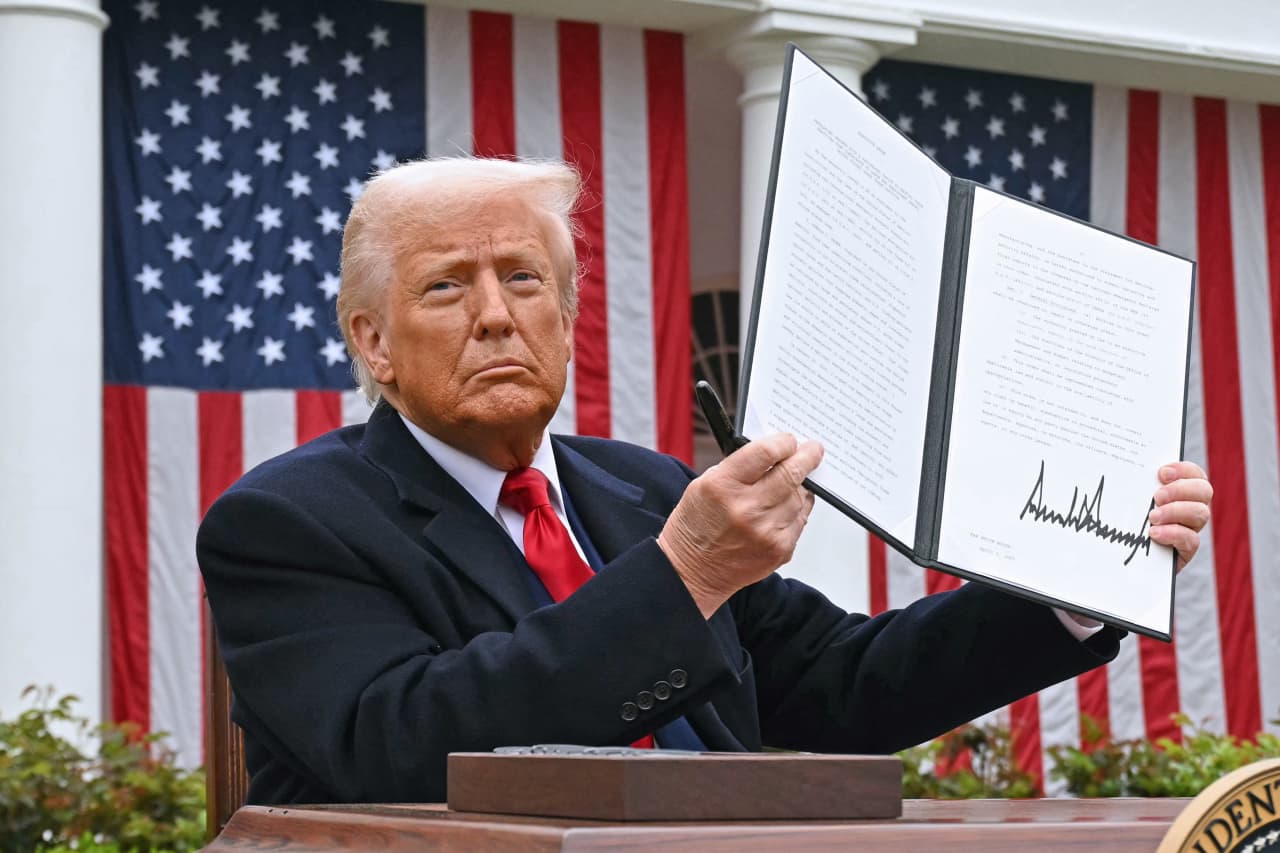
On 30 June 2026, the U.S. Supreme Court upheld state laws that bar transgender athletes from competing in girls' and women's sports. Justice Brett Kavanaugh wrote the opinion for the Court, per a wire roundup circulated by the Open Source Intel channel on Telegram at 14:20 UTC. The ruling puts the justices squarely on the side of state legislatures that have spent the last three years codifying the position into statute.
The transgender-athletes decision is the loudest of the three, but it is not the only one. Within roughly 24 hours, the same Court told the country it would hand down its long-awaited birthright-citizenship ruling on 1 July, and Justice Samuel Alito used a separate decision on late-arriving ballots to warn that the Court's own framework leaves "open opportunities" for voter fraud. Both notices circulated via Polymarket's wire account on 29 June. Read in isolation, each ruling is its own controversy. Read together, they describe a Court that is spending the back half of its term narrowing the federal floor under American citizenship, voting, and athletic competition — and doing so with the kind of restraint in reasoning that leaves opponents room to organise.
The sporting question, settled politically before the judges arrived
The transgender-athletes case is the rare culture-war fight in which the legal outcome was foreseeable. By the time the Court granted review, more than half the states had already enacted statutes restricting participation by gender assigned at birth. Twenty-three states had passed such laws, according to tracking maintained by the Movement Advancement Project through 2025. Lower courts had split. The justices, in other words, were not breaking new constitutional ground so much as ratifying a position the elected branches had already taken.
That does not make the opinion costless. The ruling turns an evidentiary question — who is fast enough, strong enough, or skilled enough — into a status question set at birth. It instructs schools to police a binary the federal government itself has refused to recognise in adjacent contexts. It will invite litigation in every borderline case. And it confirms, for plaintiffs and defendants alike, that this Court reads Title IX's silence on gender identity as licence rather than ambiguity.
The citizenship question, arriving tomorrow
The birthright-citizenship ruling is the heavier lift. Polymarket's wire account flagged at 16:46 UTC on 29 June that the Court would officially release the opinion the following day. The case tests the Trump administration's argument that the Fourteenth Amendment's first sentence — "All persons born or naturalized in the United States, and subject to the jurisdiction thereof" — applies to the children of undocumented immigrants only when those parents are themselves lawfully present.
The textual case for narrowing birthright citizenship is thin. The amendment was drafted, in 1868, to overturn Dred Scott and to assign citizenship to the children of formerly enslaved people who were, by definition, brought into the country against their will. The administration's reading has the federal government arguing that children born to parents it considers unlawfully present are not "subject to the jurisdiction" in the sense the drafters meant. Legal scholars across the ideological spectrum, in amicus briefs filed through 2025, called that reading a departure from a long-settled understanding.
A narrow decision — one that, say, requires at least one parent to be a lawful permanent resident — would be a structural break with the post-Civil War settlement. A broad decision invalidating birthright citizenship nationwide would force every state to rebuild its vital-statistics apparatus from scratch, and would expose an estimated four million U.S.-citizen children to a status their parents never held.
The voter-fraud footnote, written to be remembered
Alito's warning about "open opportunities" for fraud in the late-ballots ruling is, on its face, a concurrence. Concurrences do not bind. But they do signal. Alito's complaint — that the Court's own reasoning tolerates a window in which ballots received after Election Day can still be counted — is the kind of language litigants quote in the next emergency application. State legislatures already hostile to mail-in balloting now have a Supreme Court justice's framing to point at when they tighten their own rules.
The structural pattern is hard to miss. The Court is not inventing new federal doctrine from whole cloth. It is, instead, providing the constitutional vocabulary in which state-level restrictions can be defended. Trans athletes excluded from school teams. Birthright citizenship narrowed. Late ballots discounted. Each opinion is a brick. Together, they describe a smaller federal floor and a more capacious state role.
What the institutional centre is not saying
The press coverage of these three rulings has been scrupulous about the holdings and largely incurious about the connective tissue. There is a reason. Each case touches a different beat of the conservative legal movement's long game, and each has its own coalition of supporters and critics. Lumping them together invites the charge of agenda-narrative. Reporting them separately lets the Court define each ruling on its own terms.
That deference is its own kind of framing. Three decisions in forty-eight hours, each reducing the scope of a federal protection, each issued by a Court whose conservative supermajority was assembled over four presidencies — the pattern is the story. The institutional centre is not telling it because the institutional centre is the audience the Court is now writing to.
The stakes, plainly stated
If the trajectory continues, the federal guarantee that an American-born child is an American citizen will be conditional on the paperwork of the parents. The federal guarantee that an American voter can have her ballot counted after the postal service has moved it will depend on which state's legislature you live in. The federal guarantee that a girl trying out for her high-school team will be judged on her ability will be replaced by a guarantee that she will be judged on her birth certificate. None of these changes requires a constitutional amendment. All of them are within the Court's power to make in a single term.
What remains genuinely uncertain is how far the Court intends to go. The transgender-athletes ruling is a 6–3-or-better exercise of judicial restraint: defer to the state legislature, do not weigh the medical evidence, do not address the equal-protection claim on the merits. The birthright citizenship decision, due 1 July, will not have that option. The Court will have to either reaffirm a 158-year-old understanding of American citizenship or replace it. The political cost of the latter choice is high enough that even this Court may flinch — or, alternatively, may use the flinch as proof that the question belongs to the states, and to the voters, rather than to Washington.
That is the move to watch. Not the headline ruling, but the closing paragraphs of the opinion. Whatever the Court says about jurisdiction, it will say something about who, in 2026 America, gets to decide.
Desk note: The wires led with each ruling as a discrete story. Monexus is running them together because the timing is the story — three federal-floor rulings inside 48 hours, in a Court that spent the previous term signalling its appetite for exactly this sequence.
Wire provenance
This editorial synthesis draws on the following public wire/social posts:
- https://t.me/s/osintlive