Serena Williams returns to Wimbledon — and the question is not whether she can, but what the tour looks like with her in it
A 44-year-old champion walks back onto the All England Club lawns. The match matters; the framing matters more.
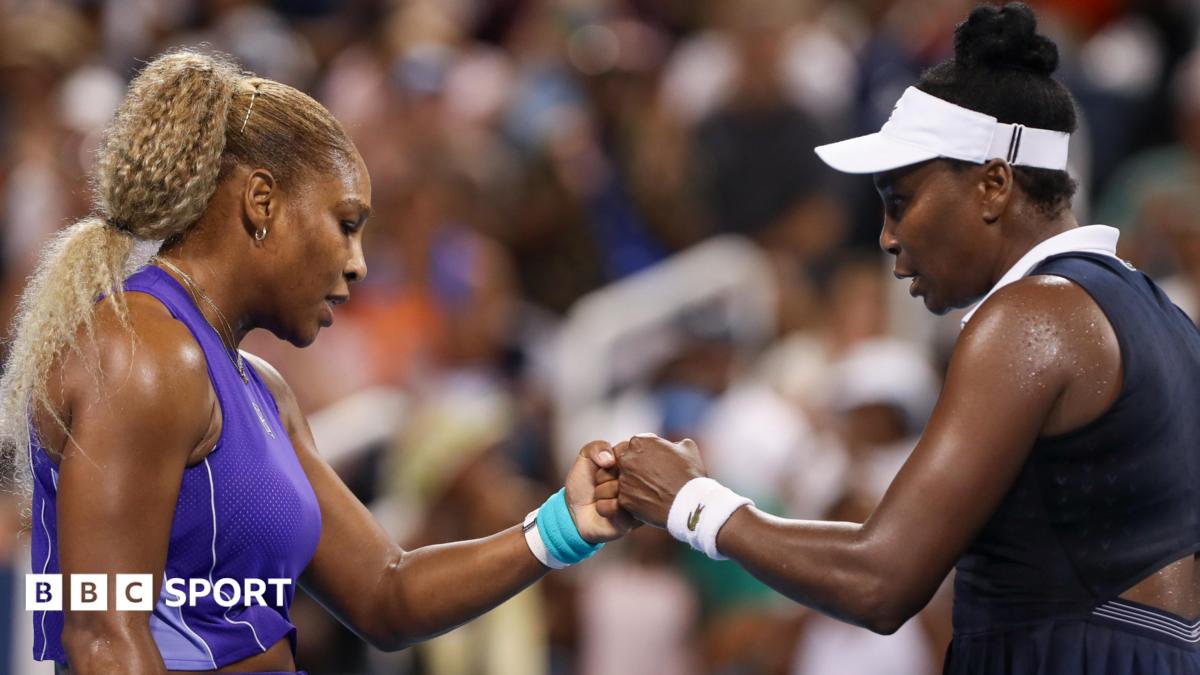
On 30 June 2026, the All England Club reopens its Centre Court doors to a name it knows extremely well. Serena Williams, 44, is back on the lawns she last graced competitively in 2022, and the framing around her return has already begun to harden into a kind of inevitability — the legend, the walk, the bow. Reporting from BBC Sport on 30 June frames the occasion as something older than form: a closing of a circle that, on paper, never had to be reopened.
The storyline is not whether Williams can beat a top-30 opponent on grass at her age. That question answers itself every time she steps on court. The storyline is what tennis looks like when a once-in-a-generation figure re-enters a tour that has, in her absence, settled into a rhythm she no longer quite fits. Wimbledon does not get to choose its subplots. This year, it inherited one.
The return in plain numbers
Williams has not played a tour-level singles match since the 2022 US Open. The break stretches across more than three seasons, a period during which the women's game produced a new world No 1 in Aryna Sabalenka, a first-time major champion in Madison Keys at the Australian Open, and a generational shift in the lower half of the draw that the tour barely had time to document. ESPN's 29 June roundtable with tennis analysts noted that Williams' ranking protection, where it applies, gives her freedom to schedule conservatively in early rounds — a luxury the rest of the field does not enjoy and a structural detail that quietly tilts the optics before a ball is struck.
The BBC's reporting on 30 June underscores the dual register the occasion demands: "It's nothing new and yet at the same time everything new," Williams told the broadcaster. The line lands because it is precise. The Centre Court rituals have not changed. The player has.
The counter-narrative the tour would rather not discuss
There is a less flattering read, and it has been visible since Williams first hinted at a comeback in late 2025. The women's tour has spent four years trying to convert post-Williams attention into durable audiences. Sabalenka, Iga Swiatek and Coco Gauff have all carried top-of-bill status and have delivered consistent viewership, but the sponsorship delta between a Williams match and any other match on a schedule remains measurable in ways the tour does not publish. ESPN's experts were candid on this point: a Williams run to the second week is, in pure broadcast inventory terms, worth more than a routine quarter-final between two ranked players in their twenties.
That creates a quiet tension. Every round Williams wins is, on one ledger, a story of sporting heroism; on another, a reminder that the rest of the field still competes in her commercial shadow. Neither register is more real than the other. Both are operating at once.
Structural frame: the tour has a Williams problem it cannot solve
The women's game has spent the last four years institutionalising its post-Williams identity. The WTA's broadcast deals, its social-media verticals, its marketing campaigns — all have been built around the assumption that the story is the depth of the field, not the gravitational pull of a single name. Williams' return punctures that assumption gently but unmistakably.
The structural pattern is familiar across individual sports. A dominant figure exits; the tour rebrands around plurality; the dominant figure returns; the rebrand is suddenly revealed as a holding pattern. Golf has lived this with Tiger Woods. Athletics has lived it with Usain Bolt. Tennis has now booked its own version, with the complication that Williams is not a ceremonial presence — she is, by her own account, here to compete.
Wimbledon's 30 June start date places the tournament at the apex of the British sporting calendar, and the All England Club has made no public move to dampen the Williams spotlight. Tickets moved in a compressed window once the entry list was confirmed, per BBC reporting, and the women's singles draw announcement on 27 June was treated by the British press as a story in itself before a single match was played.
Stakes: what is actually being measured
For Williams personally, the tournament is a referendum on the body she has spent three years rebuilding. For the tour, it is a referendum on whether the post-Williams economy the WTA has built is structurally real or structurally Williams-adjacent. For the players she will face, it is the most demanding draw assignment in the sport, with no upside that outweighs a routine win.
The honest read is that nobody in the field benefits from Williams' presence as much as she does. A deep run for her is a story; a deep run against her is a footnote. That asymmetry is the structural fact underneath the warm narratives, and it is the reason ESPN's panel returned more than once to the question of what the tour does next.
What remains genuinely uncertain is the on-court product. Williams has played a handful of exhibition and lower-tier matches since her return, with results the BBC report declined to characterise in granular detail. The sources do not specify her current physical match-readiness, and the tour's own data on serve speed and movement in 2026 has not been published in a form that would allow a clean comparison to her 2022 baseline. The match will answer the questions the press cannot. Wimbledon, as ever, is where the stories either hold or collapse.
Desk note: Monexus framed Williams' return as a structural story about the tour's economy rather than a sentiment piece about a legend's walk. The wire coverage from BBC and ESPN supplies the on-the-record material; the framing is the publication's own.