Bruce Springsteen takes the long road to PBS, and the network's quiet bet on legacy talent
A half-hour Geoff Bennett sit-down with Springsteen lands at a moment when public broadcasting is short on cash and long on the search for tent-pole audiences.
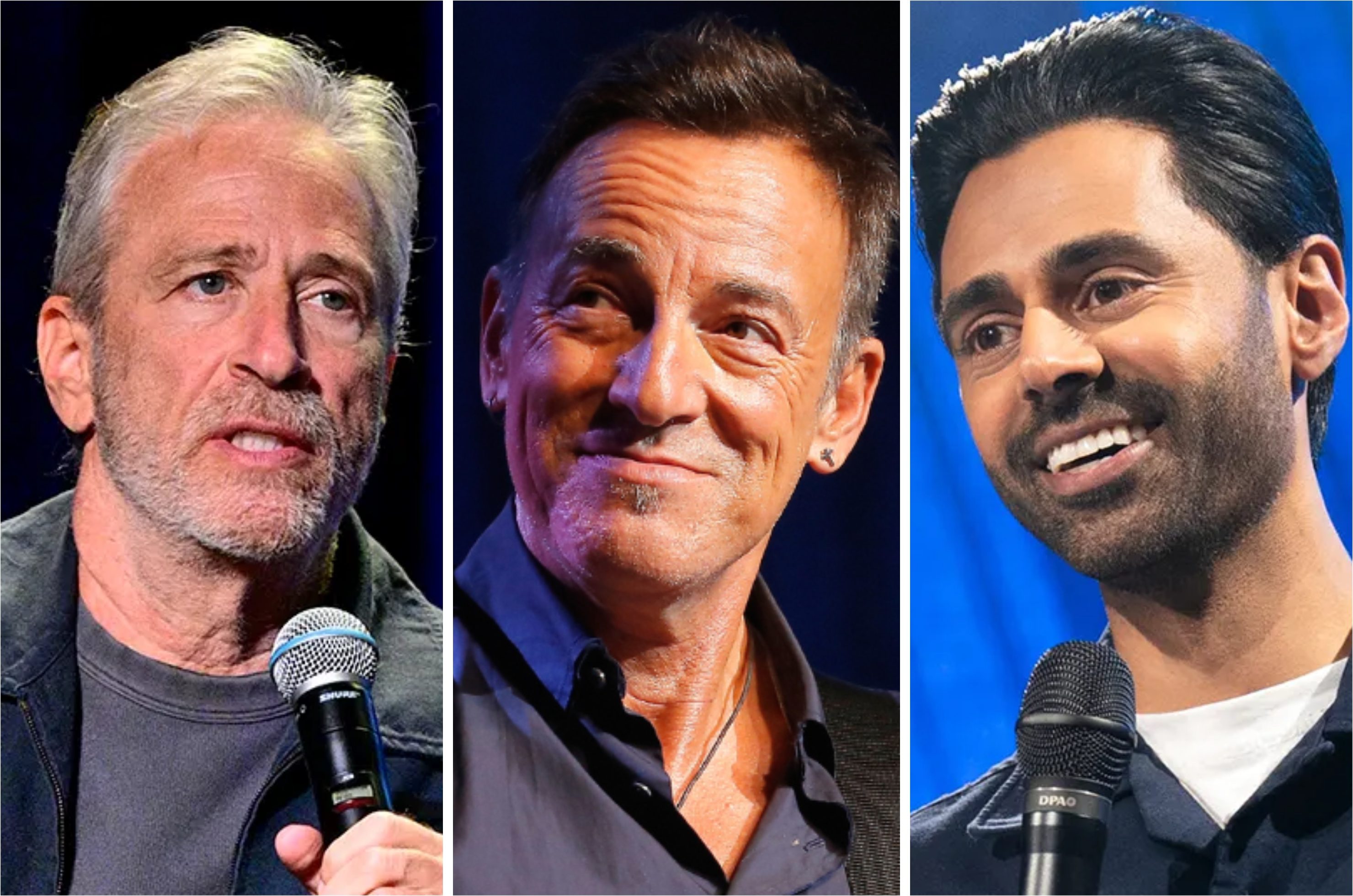
On 29 June 2026, PBS NewsHour disclosed that Geoff Bennett, one of the program's two co-anchors, had recently sat down with Bruce Springsteen for a half-hour on-camera conversation — a venue few rock artists of Springsteen's commercial standing bother with in the streaming era, and one that the network itself rarely programs outside its nightly news block.
The pairing is small in absolute terms — one interview, one primetime-adjacent slot, one artist. Read against the broader landscape of American public broadcasting in 2026, it looks like something else: a deliberate, low-cost move by a network starved of marquee programming to attach itself to the dwindling roster of artists whose names still move broadcast audiences.
What PBS actually bought
Springsteen's appearance, as described by Variety's reporting on 29 June 2026, is a straightforward sit-down: Bennett in conversation with the artist, formatted for a NewsHour audience rather than a Tonight Show one. The half-hour runs long by network-news standards and short by talk-show ones, a deliberate middle register that lets PBS offer something cable cannot — a serious, ungarbled exchange with a major cultural figure — without the production budget of a Netflix special.
The exchange also lets Springsteen do something he has visibly wanted to do for some time. As Variety noted, the artist once dismissed the medium of television as "fifty-seven channels and nothin' on." PBS, a publicly funded non-commercial outlet, sits outside that critique: it is advertiser-free, structurally incapable of the algorithmic churn that drives cable, and still carries the residual trust that allows an artist to speak at length without being edited into a five-second clip. For an artist managing his own late-career narrative, that is the actual scarce resource, not the audience size.
The arrangement also fits Bennett's brief. NewsHour's co-anchor chair has, since 2022, gradually expanded into long-form interview territory, and a Springsteen sit-down extends that pattern: a cultural figure whose body of work intersects with the program's typical register of policy, class, and place.
The counter-narrative: legacy talent as stopgap
The optimistic framing — that public broadcasting is broadening its cultural remit by booking legacy rock acts — sits uneasily beside the structural reality of the Corporation for Public Broadcasting in 2026. CPB funding has been the subject of recurring congressional action across the past several budget cycles; PBS stations have absorbed repeated rescission rounds; and the network's programming slate has visibly thinned as a result, with less room for original documentary work, fewer arts strands, and a heavier reliance on BBC-import catalogue to fill the primetime grid.
Read that way, the Springsteen booking is not a statement of editorial ambition. It is a stopgap. A name with multi-generational reach buys an audience that PBS's current marketing budget cannot assemble on its own, and it does so cheaply: the artist has his own reasons for showing up, the production cost of an in-studio conversation is a fraction of a documentary commission, and the rights footprint of a news-interview format is small enough to live comfortably inside PBS's standard clearance window. The booking is plausible as cultural strategy and plausible as triage. Both readings are supported by the available evidence; the underlying motive sits somewhere between the two.
The structural pattern
Public broadcasting in the United States has spent the last decade learning to behave like a prestige cable network without the budget of one. The throughline is a thin layer of marquee talent — Kenneth Branagh narrating a Shakespeare adaptation, David Attenborough fronting a natural-history strand, Springsteen in conversation with a news anchor — wrapped around a much larger catalogue of acquired and reversioned content. The model works because it lets PBS charge member stations and underwriters for prestige while spending prestige-production money only sparingly.
The Springsteen appearance slots into that logic. It is also a quiet signal of where the network thinks its competitive advantage now lies. Streamers can offer any Springsteen concert film, any archival interview, any documentary on the E Street Band within a search bar. They cannot offer a half-hour of unscripted conversation between the artist and a working news anchor in a format designed for an adult viewer. That distinction is small, but it is the one PBS has spent years trying to defend, and the Springsteen booking is one of the cleaner demonstrations of the strategy in 2026.
What it costs and what it buys
For Springsteen, the cost is low: a half-day on a soundstage in a format he controls by long habit. The upside is concrete — a broadcast that reaches the cohort of American viewers who still watch PBS nightly, who still treat NewsHour as a credentialed source, and who skew older than the streaming platforms' core audience. That cohort is not large in 2026, but it is loyal and demographically valuable in ways the algorithm rarely delivers.
For PBS, the arithmetic is tighter. A Springsteen conversation does not move the needle on CPB appropriations; it does not change the structural funding fight that has shaped the network for several years. What it does is give underwriters and member stations a piece of programming they can actually market — a recognisable name, a defined half-hour, an editorial register that flatters the brand. In a year in which public broadcasting has had to fight for its baseline, that is a defensible use of the airwaves. It is also the most a network in PBS's position can realistically ask for: one conversation, one artist, one quiet reminder that public broadcasting still has a register the market does not.
Desk note
Monexus framed the Springsteen–PBS pairing as an institutional story first and a celebrity booking second — the more interesting question in 2026 is what a publicly funded network does with its remaining primetime real estate when its funding base is under structural pressure. The wire took the celebrity angle; the editorial question is the budget one.
Wire provenance
This editorial synthesis draws on the following public wire/social posts:
- https://en.wikipedia.org/wiki/PBS
- https://en.wikipedia.org/wiki/Corporation_for_Public_Broadcasting