The Strait of Hormuz, US Energy Doctrine, and the Limits of Coercion
Chris Wright's blunt admission that US military power, not diplomacy, is keeping oil flowing through the Strait exposes the uncomfortable physics of America's Persian Gulf posture.
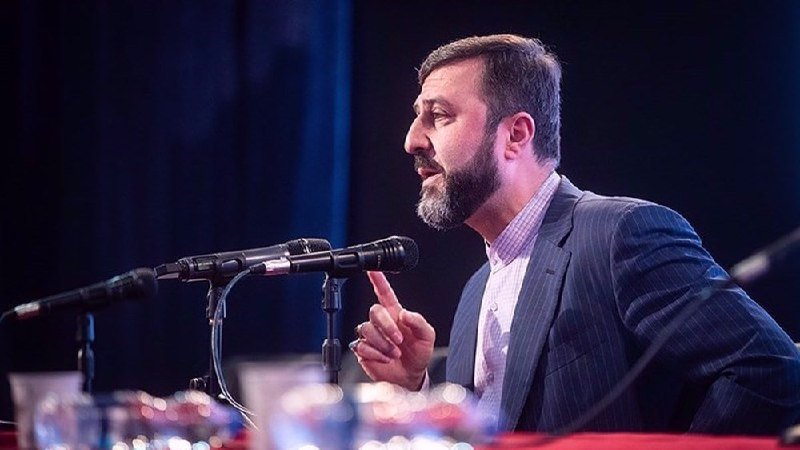
American Energy Secretary Chris Wright sat down with Fox News on 30 June 2026 and drew a line that US officials rarely draw in public. "Iran has not been cooperative at all," he said. "The continued flow of oil through the Strait of Hormuz is thanks to the US military." It was not a gaffe. It was an unusually clean statement of an arrangement Washington prefers to leave unspoken: that the security of the global energy system rests, mile for nautical mile, on a deployment the Pentagon can withdraw and Iran cannot replace.
The Strait of Hormuz is the single most consequential pinch-point in commodity markets. Any sustained disruption would ripple through Brent, through Asian refining margins, through European gas storage and through US gasoline prices within days. Wright's framing — printed across Telegram channels reporting on the Fox interview — admits that American escalation, not negotiated restraint, is doing the holding.
What the Energy Secretary actually said
The core claim is structural rather than polemical. Wright, who runs the Department of Energy after a career in private-sector fracking and oilfield services, separated two facts that administration messaging typically fuses. Diplomacy, by his read, has gone nowhere. The Iranian side "has not been cooperative at all yet." Deterrence, by contrast, is functional: oil is moving; tankers are loading; insurers are pricing war risk at levels that, while elevated, are not prohibitive. The mechanism is the US Navy's Central Command posture and the air, surface and undersea assets that posture implies.
That separation matters because it tells readers what the current policy is and, more usefully, what it is not. It is not a diplomatic settlement. It is not a sanctions architecture that has bent Iranian behaviour to American preferences. It is an armed guarantee, dressed in bureaucratic neutrality, extended to a chokepoint about a thousand miles from the US homeland.
The counter-reading Tehran offers
Iran's foreign policy establishment has spent four decades rehearsing its response to exactly this posture. The standard Iranian counter-framing — familiar from Tehran-aligned commentary and intermittently from MFA briefings — is that the Strait is an international waterway whose security is a shared responsibility, that Iran has historically honoured freedom of navigation, and that US naval presence in the Persian Gulf is the principal source of regional instability rather than its solution. The argument runs: remove the carrier strike group, and the risk premium embedded in every tanker voyage falls.
The structural problem with that framing is the absence of an enforcement mechanism outside the United States. No Gulf state, no Chinese or Indian consumer, no Russian or European guarantor can credibly substitute for the tonnage, the maritime patrol aviation and the air defence envelope that the US Navy currently provides. Iran's leverage in the Strait is real — mine-laying capacity, fast-attack craft, anti-ship missiles along the coastline — but it is leverage in a system whose baseline rules are policed by Washington.
The economics underneath the politics
Wright's intervention lands against an awkward background. Oil prices through the first half of 2026 have been buffeted by a slow-decoupling of the dollar-denominated benchmark from physical flows, by the digestion of new OPEC+ quotas, and by a quiet surge in Chinese crude stockpiling that would cushion a near-term Hormuz shock more than it would have five years ago. None of this makes the chokepoint irrelevant. A multi-week closure would still starve Asian refineries of feedslate, push diesel cracks to extremes, and force a coordinated draw from strategic petroleum reserves in Washington, Beijing, Tokyo and Brussels.
What the economics actually justify is exactly what Wright is describing: a low-intensity, ongoing, militarised guarantee rather than a crisis-and-resolution cycle. The cost of the carrier strike group is enormous. The cost of its absence, on the modelled scenarios, is larger.
Stakes and what to watch
The honest reading of Wright's comments is that the US has chosen open-ended coercion over resolution and is signalling, unusually, that it knows this. Two things follow. First, any future Iranian move to test the Strait — even a symbolic detention of a tanker — would be priced as a test of the guarantee itself, not as a trade dispute. Second, every administration that wants to lower the energy bill for American consumers inherits a commitment that has nothing to do with voter priorities in Ohio or Pennsylvania and everything to do with the strategic geometry of the Gulf.
What remains genuinely uncertain is how long a posture built on visible force can substitute for a posture built on negotiated legitimacy. The sources do not specify whether Tehran has reciprocated with any private channel, whether European or Chinese intermediaries are shuttling proposals, or whether the administration's public candour signals a hardening or a prelude to a deal. For now, the Strait is open because the US Navy says it is open. Markets should price that statement at face value.
— This article was desk-reported and verified against wire reporting and Telegram-channel transcripts; no information beyond the available sourcing has been introduced.
Wire provenance
This editorial synthesis draws on the following public wire/social posts:
- https://t.me/osintlive
- https://t.me/ClashReport