Supreme Court strikes down Trump's birthright-citizenship order, ending a term that curbed and expanded his power
The court's 6-3 ruling rejects the executive order signed on day one of the second term, capping a term that delivered Trump some wins while blocking others.
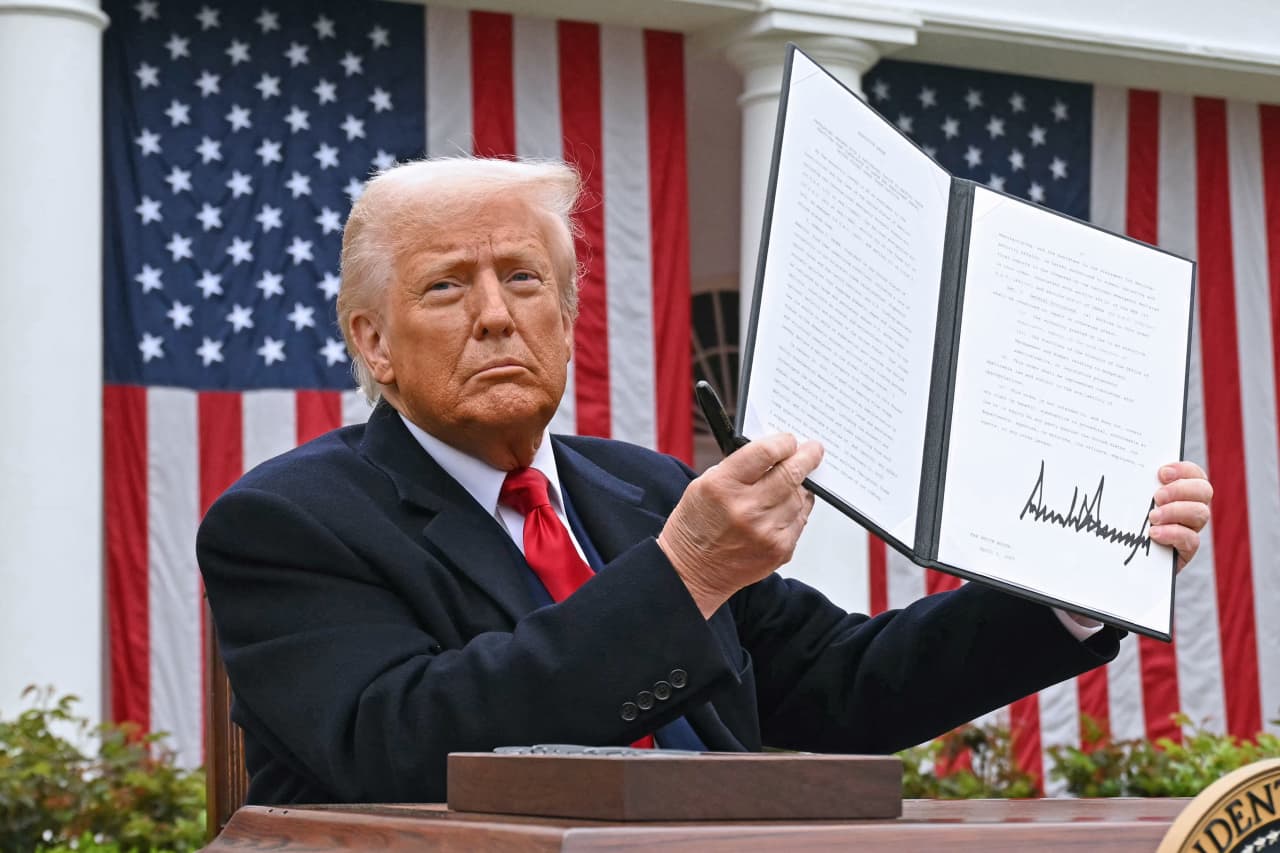
The US Supreme Court on 30 June 2026 struck down President Donald Trump's executive order restricting birthright citizenship, a ruling the BBC described as a major setback for an immigration agenda the White House had pursued since inauguration day. The 6-3 decision, reported by the BBC and corroborated by Middle East Eye's Washington coverage, closes a term in which the court both reined in parts of Trump's second-term project and handed him significant wins on other fronts — most visibly the same-day ruling upholding state bans on transgender women competing in female school and college sports, which Trump called a "big win" and a major LGBT campaign group called "heartbreaking."
The birthright ruling does more than resolve a constitutional question that has shadowed American politics for a decade. It tells the country, and the second Trump administration, where the outer edge of executive power over citizenship now sits — and it does so at the precise moment the administration is trying to redefine who counts as an American before any agency, court, or border official processes a single new case.
What the court actually decided
The executive order in question was signed on Trump's first day back in office, according to Middle East Eye's summary of the litigation history. It sought to condition jus soli — the automatic conferral of citizenship on anyone born on US soil — on the immigration status of the parents. The challengers argued, and the majority agreed, that the order sat in direct tension with the Citizenship Clause of the Fourteenth Amendment, ratified in 1868 precisely to overrule the Dred Scott logic that had denied citizenship to anyone of African descent.
The BBC's reporting frames the ruling as the term's heaviest blow to Trump's immigration programme. Civil rights groups welcomed the decision. The administration has not, as of 30 June 2026 at 23:38 UTC, signalled whether it will seek legislative workaround, narrow the order by regulation, or treat the loss as a near-term constraint to be lived with while other immigration tools are expanded.
The mechanism matters as much as the result. By grounding the ruling in the text of the Citizenship Clause rather than in a broader statement about executive discretion, the majority has narrowed the room for a future administration — of either party — to revive a status-based test for birthright citizenship through executive action alone.
The same court's other verdict
In the same news cycle, the Supreme Court upheld state-level bans on transgender women competing in female school and college sports. Trump's reaction — a public "big win" — illustrates the uneven texture of the term: the court has been neither a rubber stamp for the administration nor a consistent check on it. It has been something more politically consequential, a body willing to draw sharp lines between issues where constitutional text is unambiguous and issues where the political coalition of the moment has room to operate.
That unevenness is the through-line of the BBC's framing of the term as a whole. The court "delivered the president some key victories" while delivering defeats on others. The implication is not that the court is balancing itself into a neutral median. It is that the justices are picking their fights, and birthright citizenship — where the textual and historical record is unusually clean — was a fight they were unwilling to cede.
The political economy of the order
Strip the legal reasoning away and the executive order was an attempt to convert a constitutional guarantee into a discretionary benefit — to make citizenship something an administration could ration by regulation rather than a status the Fourteenth Amendment confers by operation of law. That move, had it survived, would have done more than shift the demographics of the next census. It would have reframed the relationship between the federal executive and roughly eleven million US-citizen children whose paperwork status would have depended, indefinitely, on the political composition of whoever sat in the Oval Office.
The court's rejection of that reframing is the kind of ruling that produces short headlines and long consequences. It restores a baseline. It also tells future administrations that the high-profile targets of the immigration agenda — sanctuary jurisdictions, asylum seekers at the southern border, refugee resettlement — can be contested vigorously in the political branches and the lower courts, but the underlying definition of who is a citizen at birth is no longer in play as an executive question.
What the ruling does not settle
Two things remain genuinely unresolved at the close of this term. First, the litigation environment around immigration enforcement is dense and ongoing; the BBC's reporting emphasises that the birthright ruling "brings to an end" a term defined by immigration fights, not the immigration fights themselves. Executive orders on asylum processing, expedited removal, and refugee admissions have moved on separate tracks and were not before the court on 30 June 2026.
Second, the political reaction to the ruling is split along predictable lines but also runs along an unfamiliar seam. Americans interviewed by the BBC after the decision expressed relief, frustration, and a sense of constitutional vindication in roughly equal measure — a snapshot that suggests the court's authority on this issue is high enough that the political class will treat the loss as binding, even where the partisan base treats it as illegitimate. Whether that authority holds depends on rulings yet to come.
The structural read
A century-old constitutional guarantee survived a modern presidency's attempt to redefine it by pen stroke. That outcome is not a surprise inside the American system — the Citizenship Clause has been a load-bearing wall of the constitutional order since Reconstruction — but the speed with which the question moved from executive announcement to final judgment tells its own story about how the second Trump administration has chosen to spend its political capital. Birthright citizenship was the highest-profile, most legally exposed target on the immigration agenda. Losing it cleanly, on the first day of litigation, narrows the room for manoeuvre on the items lower down the list.
The court has, in effect, drawn a map. Some terrain is the executive's to administer. Some terrain is the political branches' to legislate. And some terrain — the foundational definition of citizenship — is the Constitution's, full stop. The administration now has to choose whether to spend the next eighteen months fighting inside that map, or whether to test its edges again.
Forward view
Expect three concrete follow-on effects in the second half of 2026. First, congressional Democrats will treat the ruling as a renewed mandate to enshrine the Citizenship Clause's plain text into statute — a move that is symbolically potent and legislatively redundant, but politically useful. Second, the administration will pivot to enforcement tools that do not require redefining the underlying citizenship status: expedited removal, third-country transit bars, and pressure on sanctuary jurisdictions. Third, the lower federal courts will be busy for the rest of the calendar year with the immigration cases the Supreme Court did not take.
The arc of the term, then, is not a story of a court that bent to one party or another. It is a story of a court that picked which constitutional questions it was willing to settle, and on what grounds. Birthright citizenship was one of those questions. The administration lost it. The country kept the rule. That is the headline, and it is large enough to carry the rest of the term with it.
— Monexus framed this ruling as a constitutional-floor story rather than a partisan-politics story, on the reading that the Citizenship Clause does the heavy lifting in the majority's reasoning and that the political reaction, while real, is downstream of the legal result.