Three Fronts, One Week: Germany's Far-Right Reckoning, the Court's Transgender-Sports Ruling, and Senegal's Constitutional Power Struggle
On 30 June 2026 three separate political shocks landed within hours: Germany's domestic intelligence put the far-right extremist count near 60,000; the US Supreme Court let state bans on transgender women in school sports stand; and Senegalese MPs moved to clip presidential powers as protesters massed outside parliament.
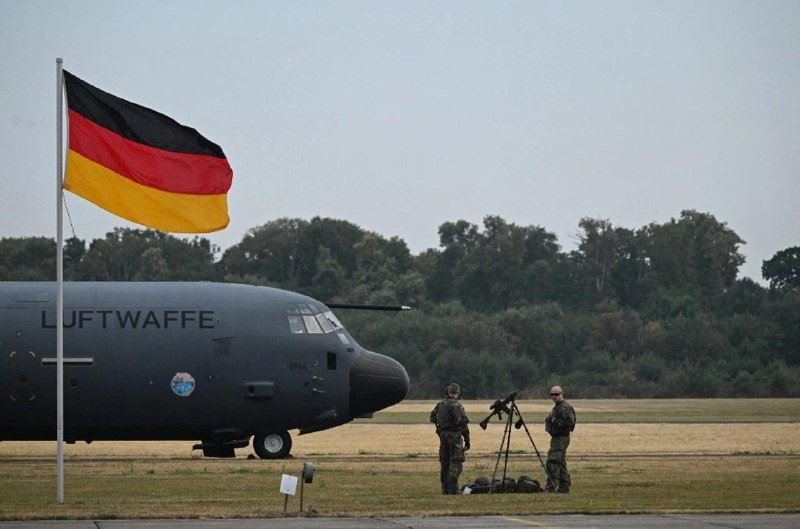
The news cycle on 30 June 2026 ran on three separate clocks, none of them synchronised. By 15:38 UTC, BBC's world feed had already pushed the day'S two most consequential items: the United States Supreme Court's decision to let states ban transgender women from female school and college sports, and a constitutional confrontation in Dakar, where Senegalese MPs moved to clip the powers of President Bassirou Diomaye Faye and demonstrators gathered outside the National Assembly. Less than ninety minutes later, Germany's Federal Office for the Protection of the Constitution (BfV) put a number on something European security services have spent years gesturing at without quite quantifying: nearly 60,000 far-right extremists inside the country, more than a quarter of them classed as willing to use violence.
Read separately, the three stories look like trivia. Read together, they describe the operating environment of the liberal democratic order in mid-2026 — under pressure from a resurgent illiberal right at home, a re-litigated culture war from across the Atlantic, and a sovereign-African state testing whether its own constitution can survive a newly elected president.
Germany's quiet escalation
The BfV figure — "almost 60,000" extremists, "more than a quarter" violent — is not, strictly speaking, a new population. It is a re-count, the agency's best public estimate of the universe it monitors: organised groups, unaffiliated networks, and individuals judged to have crossed the threshold from opinion into preparation. Germany's domestic-intelligence services treat that threshold seriously. The country that gave Europe the word Verbotsverfahren — the constitutional procedure used to ban a party outright — now treats the tracking of pre-political violence as the line that matters most.
The under-stated point is what the number does not say. The BfV does not enumerate voters, sympathisers, or the much larger pool of citizens who consume the same media ecosystem as those it counts. The 60,000 figure is the hard core; the soft periphery is the political problem. That periphery was visible in January 2024 in the Correctiv reporting on the Potsdam meeting, in the AfD's state-level polling, and in a series of local-election shocks in eastern German states since. The BfV's job is to alert; the rest is the Federal Criminal Police Office's, the judiciary's, and ultimately the ballot box's. Germany's institutional answer to the threat has been procedural — designation, surveillance, and where the evidence holds, prohibition — rather than rhetorical. That posture is itself a story.
Washington's culture war, exported by judicial decree
The Supreme Court's transgender-athletes ruling, delivered the same day, reads in Washington as the latest instalment of a long-running domestic argument. In Berlin, Brussels, and The Hague, it lands differently. The decision effectively blesses a patchwork in which individual US states set their own rules on who competes in women's and girls' sport, while the federal courts stay out. For European regulators negotiating everything from hormone-testing protocols in World Aquatics to the eligibility criteria for the 2028 Los Angeles Olympics, the ruling is a reminder that the trans-Atlantic conversation no longer has a shared vocabulary.
The reading the ruling invites in most European coverage — that the United States is exporting a more restrictive gender framework — is partly correct and partly incomplete. The Council of Europe and several member states were already moving toward tighter sport-eligibility rules before the ruling; the court's decision simply removes a constitutional floor for American jurisdictions to do likewise. The deeper shift is procedural: an issue that until 2022 sat primarily in sporting federations has been pulled into constitutional adjudication, which is a slower and more permanent kind of settlement than any rule change from World Rugby or the IAAF.
Dakar's constitutional hour
In Dakar, the news arrived through a different instrument. Senegalese MPs — a majority in the National Assembly — agreed on proposed changes that would limit the presidency of Bassirou Diomaye Faye, the anti-establishment candidate who won a March 2024 election that voters across West Africa read as a generational verdict on the country's old guard. Protesters gathered outside parliament almost immediately. The details of the proposed amendments remain in summary form in the public reporting; the political shape is clear. A young president with a thin legislative buffer is being checked by a parliament that owes its arithmetic to the same coalition dynamics that put him in office.
Senegal's constitutional conversation is the African story of the week that Western wires are likeliest to under-cover. The country has long been treated as a West African anchor — a francophone democracy that has handed power between parties without the rupture seen in Mali, Burkina Faso, Niger, and Guinea. That reputation is now under live stress. The Faye government's response, and the street response to that response, will set the terms on which the 2027 legislative cycle opens. Outside powers have so far stayed out of the framing. The lesson from the Sahel is that they tend not to stay out for long.
What the three stories share
None of these events is, on its own, a crisis. The BfV has been publishing extremism tallies for years; the Supreme Court has been narrowing federal authority over state-level social policy for a decade; Senegal's parliament has been a noisy counter-weight to its executive since at least the Wade era. The pattern is in the simultaneity. On a single Tuesday in late June, three different democratic systems disclosed, in three different idioms, the depth of the political pressure they are under.
The harder question is whether the institutional reflexes that have absorbed previous shocks — Germany's Verbotsverfahren machinery, the Supreme Court's incrementalism, Senegal's intra-party bargaining — still match the scale of what is hitting them. The sources available do not resolve that question. They do, however, give the question a date.
— Monexus will track each of these threads separately; together they describe a single, wider contest.