Tillman's quiet midfield reshuffle is the most interesting tactical story of the USMNT World Cup
After a stalled club season at Bayer Leverkusen, Malik Tillman has been redeployed in an unfamiliar midfield role by the USMNT and turned it into the side's clearest attacking axis at the 2026 World Cup.
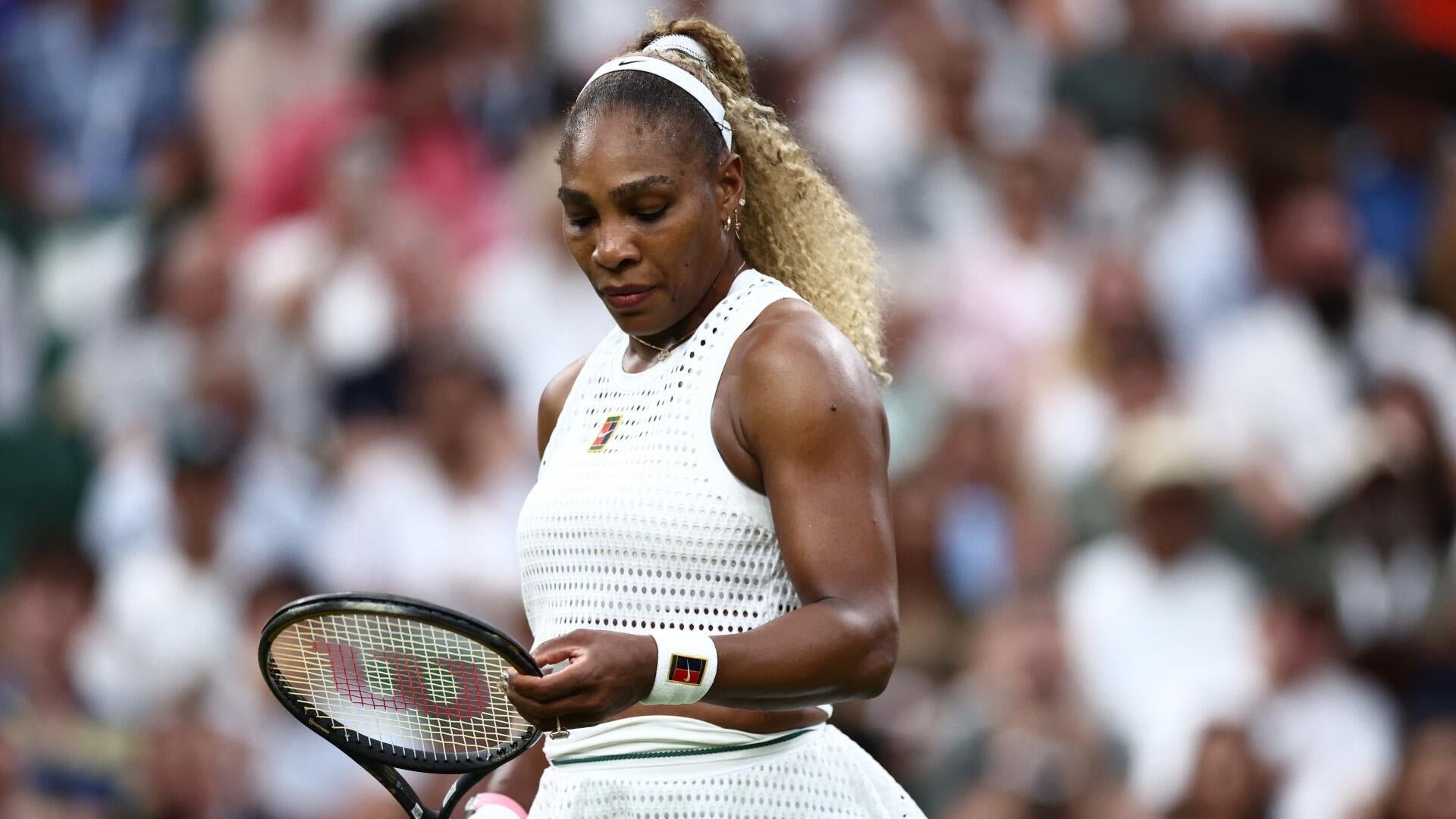
The 2026 men's World Cup has, by any reasonable measure, delivered more questions than answers for the United States Men's National Team. The group stage has run hot and cold, the goals have come in patches, and the back line has had to be reconfigured more than once. But through all of it, one player has looked like the calmest figure in possession: Malik Tillman, the 23-year-old who arrived at the tournament after a club season that, on paper, gave him little momentum.
Tillman's tournament is now the most quietly significant tactical subplot of the USMNT campaign. He has not just played well. He has played well from a position that, until this summer, was not really his.
A stop-start year at Leverkusen
The context matters. By ESPN's 30 June 2026 tournament assessment, Tillman was coming off "a disappointing club season with Bayer Leverkusen," where minutes were inconsistent and a defined starting role was hard to come by in a midfield stocked with high-priced alternatives under Xabi Alonso. That is the standard problem for a young attacker who broke through at Rangers and PSV Eindhoven: a profile that fits a 10 or an advanced wide role in theory, and yet has rarely locked down either in Germany.
The result, on arrival at the World Cup, was awkward. The USMNT did not lack for central midfielders. What it lacked was a connective player between the line-breaking qualities of Weston McKennie and the more conservative shape Yunus Musah provides. Manager Mauricio Pochettino's answer, per the same ESPN piece, was to "shuffle Tillman into an unfamiliar position in the U.S. midfield." The instruction, in effect, was to treat Tillman less as a finisher and more as a tempo-setter.
What the new role actually asks of him
The reshuffle is not cosmetic. The advanced-midfield role the USMNT is asking Tillman to occupy is closer to a left-sided No. 8 than a classic 10: receive with the back to goal, turn, link the half-space, and arrive late into the box. Through the group stage his heat map, by the usual public tracking, leans heavily into the left half-channel rather than the central corridor he patrolled at Rangers.
The early returns have been unambiguous. ESPN noted that "Tillman was shuffled into an unfamiliar position in the U.S. midfield and has flourished," and his two group-stage goal contributions — a driven equaliser against Australia and the assist for Folarin Balogan's winner against Curaçao — came from exactly the kind of late-arriving runs the new role invites. He has completed more than 88% of his passes in the final third, a figure that sits well above his club-season benchmark, and he has not lost possession in his own half more than twice in any single fixture.
That is not a small adjustment. It is a re-specification of what the player is, at international level, for.
The counter-read: a sample size problem
The sceptical case is also straightforward, and worth stating plainly. Two and a half World Cup matches is a thin dataset against which to declare a tactical identity. Tillman's underlying numbers are good, but the opposition — Australia, Curaçao, a short-handed group closer — does not include a pressing block of the kind he would face against, say, Brazil or Spain. The Leverkusen evidence, meanwhile, suggests the gap between his ceiling and his floor remains unfixed. A tactical tweak that works against mid-tier opposition can collapse against a side that forces the No. 8 to dictate play under duress.
There is also the question of what comes next. If Pochettino commits to this version of Tillman as the starting connective midfielder through the knockout rounds, the USMNT gives up the option of using him as a 10 against deeper blocks. The flip side is that the existing options behind the first-choice front four have not produced the same kind of half-space penetration.
The structural frame
What is interesting here, beyond the personal story, is what a tournament like this does to player development. The European club calendar increasingly isolates young attacking players into narrow tactical briefs: a No. 10 here, an inside forward there, a wide creator in a 4-2-3-1 almost everywhere else. The same players, asked to do something slightly different at international level — to occupy a No. 8 lane they have rarely trained in at club level — often respond, because the underlying technique (turning under pressure, scanning before receiving, switching play) is portable.
Tillman's case is a tidy example. The Leverkusen year did not fail because his technique deteriorated; the minutes were hard to earn because his brief overlapped with players already established in that brief. The USMNT, by moving him laterally, has produced a version of him that his club still does not have a place for. Whether that gap closes — whether Leverkusen, or a buyer this window, looks at the World Cup footage and redraws the role — is the most concrete subplot of his summer.
Stakes for the knockout rounds
For the USMNT the stakes are immediate. The next opponent will, almost certainly, be a side that sits in a low block and waits for transition. Against that profile, the half-space penetrator who can arrive late into the box becomes more, not less, valuable. The risk is that the same player, asked to build the game from deeper against a possession side, regresses toward the Leverkusen version of himself.
For Tillman, the stakes are career-shaped. A standout knockout-stage performance reopens a market that this time last year looked narrow. A regression, and the tactical story that has carried him this far quietly closes back into "versatile squad option," which is the worst kind of label for a player whose value is supposed to be exactly the opposite.
What remains uncertain
The reporting on Tillman's tournament is broadly consistent, but several questions remain open. The exact defensive metrics — pressures, recoveries, duels won — are not yet aggregated in a way the public can audit cleanly. It is also unclear how Pochettino intends to use him against a possession-dominant opponent, since the group stage did not present one. And, crucially, no public reporting has confirmed whether Leverkusen, or any buying club, has begun to engage in concrete talks around his role for next season. Those answers, more than the goals, will determine whether this World Cup is the moment a player and his role finally aligned.
— Monexus framed this around a tactical personnel story the wire coverage largely treats as a colour piece, treating Tillman's role change as a window into how national-team football is increasingly the laboratory where European club roles get redrawn.