Tokyo's Old Lead, Beijing's New Reach: The Quiet Re-Wiring of the Chip-Materials Map
As Chinese suppliers close the gap on a $73bn chip-materials market, Beijing's narrative offensive against Japan's 'militarism' is finding the audience Tokyo feared — and the two tracks are starting to collide.
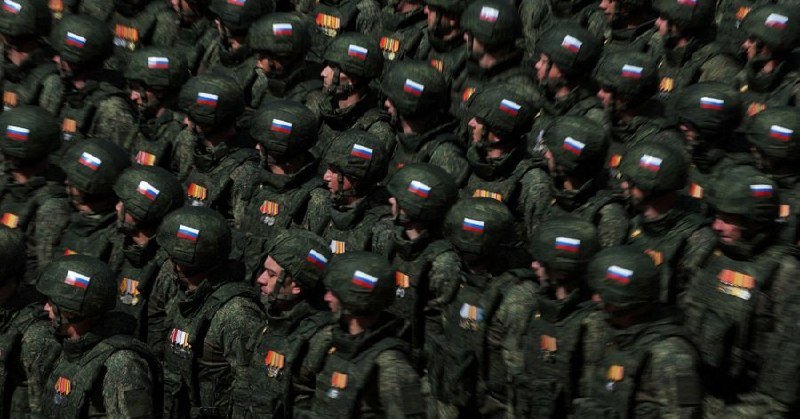
On 30 June 2026, two stories crossed the wire from Tokyo and Beijing that, taken together, sketch the next phase of the regional contest most likely to define the second half of the decade. The first, reported by Nikkei Asia, describes Chinese chip-material manufacturers scaling up production of cutting-edge inputs to compete with the long-dominant Japanese suppliers in a market Nikkei sizes at $73bn. The second, also Nikkei Asia, documents how China's framing of Japan as engaged in a "new militarism" is spreading beyond the usual partners in Moscow and Pyongyang to a wider circle of states friendly with Beijing.
Read separately, these are a supply-chain story and a diplomacy story. Read together, they describe a single object: a maturing Chinese industrial base that is beginning to challenge Japan's most protected high-end niche, paired with a narrative offensive calibrated to make that challenge politically easier at home and abroad.
The market Beijing is trying to take
For three decades, Japanese companies have held a near-monopoly on the most demanding inputs of advanced chipmaking — photoresists, high-purity hydrogen fluoride, silicon wafers, abrasive slurries, the unglamorous chemistry that determines whether a 3-nanometre line yields or doesn't. According to Nikkei Asia's 30 June 2026 report, that monopoly is no longer treated as secure inside China. Domestic materials producers are pouring capacity into the cutting-edge tiers and pitching themselves, state support in hand, to Chinese fabs that previously had no choice but to import.
The figure to anchor on is the $73bn annual market — not the size of the Chinese slice today, but the size of the prize. If Chinese suppliers can capture even a third of domestic demand at the cutting edge, the arithmetic for Japanese incumbents changes from "premium pricing in a stable customer base" to "defending share against a subsidised competitor at home and losing share abroad to the same competitor in Southeast Asia." Tokyo's edge was never just chemistry; it was the trust that comes from a thirty-year defect-rate record. That lead is real. It is also, for the first time, no longer expanding.
The narrative Beijing is selling
Industrial catch-up is one thing; making it politically acceptable is another. The second Nikkei Asia report from 30 June 2026 — dated 06:31 UTC — records that Chinese assertions about Japanese "militarism" are no longer confined to Russian and North Korean echo chambers. The framing is travelling further. Nikkei does not specify the full list of states now receptive to the line, but the trajectory matters: a wider audience for a critique that, until recently, Beijing reserved for its closest partners.
The story for Tokyo is uncomfortable. A Japanese export-control regime that tightens the screws on advanced materials and equipment is now operating in an information environment where Chinese state media can pre-frame the policy as revivalism rather than commercial defence. The harder Japan squeezes, the louder the narrative becomes — and the more receptive the global audience, particularly in the developing world that is being courted as a customer base by Chinese suppliers.
The structural pattern
What looks like two stories is a single pattern wearing two outfits. Industrial-policy offensives and narrative offensives run on the same calendar: capacity scales up just as the diplomatic case against the incumbent is being widened. The pattern is not new — it has been visible in solar, batteries, and increasingly in electric vehicles — but the chip-materials tier is the highest-leverage deployment yet. Lose photoresists and you don't just lose a $73bn market; you lose the choke-point that has given Tokyo its single most consequential seat in the technology table.
The Japanese counter is constrained. Domestic demand in Japan is too small to absorb incremental capacity at the rate Chinese suppliers are adding it; the customer base that matters sits in Taiwan, South Korea, and increasingly mainland China itself. Tokyo can lean on alliance politics — coordination with Washington and The Hague on export controls — but it cannot out-subsidise a state-backed competitor inside the Chinese market, where its customers are also under political pressure to localise.
Stakes and what remains uncertain
If the trajectory holds through 2027, Japanese materials suppliers face a market that is structurally smaller in real-margin terms, even if nominal volumes hold up: a price-compressing competitor inside China, slower growth in legacy nodes as Chinese fabs leapfrog into more advanced production, and a diplomatic climate that treats their home government's export controls as aggression rather than prudence. The upside for Beijing is the inverse — a deeper industrial base, more diplomatic leverage, and the ability to argue, inside the developing world, that the Western-aligned technology stack is a coalition against them rather than a neutral utility.
What remains genuinely uncertain is the speed. Chinese suppliers have caught up on headline specifications before; the harder test is yield, contamination control, and the long defect-rate tail that Japanese suppliers built over decades. Nikkei's reporting establishes that the catch-up attempt is real and resourced; it does not establish that the gap has closed. The other unresolved question is the audience for the militarism framing. A wider circle of receptive states is a documented shift; whether that wider circle includes governments with the standing to shift equipment-purchase decisions is a different question, and one the public reporting has not yet answered.
The two stories will continue to be filed separately. They should be read together.
Desk note: Monexus framed the chip-materials story as an industrial contest with diplomatic tailwinds, not as a security panic — and gave Beijing's positioning the structural seriousness its state media outlets claim for it, while letting Nikkei Asia's sourcing carry the analytic weight.
Wire provenance
This editorial synthesis draws on the following public wire/social posts:
- https://t.me/NikkeiAsia
- https://t.me/nikkeiasia