Trump to gas stations: drop prices, or "big problems"
The White House has combined a public ultimatum to station operators, a Justice Department referral, and a right-to-repair memorandum into a single week's economic signalling — and the message is as much about the retail fuel market as it is about who controls it.
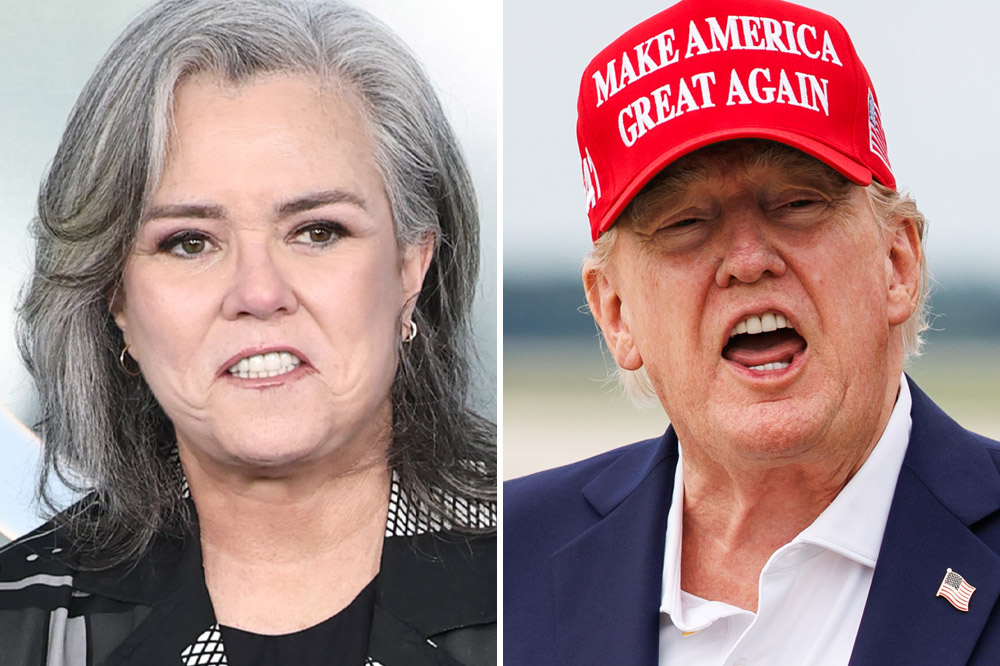
At 01:04 UTC on 30 June 2026, an account pulling from the Polymarket live-wire feed posted a two-line dispatch: President Donald Trump was demanding that U.S. gas stations drop prices immediately and warning of "big problems" if they refused. Twelve hours earlier, the same account had logged a separate Trump statement calling on Americans to report any gas price gouging and confirming that he had asked the Department of Justice to open an investigation into the practice.
Read together, the two messages describe a White House that has decided retail fuel margins are a political target — and that the operators of America's roughly 150,000 branded stations are now on notice, with the nation's antitrust machinery queued up behind the tweet.
The fuel retail industry earns its money from three places: the gasoline margin (the spread between wholesale cost and pump price), the diesel margin, and the shop — convenience-store sales, car washes, ATM fees. Margin on gasoline is famously thin, measured in cents per gallon. Public campaigns that focus on the pump price tend to assume, correctly or not, that there is slack to give back. The framings circulating this week leave that question to the station owners and the refiners that supply them.
A separate economic signal sits inside the same news flow. At 23:46 UTC on 29 June, a third post surfaced a remark attributed to the same office on a different commodity entirely: "I don't want to drive housing prices down. I want to drive housing prices up." The juxtaposition is the story. The administration has picked out two large consumer categories — what drivers pay at the pump and what buyers pay for a house — and signalled that it wants the first lower and the second higher. That is a coherent political preference; it is also a tension the Federal Reserve and the Treasury have spent two years trying to manage.
The legal vehicle: DOJ, the FTC, and a thirty-year-old statute
The operative statute behind a "gouging" referral is the federal Petroleum Industry Practices Act and, more practically, the FTC Act's unfair-methods-of-competition provisions. State attorneys general — not federal ones — investigate retail gasoline under most state-level price-gouging statutes, which typically trigger on a declared emergency. There was no federal emergency declaration accompanying the 16:37 UTC post. What the President appears to be requesting is a federal antitrust inquiry into whether station operators, refiners, or marketers have coordinated to hold prices above a competitive level.
That is a tall ask. Wholesale gasoline prices follow the futures curve on the New York Mercantile Exchange and the cost of crude. Retail prices follow wholesale prices with a lag and a markup. Demonstrating collusion in that market has historically required either a recorded conversation, an internal email, or a smoking-gun whistleblower — not a political demand that the price fall.
The threat of "big problems" for station operators is less legal than commercial. Federal fuel-economy and emissions rules, Renewable Identification Number compliance, and access to the Strategic Petroleum Reserve all run through the executive branch. A retailer choosing to absorb margin to stay friendly with the White House faces a different calculus from one choosing to defend its balance sheet.
Right to repair, signed the same evening
At 23:04 UTC on 29 June, Polymarket posted that Trump had signed a memorandum backing Americans' right to repair their own vehicles. Reuters confirmed the memo at 22:35 UTC the same day. The two stories belong in the same paragraph: a presidential economic agenda that reaches from the price of a gallon at the pump to the price of an OEM replacement part. Independent repair shops and consumer-rights groups have lobbied for years against what they describe as manufacturer lock-out — encrypted modules, paired parts, software gates. The auto manufacturers have argued that emissions compliance, cybersecurity, and crash-safety standards justify the restrictions.
Neither the Polymarket wire post nor the Reuters short item specifies the exact text of the memorandum. Past federal right-to-repair executive actions have directed the FTC to enforce against restrictions on independent repair. The mechanics of this one will be in the implementing rulemaking, not the signing statement.
What the operators say — and don't say
The trade body for fuel retailers in the United States is the NATSO and the SIGMA associations, representing truck stops and fuel marketers respectively. As of this writing neither has issued a public response to the ultimatum captured in the 01:04 UTC post. Their members' defence, when pressed, is that margins on gasoline are already at or below the cost of capital, that the real money is in the convenience store, and that retailer closures would actually push pump prices higher by thinning out the network.
The refiner side, organised under the American Fuel & Petrochemical Manufacturers, makes a different argument: that the crack spread — the difference between a barrel of crude oil and the gasoline refined from it — is set on a global market and not under any refiner's control.
Both arguments are defensible. Neither industry has yet had to defend itself on the timeline the President has set.
The structural frame
A sitting government publicly demanding that a downstream retail sector lower its prices is unusual, but not unprecedented. The Nixon-era wage and price controls of the early 1970s operated the same way and ended in distortions — shortages, long queues, and a partial retreat within two years. The policy lever in this episode is not a price ceiling but the threat of regulatory attention across multiple files simultaneously: an antitrust referral on margins, a right-to-repair directive that pulls at OEM revenue, a housing-price preference that pulls at mortgage rates via the Fed, and a separate security-and-monuments declaration earlier the same evening (21:16 UTC on 29 June) that puts federal prosecutorial weight behind property crimes against federal installations in Washington.
The pattern is the same as it has been: an administration that prefers to govern by direct, public statement across many files at once, with agency machinery lined up behind whatever the statement is on that day.
Stakes
For the consumer, the near-term question is whether pump prices move. They may, briefly, on a voluntary retailer response to the political pressure. They will then re-anchor to the wholesale benchmark. For the investor, the question is which of the public promises becomes a rulemaking — repair access, an antitrust consent decree, a federal fuel-economy change — and on what timeline. For the Federal Reserve, the harder question is whether the demand to drive housing prices up while energy prices fall is operationally compatible with a 2% inflation target, or whether the administration has effectively conceded that the dual mandate's inflation leg will be satisfied by cheaper fuel instead of by the fund rate.
The sources reviewed here do not resolve those questions. They record that the demands were made. What comes next will be in the Federal Register, not on the wire.
This article was prepared by Monexus staff from publicly available wire items dated 29–30 June 2026; it relies on the cited Polymarket and Reuters items as the primary record of the President's statements and on no other input.
Sources
- Trump: I don't want to drive housing prices down. I want to drive housing prices up — X / Unusual Whales, 29 June 2026
- Trump has said that Americans should report any gas price gouging. Recently, he requested the DOJ to investigate. — X / Unusual Whales, 29 June 2026
- JUST IN: Trump signs memo backing Americans' right to repair their own vehicles. — X / Polymarket, 29 June 2026
- Trump signs memo making it easier for Americans to fix own vehicles — Reuters, 29 June 2026
- JUST IN: Trump reveals security is watching nearly 70 D.C. monuments, statues, & fountains "very carefully" & warns attackers could face up to 10 years in prison. — X / Polymarket, 29 June 2026
- JUST IN: Trump reveals he has the "highest poll numbers ever" — even higher than his 2024 Election Day. — X / Polymarket, 29 June 2026
- JUST IN: FBI & CIA officials are reportedly resisting Trump administration demands for a master list of suspected foreign spies, fearing it could compromise sensitive operations. — X / Polymarket, 29 June 2026
- JUST IN: Trump is demanding gas stations drop prices immediately, warning there will be "big problems" if they do not. — X / Polymarket, 30 June 2026
Wire provenance
This editorial synthesis draws on the following public wire/social posts:
- https://x.com/polymarket/status/2071724179414540288
- https://x.com/unusual_whales/status/
- https://x.com/polymarket/status/
- https://x.com/unusual_whales/status/
- https://x.com/polymarket/status/