The Long Arm: How Ukraine's June 30 Strikes Reset the Drone Calculus
Within a single hour on 30 June 2026, Kyiv confirmed a second strike on Russia's largest space-communications node in Dubna while London moved to rewrite the legal rules of the drone war. The combination tells a story the front pages haven't caught up to yet.
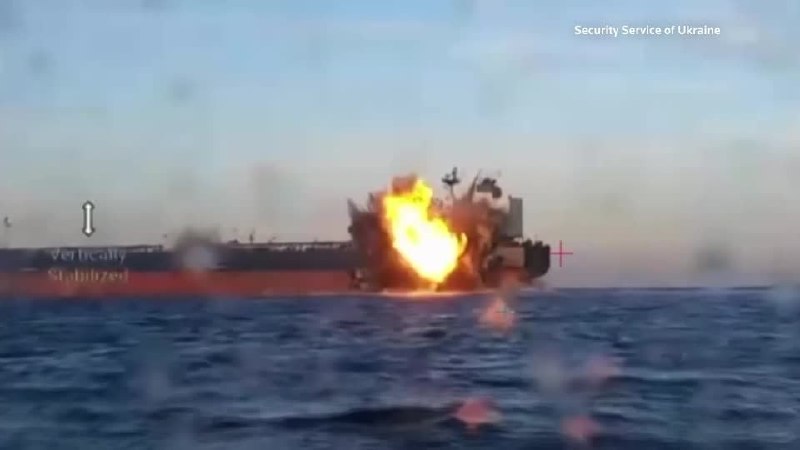
On 30 June 2026 at 18:03 UTC, President Volodymyr Zelenskyy confirmed that the Ukrainian Armed Forces had struck the largest space communications centre in Dubna, in the Moscow region — the second such hit inside a month. By 17:58 UTC the same day, the United Kingdom had moved to amend its Armed Forces Bill in direct response to the rising tactical use of drones by the Russian military. And by 17:18 UTC, Ukrainian military leaders were publicly preparing for a renewed Russian push into the Chernihiv region, hardening defences and coordinating forward positions. Three announcements, four-and-a-bit hours, one picture: the war on the ground is no longer the war in the air, and the legal architecture is scrambling to catch up.
The point worth stating plainly is this. Ukraine is not merely absorbing Russian drone barrages; it is now exporting the same logic back into Russian rear-area infrastructure, at a tempo that has forced a NATO member-state to legislate its way into the new aerial environment. The story of this summer's drone war is being written in Moscow oblast, not in Donetsk.
Dubna, again
Dubna is not a battlefield. It is a scientific city north of Moscow, home to the Joint Institute for Nuclear Research and, more relevantly here, one of Russia's primary space-communications nodes. The fact that Ukrainian long-range systems have reached it twice in thirty days tells you two things at once. First, that the geographic limit of Ukrainian strike options has moved decisively past the old 200-kilometre envelope into something the Russian civil-defence establishment has no playbook for. Second, that Kyiv is willing to spend scarce deep-strike capacity on communications and command infrastructure rather than purely on fuel, ammunition or troop concentrations — a doctrinal choice with consequences for the Russian general staff's ability to coordinate anything at distance.
The June 30 strike lands in the same operational week as Ukrainian preparations in Chernihiv. If Russian forces are being readied for an offensive across the northern border, the value of degrading Russian satellite and relay capacity inside the Moscow region compounds quickly. Long-range fires and frontline defence are not separate programmes; they are the same programme, viewed from opposite ends of a tube.
The UK legislates the air
The UK is responding to the increasing threat posed by drones, particularly in light of the Russian military's tactics, by introducing new measures through the Armed Forces Bill. That single sentence, drawn from official London framing, carries more weight than it appears to. Britain's existing force-projection and rules-of-engagement law was written for a world of manned aircraft and, in extremis, cruise missiles. A conflict in which a £500 first-person-view quadcopter can knock out a £45 million armoured vehicle rewrites the cost curve that the law was drafted against.
Two questions follow. What new authorities does the Bill actually create — expanded counter-drone tasking for the Royal Air Force, looser rules of engagement over British and allied bases, fresh procurement authorities? The current public framing is broad. And second, why now, four years into a war that has been visibly drone-led since at least 2023? The honest answer is that parliamentary reform cycles move slowly and the threat has been visibly accelerating, not newly arrived. London is ratifying a reality that has been true for some time.
Chernihiv and the northern axis
Ukrainian forces are preparing for a potential Russian offensive in the Chernihiv region. This preparation includes strengthening defences and coordination with local authorities. That phrasing — "preparing", "potential", "coordination" — is the correct register. It neither panics nor pre-empts.
Chernihiv was hit hard in the opening weeks of the full-scale invasion in 2022. A renewed thrust there would test Ukrainian reserves that have been committed elsewhere, would open a flank that has been quiet long enough to gather political weight, and would oblige Kyiv to choose between reinforcing the north and sustaining its deep-strike campaign against Russian rear infrastructure. The two demands are not in tension by accident. They are the same resource, allocated.
What the picture actually shows
Three threads on the same day do not a strategy make. But they do establish that the burden of proof has shifted. For most of 2022 and 2023, the Western analytic line was that Ukraine was fighting defensively, with Western-supplied systems, on its own territory, against a numerically superior invader. That much remains true and is the framing any honest piece must lead from.
What is new in mid-2026 is the direction of pressure. Ukrainian deep strikes are landing on Russian space and communications nodes. A NATO parliament is rewriting its force law to deal with the drone threat Russia has popularised. And the Ukrainian general staff is publicly signalling that it expects to be hit again in the north. The initiative — contested, partial, expensive — is no longer entirely Moscow's.
The sources disagree about scale and tempo. Telegram-channel reporting on strike damage is, by its nature, immediate and unverified; what reaches Kyiv Independent and the Ukrainian air force the following morning may be larger or smaller than first claims. The Russian picture is opaque by design. None of this means the underlying pattern is wrong. It means the precise contours will take weeks to firm up.
What can be said is that on 30 June 2026, Ukraine struck twice at Moscow's communications depth, Britain moved to legislate the air, and Kyiv braced for a northern assault. The drone war has moved up the escalation ladder. The legal and strategic architecture is still climbing after it.
How Monexus framed this vs the wire: the day-of-event news lines will treat these as three separate stories — a strike, a bill, a defence posture. Monexus is treating them as one, because that is how the actors are treating them.
Wire provenance
This editorial synthesis draws on the following public wire/social posts:
- https://t.me/s/OSINTdefender
- https://t.me/s/OSINTdefender
- https://t.me/s/OSINTdefender