World Cup 2026: predicting the bracket two years out
A single trophy emoji from FIFA and The Athletic on 30 June 2026 has reignited the long-cycle business of picking a winner. The arithmetic has not changed since Dallas.
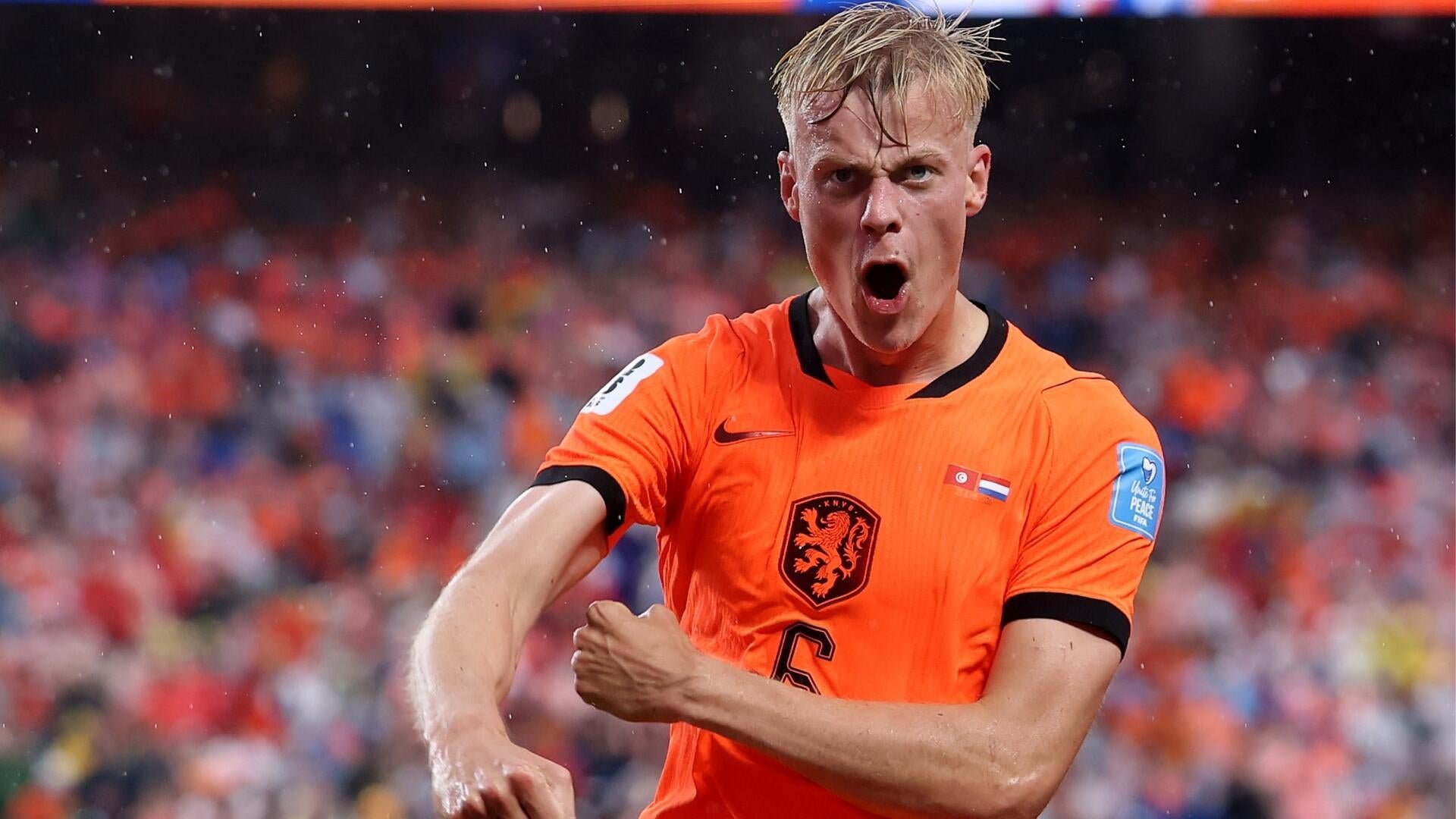
At 13:09 UTC on 30 June 2026, FIFA's verified channel and The Athletic's desk both posted the same two-word message: "Prediction... 🏆 #FIFA." The trophy emoji is the only substance. The markets, the federations and the bookmakers have spent two years trying to fill the rest of the sentence, and the answer has not moved much since the 2022 final in Lusail.
Strip away the fandom and the World Cup is a four-week stress test on a small set of structural variables — squad depth, injury risk to a handful of irreplaceable forwards, refereeing variance, and the refereeing of the weather. None of those resolve in late June. The question worth asking is why the prediction economy hums so loudly for a tournament whose fundamental inputs are still this soft, and whether the wires that publish these forecasts are doing anything more than packaging the consensus of a small London modelling shop into four neatly typeset brackets.
The state of the market
Pricing on the 2026 winner is anchored, as it has been for most of the post-2022 cycle, by the European contenders. France, England and Brazil sit in the top tier of every major sportsbook's outright market, with Argentina a notch below as the defending champion and Germany hovering as the perennial value pick. The exact numbers drift week to week, but the ordering does not. Spain has climbed since the 2024 European Championship; the Netherlands has slipped back to the chasing pack. The United States, as co-host, is a long shot whose odds compress in cycles around each home-soil tournament and then expand again once the squad sheet is published.
The Athletic's daily bracket, the format FIFA itself chose to amplify with the simultaneous trophy-emoji post, is built for engagement, not forecasting. The exercise rewards bold calls — a finalist from outside the top eight, an early exit for a European heavyweight — that generate more reader time-on-page than a sober copy of the bookmaker's favourite. That is not a criticism. It is the business model. But it explains why the same two predictions tend to travel around the world inside a 24-hour news cycle: the bold call, the safer call, and the implied "or maybe both."
Counterpoint: the format itself
The expanded 48-team field changes the arithmetic. Group-stage variance, historically the great equaliser, is now diluted across three matches in a six-team pool where qualification can be sealed with a single win and a couple of goal-difference goals. The knockout rounds start later, and the path through to the final now runs through one extra match. For elite squads that means more rest between fixtures and a deeper bench tested over a longer run. For underdogs, it means the door to the round of 32 is wider, and the door to the quarter-finals is no wider at all.
This is the structural point the marketing copy around the expansion avoids. More teams, more matches, more tickets sold — and a tournament that, on the margins, slightly favours the side that already had the deepest squad. The prediction shops in London and Lausanne have quietly adjusted their models for this. The Twitter brackets, almost none of them.
What a serious forecast looks like
Three variables actually move the trophy from one capital to another. The first is minutes managed for the irreplaceable attacker — Kylian Mbappé, Vinícius Júnior, Jude Bellingham, the Brazilian nine who has not yet been definitively identified — and whether the federation's medical staff treats the group stage as a load-management exercise. The second is the single high-variance refereeing decision per knockout round, which has decided more than one of the last six finals on review. The third is the climate band. Late-June kickoffs in the southern United States, even with evening slots, push the effective pace of play downward in ways the data on European summer football does not fully capture.
A serious prediction, then, is less a pick than a hedge: the favourite whose squad depth survives the new format, with a note on the most likely upset route through the bracket. The Athletic and FIFA are not offering that. They are offering the starting gun for a four-week prediction contest whose prize is engagement and whose currency is the trophy emoji.
Stakes and the road to 2026
What is genuinely at stake, beyond the trophy, is the off-pitch scoreboard. Host-city delivery on infrastructure, broadcast rights renewals for the next cycle, the political temperature around a tournament staged across eleven US venues with three in Mexico and two in Canada, and the unresolved questions over player welfare in a 104-match schedule. None of those resolve in a bracket post. They will resolve, or fail to, in the eighteen months between this emoji and the opening whistle.
How Monexus framed this: the wire desks treated the dual post as a soft launch for prediction content. We read it as a reminder that the structural inputs to a World Cup forecast — format, squad depth, climate, refereeing variance — are more legible now than they have been since 1998, and that the prediction economy has not yet caught up.
Wire provenance
This editorial synthesis draws on the following public wire/social posts:
- https://t.me/FIFAcom
- https://t.me/TheAthletic
- https://en.wikipedia.org/wiki/2026_FIFA_World_Cup
- https://en.wikipedia.org/wiki/2022_FIFA_World_Cup_final