Beccacece out as Ecuador manager hours after Mexico humbles La Tri
Sebastian Beccacece walks away from the Ecuador job hours after a 2-0 group-stage defeat to host Mexico, capping a turbulent qualifying campaign that leaves the federation hunting for a new manager before the knockout rounds.
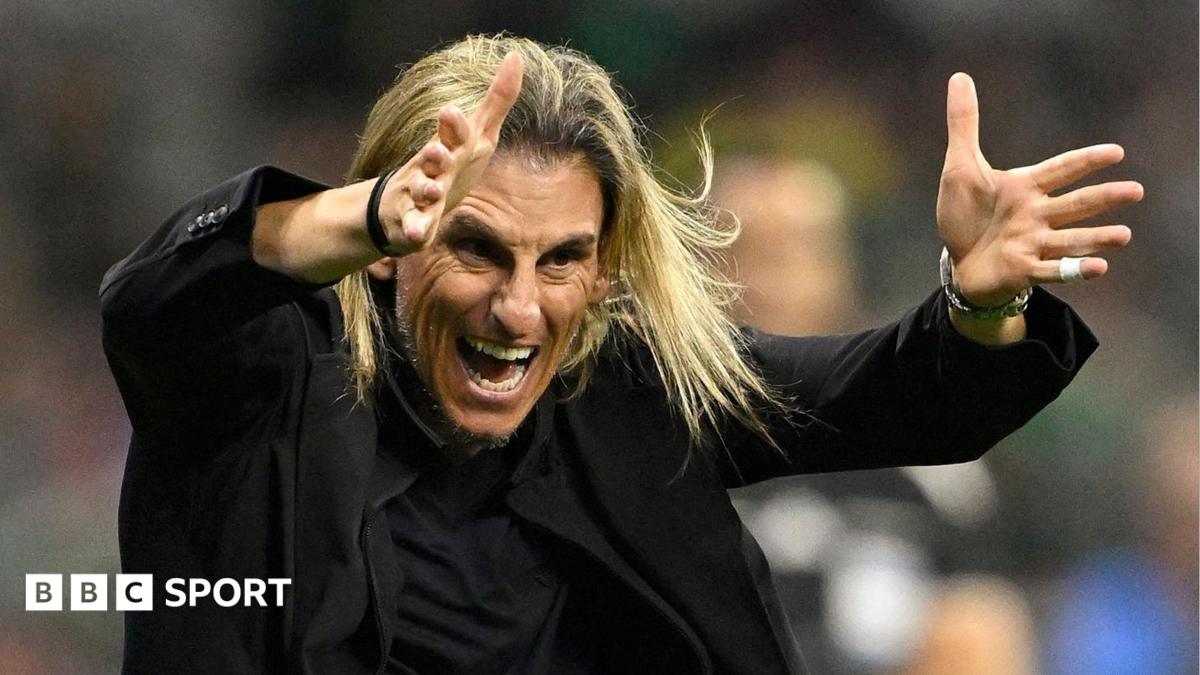
Ecuador's World Cup campaign effectively ended on 1 July 2026 at a raucous Estadio Azteca, where Mexico eased past La Tri 2-0 to seal top spot in the group and send the South American side packing in the opening round. Within hours, head coach Sebastian Beccacece told the Ecuadorian federation he would not continue, confirming what had looked inevitable from the moment the final whistle sounded. The 44-year-old Argentine had been in the post since 2024, parachuted in to stabilise a project that had wobbled through a difficult qualifying cycle, and his exit leaves the federation hunting for a permanent replacement before the next competitive window.
Beccacece's resignation is the natural punctuation on a campaign that began with promise and curdled under the weight of expectation. Ecuador arrived in Mexico as one of CONMEBOL's four automatic qualifiers, fresh from a run that included a bruising draw with Brazil and a competitive showing against Argentina, but the margins for error inside a hostile group were never generous. Beccacece knew it. "We knew the difficulty of the group," he said on the touchline after the Mexico defeat, according to BBC Sport, framing the loss as the product of a brutally unforgiving draw rather than a tactical collapse.
A group stage that went the wrong way
Mexico's opener came inside the first half, with El Tri asserting the kind of territorial dominance a host nation is expected to bring to its own party. The Transfermarkt wire summarised the match as a comfortable Mexican first-half performance in which the host "beat Ecuador in the first half" and converted that pressure into a 2-0 cushion Ecuador never seriously threatened. Beccacece's side, which had arrived with a low-block blueprint designed to frustrate, found itself pinned and unable to relieve pressure through possession. The pattern — Mexico on the front foot, Ecuador chasing shadows — held for most of the 90 minutes.
For Ecuador, the defeat confirmed a familiar recent trend: qualifying for the World Cup is one task, surviving the group stage once there is another. The country reached the 2022 tournament in Qatar and exited at the same hurdle, and the 2026 edition has now followed an almost identical script. The structural gap is not secret — Ecuador's player pool remains thin at the elite end, with the bulk of the squad drawn from Liga de Quito, Independiente del Valle and a clutch of European-based midfielders — but the consequences are nonetheless acute, because the federation's contract decisions are usually made within hours of the final whistle, not weeks later.
Beccacece's short, turbulent tenure
Beccacece was hired in 2024 to bring a possession-first identity to a side that had lurched between managers through the back half of the previous cycle. The early returns were encouraging: Ecuador moved the ball with a fluency that had been missing under the previous regime, and a generation of young players — most notably the Independiente del Valle cohort that had just won the Copa Libertadores at club level — slotted into a system that looked, briefly, like the most coherent Ecuador had produced in a decade. Results were good enough to secure automatic qualification, but the underlying numbers suggested a thin margin: Ecuador's expected goals against ranked among the worst of the CONMEBOL qualifiers, and the team relied heavily on set-piece efficiency and goalkeeper Hernán Galíndez to grind out results.
The Mexico defeat exposed that fragility on the biggest stage. Beccacece's possession game requires the central midfield pair to dictate tempo, and against a Mexican side that pressed high and won second balls with authority, the system stalled. The resignation, which BBC Sport framed as Beccacece "leaving his role following his side's World Cup exit against Mexico," allows the federation to begin a clean recruitment process while the competitive calendar still has a window before the next FIFA dates.
What comes next in Quito
The federation's first task is interim management. Assistant staff will likely take training duties through the early-July window while the federation conducts what sources close to South American football expect to be a discreet sounding-out of candidates. The list is short: South American national-team jobs rarely attract foreign coaches with established CVs, and the federation has historically preferred either a homegrown appointment or an Argentine with prior CONMEBOL experience. Either way, the new manager inherits a squad that has just exited a World Cup at the group stage for the second consecutive cycle, a fanbase that travels and spends in expectation of progress, and a federation that will measure the next manager by results against continental rivals rather than friendlies in Europe.
The longer-term question is structural. Ecuador's football economy remains smaller than Argentina's, Brazil's or Uruguay's, and the federation's revenue base — broadcasting, sponsorships, ticketing — does not yet support the kind of sustained technical staff and sports-science investment that the leading CONMEBOL federations treat as table stakes. A World Cup group-stage exit will be used, fairly or not, to argue either for deeper investment or for a wholesale rethink of the player-development pipeline. Both arguments will be made in the coming weeks.
The Mexican performance, meanwhile, suggests that El Tri's decision to invest in a home World Cup has at least delivered the opening act the federation wanted. A 2-0 win over a CONMEBOL qualifier in front of a full Azteca is the kind of result that resets the narrative around a programme that had been written off after a poor run of competitive results in 2024 and 2025. Whether that opening translates into a deep knockout run is a separate question; what the Mexico performance has done, decisively, is end Beccacece's tenure in Quito and put Ecuador's federation back at the drawing board.
Desk note: this article leads with the confirmed exit (BBC Sport, 09:25 UTC) and the result that produced it (Transfermarkt wire, 08:40 UTC), in that order; no speculation about successors is attributed to unnamed sources.
Wire provenance
This editorial synthesis draws on the following public wire/social posts:
- https://t.me/transfermarkt