Three bills, three messages: Congress's aid fight is about more than Israel
Three Democratic moves on Israel's $3.3bn aid pipeline tell a story about 2028, about Gaza framing, and about whether Congress will ever let an incumbent security consensus ossify into silence.
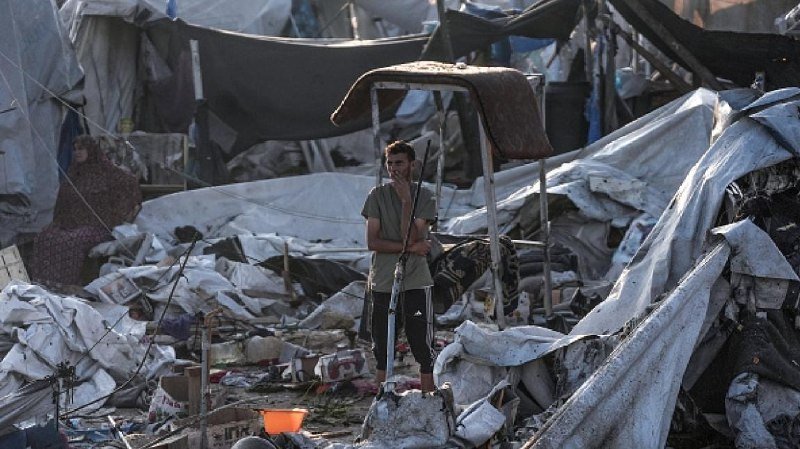
The headlines arrived in a single minute on the morning of 1 July 2026. At 05:03 UTC, a Trump-backed Gaza security force confirmed tactical vehicles had arrived near the Strip. At 05:05 UTC, the World Health Organization said it had evacuated 85 patients and companions from Gaza for treatment abroad. At 05:06 UTC, US lawmakers introduced a bill to halt $3.3bn in military aid to Israel. Read them in isolation and the day looks like noise. Read them as a single wire and a coherent argument emerges: the political weather in Washington is shifting, even as the kinetic weather in Gaza is not.
The staff writer's claim this morning is straightforward. The $3.3bn figure is not a rounding error — it represents the kind of line item that, once contested in committee, becomes the spine of a longer argument about whether unconditional military flows to any government, however close an ally, remain compatible with American domestic politics and international law. The bill is not a vote on Israel. It is a vote on the architecture of the postwar aid regime.
A bill, and what it is not
The text would suspend the specific $3.3bn pipeline, not the broader $3.8bn annual commitment long reported as the baseline figure for US military assistance to Israel. That distinction matters: what is being challenged is the supplemental, the upgrade tranche, the kit that buys new capability rather than sustains existing inventory. In any other bilateral relationship, that is where oversight lives — at the margin, where new systems are funded, not at the floor of legacy commitments. The fact that this is news tells you how rarely the margin gets reached.
The press around the bill tends to frame it as a referendum on the Gaza war. That frame flatters the legislation and obscures the politics. Lawmakers introducing the bill are not making a foreign-policy argument; they are making a domestic one. The audience is the Democratic primary electorate of 2027–28, and the message is that the aid relationship must carry conditions, be reported against measurable benchmarks, and respond to documented civilian-harm findings. Whatever one's view of that audience or that calculus, the bill is real legislation with real co-sponsors, and the wire moved on it first.
The medical-evacuation counterweight
Two minutes before the bill, at 05:05 UTC, the WHO confirmed 85 patients and companions had been evacuated from Gaza for treatment abroad. That number is small. The infrastructure required to move it is not. WHO-coordinated evacuations under the current configuration depend on a chain of approvals involving Israel, Egypt, and a small set of receiving states. Eighty-five people is a single aircraft. Eighty-five people is also the visible tip of a waiting list measured in the tens of thousands: cancer patients, dialysis patients, paediatric cases that the Strip's medical system, after more than a year of bombardment, can no longer absorb.
Place the two dispatches next to each other and the contradiction is the story. A medical-evacuation chain operating at single-aircraft throughput, with measurable backlogs, is being asked to compensate for a sustained healthcare collapse produced, in significant part, by the capabilities the supplemental aid buys. That is not a moral observation; it is a logistical one. It is what the staff writer expects future oversight hearings to lay out in evidence, with names attached.
Structural frame: the open check is the policy
A bipartisan Washington consensus has treated the military-aid pipeline as a feature of the alliance rather than an instrument that can be throttled. Treat the pipeline as infrastructure and a different picture emerges. Every dollar authorised is a dollar that does not need to be re-litigated next quarter; every weapons system funded on a multi-year profile pulls future Congresses into the same vote. The lock-in is the policy. Supplemental tranches are the only point where there is daylight, and they are precisely what this bill targets.
This is the part the cable-news framing tends to miss. The argument is not whether Israel has a right to defend itself; the framing on this publication's pages accepts that as a settled premise. The argument is whether the United States, having decided to be the indispensable external supplier of the relevant capabilities, retains meaningful supervision of how those capabilities are deployed. The bill, in that read, is a request for the kind of reporting relationship that already exists with most other major recipients of US military assistance. The novelty is the recipient.
What remains uncertain
The bill's committee path is the obvious unknown. A suspension of a $3.3bn tranche faces the iron triangles — defence procurement, the relevant caucuses on both sides of the aisle, and the executive branch's institutional reluctance to reopen any foreign-military-sales file. Past efforts to condition aid on specific conduct have stalled in conference or been signed into a form soft enough to satisfy the status quo. None of that guarantees a similar fate here, but it is the base rate.
The wire does not yet specify which lawmakers introduced the bill, the chamber of origin, or the cosponsor count. The accompanying Gaza-security-force report is similarly thin: tactical vehicles near the Strip confirms deployment direction but not composition, rules of engagement, or chain of command. WHO's 85-patient figure is precise but static; we do not know how the queue is moving, or whether the receiving-side capacity is keeping pace. These are gaps that the next 48 hours of reporting will fill.
The stake is not whether one bill passes. It is whether the architecture that has defined the US–Israel military relationship for two decades is treated, in the second half of this decade, as a policy instrument the legislature can adjust — or as a fixed feature of the world, like the dollar's reserve status, that everyone admires and nobody is permitted to touch. The next committee markup will be the first data point.
This publication treats Israeli security concerns as first-order facts and Palestinian civilian harm with equal human weight. The above is a staff-writer take on the politics of one piece of legislation, not an editorial endorsement of its substance.