England's deep squad meets a restless Congo: why Wednesday's friendly is more than a tune-up
A sold-out Wembley fixture framed as a warm-up doubles as a referendum on squad depth, with former DRC defender Gabriel Zakuani pointing to specific weaknesses in the England side.
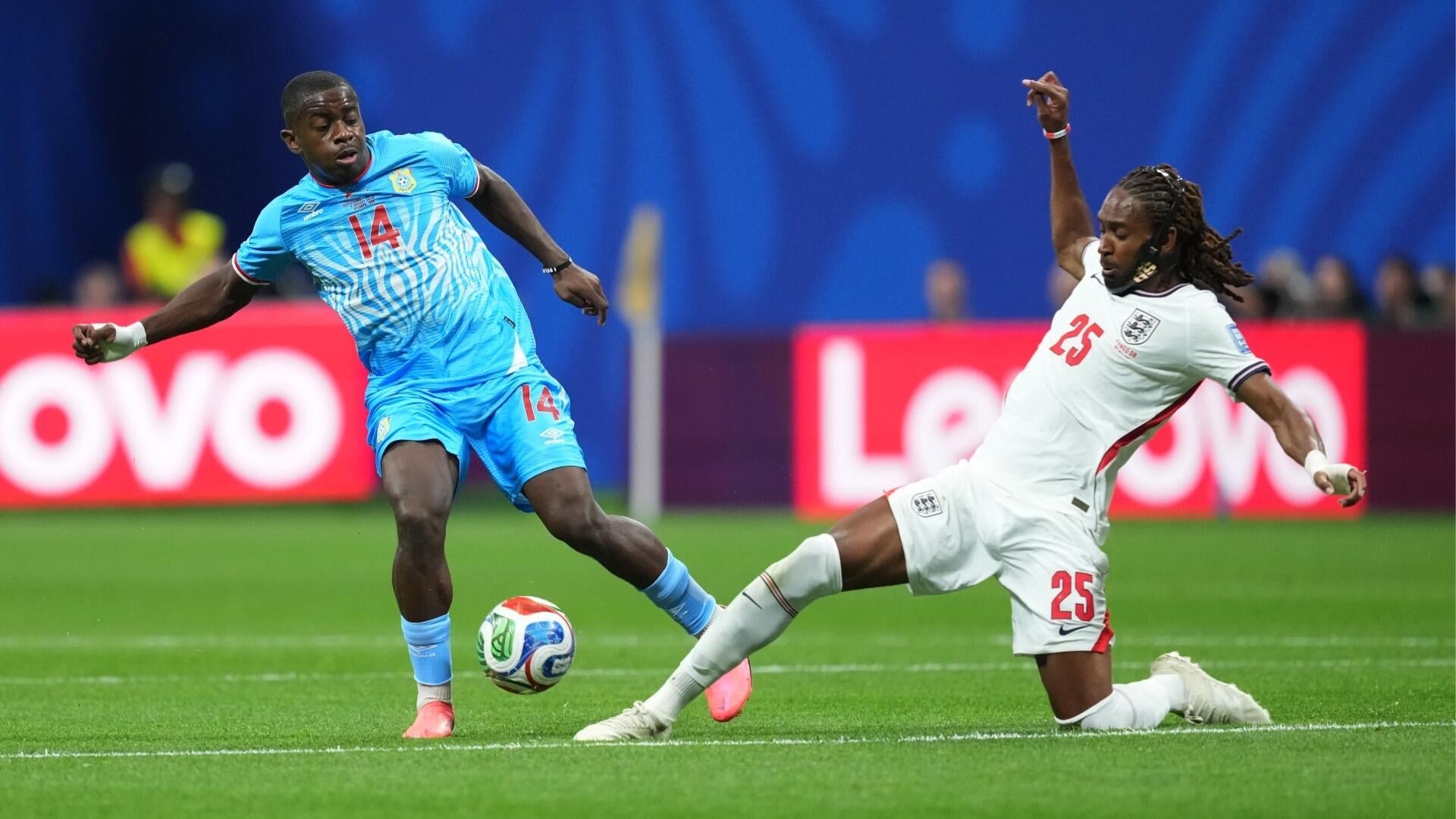
England's men walk into Wembley on Wednesday evening carrying the air of a team that has won most of the fixtures it was supposed to win and heard very little about the ones it has not. The opponent arranged for 1 July 2026 is DR Congo, a side ranked outside the European elite but stocked with players who earn their living inside it. For Thomas Tuchel, the match is the last rehearsal before competitive football resumes in the autumn. For the visitors, it is an audition they did not ask for but intend to take.
The premise of the evening is straightforward: England are deep, talented, and not yet a finished product. DR Congo are athletic, organised, and arrive with nothing to lose. The friendly is a referendum not on whether England can beat a CONCACAF-tier guest at home, but on whether the squad's much-vaunted depth translates into control when the opposition refuses to sit back.
Zakuani's reading
Former DR Congo defender Gabriel Zakuani, who spent the bulk of his club career in English football, was blunt in the Guardian's preview: there are holes. He identified them quickly and without the diplomatic varnish that usually coats pre-match quotes from ex-professionals. The argument is not that England lack quality; it is that depth creates selection questions that have not been fully answered, particularly at full-back and in central midfield where rotation has been constant.
Zakuani's critique carries weight because he has seen both dressing rooms from the inside. He knows which physical thresholds the Congolese players are accustomed to meeting in Ligue 1, the Belgian Pro League and the Championship, and he knows where English defenders habitually switch off. The framing is not the romantic upset story sold by continental federations ahead of every World Cup; it is a structural observation about a team that has rotated heavily and not yet had to defend a settled identity under pressure.
What DR Congo actually bring
The Congolese federation spent the better part of two years rebuilding a programme that had drifted after successive coaching changes. The current squad is anchored by players at European clubs of varying stature, several of them dual nationals who could have represented France or Belgium. That talent floor is what makes the friendly interesting: this is not a curiosity fixture, it is a side whose starting XI would compete in the knockout rounds of most continental tournaments outside Europe and South America.
There is a secondary layer. DR Congo's football federation has used these windows to build competitive metrics ahead of the next Africa Cup of Nations cycle. A clean performance at Wembley, even in defeat, validates a development path that has leaned heavily on European-based diaspora recruitment. The fixture is, in that sense, a board-meeting item as much as a sporting one.
England's structural question
Tuchel's brief since taking the job has been the conversion of squad depth into tactical clarity. The early evidence is mixed. England have scored freely against mid-ranked opposition and laboured against sides that pressed with discipline. The midfield combination that started the spring window is not the combination that finished it, and the manager has used the term "competition" rather than "hierarchy" when describing his selections.
The deeper question, and the one Zakuani's comments sharpen, is whether a squad built for a 26-man tournament can find a settled eleven. Modern tournament football punishes indecision at full-back and central midfield more harshly than at centre-forward, because the supply lines run through those positions. If England cannot name a preferred pairing in either zone by the autumn, the depth becomes a liability rather than an asset.
Stakes and what to watch
The competitive stakes are low. The reputational stakes are not. A controlled win extends Tuchel's honeymoon and validates the rotation; a draw or a narrow loss reframes the narrative around a squad that has not yet had to absorb a punch from a side with both pace and physical maturity. For DR Congo, the ceiling is a result that the continental federation can use to argue for a more prominent seeding band at the next global draw.
The single most important subplot is structural rather than tactical: whether England can dictate the tempo of a match against opponents who will not collapse into a low block after the first goal. The answer will not settle the World Cup debate, but it will tell the staff which of their rotation choices are settled and which still need work.
Desk note: where wire previews tended to frame Wednesday as a ceremonial outing, this publication led with Zakuani's identification of specific selection gaps — the story England will tell about itself if the friendly goes poorly.