France's new cage: Deschamps loosens the leash and Les Bleus run riot
Didier Deschamps used to manage by iron control. Against Sweden he let his forwards think for themselves — and got the most authoritative performance of his reign.
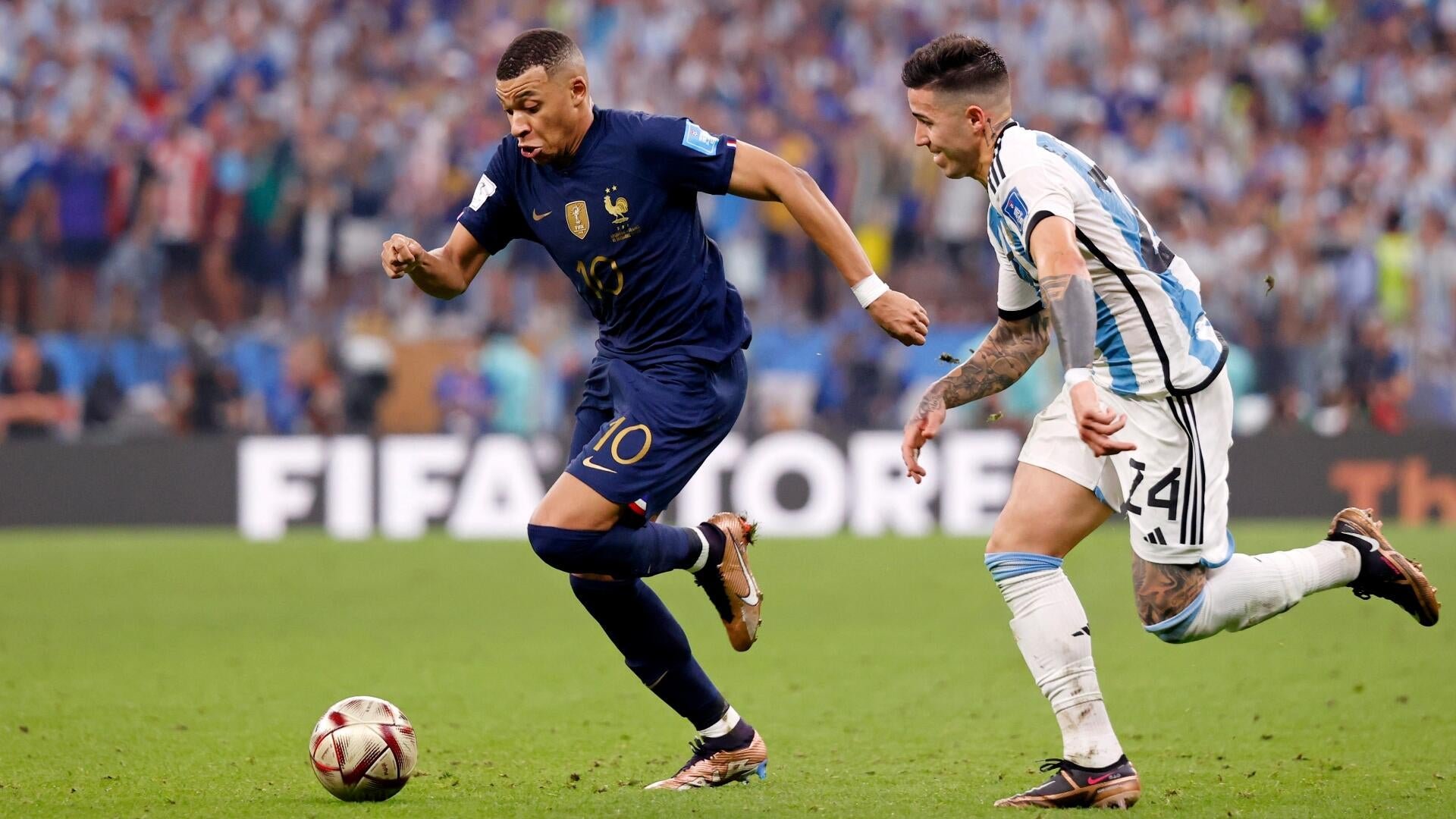
Didier Deschamps has spent his entire tenure as France manager behaving like a man convinced that control beats chaos. At the Stade de France on Tuesday, against opposition strong enough to expose any slack, he did something close to the opposite: he handed the keys to Kylian Mbappé, Michael Olise and Ousmane Dembélé, stood back, and watched them dismantle Sweden in a performance that doubled as the most pointed World Cup statement of the tournament so far.
Mbappé scored twice. The supporting cast played as if they had been told, in no uncertain terms, that the next pass — and the one after that — was their call. France moved the ball at a speed and with a confidence that has been absent from this group's major-tournament football since the long, attritional evenings of 2022. The result, comfortably settled before the hour, leaves Les Bleus top of their qualifying group and, more importantly, leaves their manager with a tactical problem he is unusually happy to have: too many good options, all of them in form.
The Deschamps recalibration
For most of the past decade, France under Deschamps have been a counter-attacking team shaped by caution. Even the 2018 World Cup win — the high-water mark of his tenure — was built on solid defensive structure and the occasional lightning break. The manager trusted a tight spine: Kanté in front of the back four, Pogba or Griezmann in support of a focal striker, and Mbappé asked to do little more than run into space.
That model is now in retreat. With Kanté ageing, Pogba absent and Griezmann transitioning into a deeper, more passive role, the only path left is to overload the front line and let superior technique decide the match. Tuesday was the clearest evidence yet that the manager has accepted the change in his own terms.
The Mbappé-Olise-Dembélé axis
The new shape is built around three attackers who are, in a sense, redundant: each wants the ball, each wants to face goal, each can drift inside or wide. Mbappé, nominally the nine, is operating more as a false striker than a centre-forward; Olise, on the right, is being given licence to chop onto his stronger left and look for combinations; Dembélé, free on the left, is the release valve.
Sweden had no answer for the rotations. France's two goals came from direct Mbappé finishes, but the platform — the half-spaces opened by Olise, the stretch provided by Dembélé — was what made them possible.
The counter-question: can it scale?
The honest counter-read is that Sweden, however respectable a qualifying opponent, are not a serious test of a World Cup-winning team's ceiling. France have, in past tournaments, peaked early against modest sides and then run into walls in the knockout rounds when opponents sit deeper and refuse to chase the game.
Deschamps himself urged restraint. Speaking after the match, he told reporters that the performance was excellent but warned that the level of opposition rises sharply in the business end of any tournament. He has been around long enough to know that a scoreline flatters a team whose defensive structure was, at times, slightly easier to navigate than a France side without the ball in 2018 would have allowed.
The stakes
If the new model holds against stronger opposition, France begin the World Cup as favourites in a way they have not been since 2018. The Mbappé generation has finally been given a tactical identity that suits its qualities rather than its manager's instincts. If it does not hold, the fallback is the familiar one: an ageing squad containing the best player in the world, asked to grind its way through three knockout ties on the back of one moment of brilliance.
The next three matches — against teams who can sit a low block — will say more than Tuesday did. For now, France look like the team the rest of the draw would least like to meet on a good night.
Desk note: Monexus framed this around the tactical shift inside France's camp — how Deschamps' management style is changing — rather than the scoreline, which the wires carried as the headline. The structural question is whether a France team designed to absorb pressure can reinvent itself as a possession-dominant side in the final year before a World Cup.