Google's Nano Banana 2 Lite signals a price war in image generation
Google's Nano Banana 2 Lite ships inside Gemini at near-zero per-image cost, turning generative visuals from a feature into infrastructure and redrawing the competitive floor for everyone from Midjourney to Firefly.
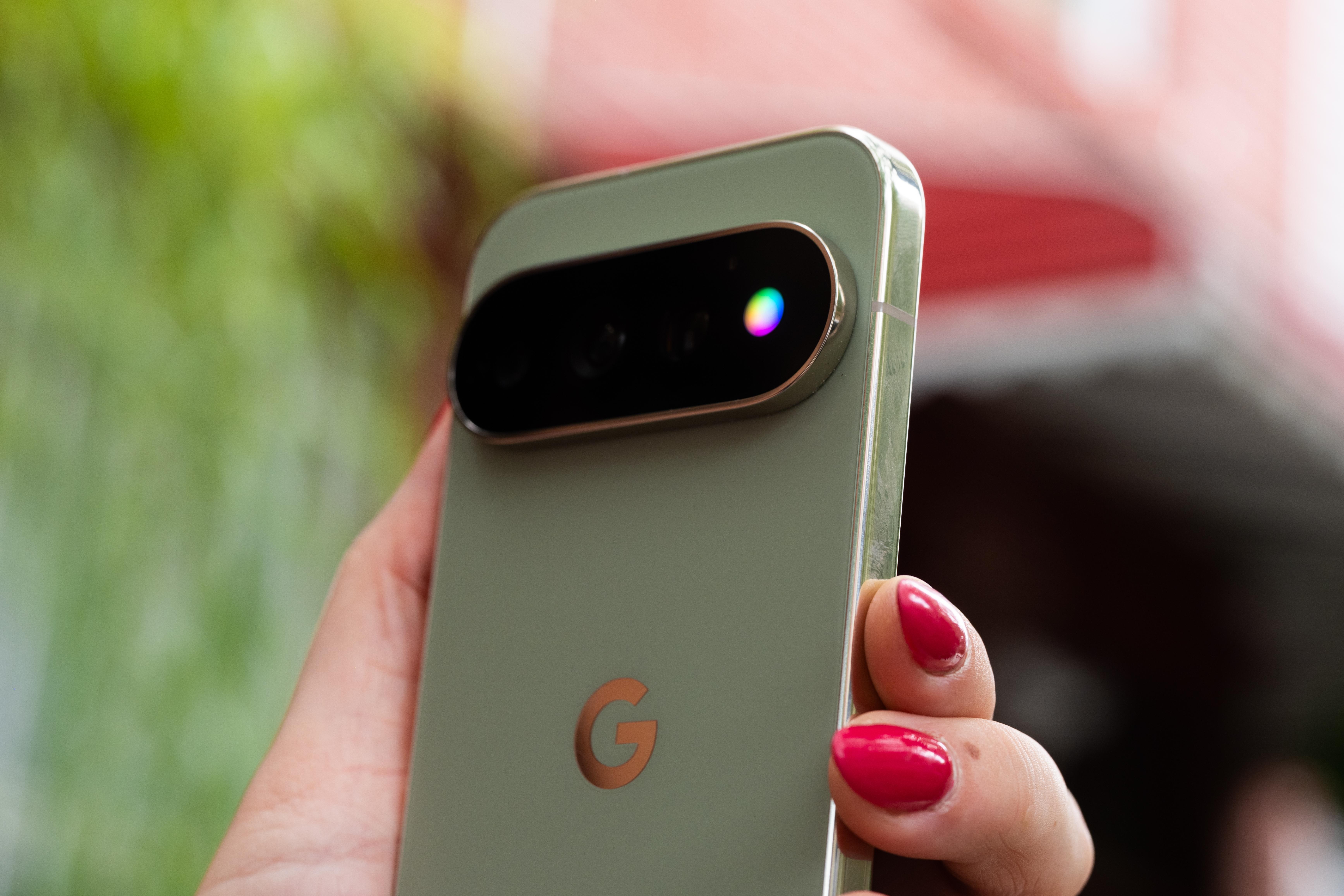
Google shipped a stripped-down image model on 1 July 2026 and priced it like a commodity. The new Nano Banana 2 Lite arrived inside the same update window as the wider Gemini refresh and lands with a per-image cost low enough to make generative visuals a default ingredient rather than a considered expense. Read in isolation, it is a routine product release. Read alongside the rest of the package, it is a price war.
The Lite tier sits inside a stack that already includes the full Nano Banana 2 and the older Gemini image pipeline, all of which trace back to the same Google DeepMind organisation that built and maintains the broader Gemini family of models. That vertical integration matters: when the research lab, the foundation model, and the distribution surface all sit inside one balance sheet, the company can choose which product pays for which other product. It has now chosen to price image generation like bandwidth.
The price beneath the headline
The wire coverage of the broader Gemini refresh ran on the assumption that the story was capability. Benchmarks, new modalities, an updated developer surface. The Lite image model got one or two lines in most of those write-ups, because it looks like the smaller sibling that nobody is supposed to lead with. But the unit economics tell a different story. A model that is cheap enough to call inside a content management system, an ad creative pipeline, or a stock-photo replacement workflow stops being a feature and starts being infrastructure. Once image generation is infrastructure, the competitor with the largest distribution surface wins, because the marginal image costs less than the friction of routing around it.
This is the move that open-source image models have been threatening for two years, ever since Stable Diffusion escaped the lab and put a workable text-to-image model on a single consumer GPU. Stable Diffusion's release made generative imagery cheap in a way that no closed product had been. It also fragmented the market, because the cost of running an image model collapsed while the cost of running a general assistant did not. Google's Lite tier is the response from the closed-model camp: if you cannot stop the price from collapsing, you collapse it yourself, on your own rails, before someone else does.
What the bundling buys
The Lite image model is not being sold as a standalone. It is appearing inside Gemini, inside developer APIs that already bundle text and vision, and inside the workflows that Google has been seeding across its productivity suite for the last eighteen months. That bundling is the actual product. A standalone image model at this price would be interesting; an image model that ships as a default endpoint inside an environment hundreds of millions of people already use is structural.
The pattern is familiar. Cloud providers cut unit prices on storage and compute until the rivals built on top of them cannot match the cost of staying on the platform, at which point the rivals become customers. The same logic now applies to model outputs. Once a Gemini-based workflow can generate the hero image, the variant, the localised version, and the A/B test creative at a cost that rounds to zero, any competitor that charges per-image for the same output is competing against a rounding error. The competitor's only escape is to be cheaper still, which is a war nobody wins.
The competitive field, narrowly drawn
The rivals are not who they were a year ago. OpenAI ships image generation inside its assistant and its API. Midjourney runs a community product with strong brand pull. Adobe has pushed Firefly deep into Creative Cloud as a default. Stability AI and the wider Stable Diffusion ecosystem continue to serve the open-weights crowd, which includes a long tail of fine-tunes, regional communities, and hosted providers. None of those competitors are absent. What changes with a Nano Banana 2 Lite at this price point is the floor.
Midjourney's subscription product is the most exposed, because its pricing model is built around image count. A consumer who used to pay ten or thirty dollars a month for a fixed number of generations can now route the same workload through Gemini and pay effectively nothing. Adobe's exposure is more complicated: Firefly is bundled into software that people already pay for, so the price war looks like feature parity pressure rather than a subscription fight. OpenAI is the awkward case, because it has the distribution to absorb a price cut and the brand to charge a premium, but not the productivity footprint that makes image generation feel free.
What the security record suggests about demand
Two adjacent stories from the past week sharpen the picture. The UK's National Crime Agency warned parents not to publicly share children's images, citing the growing risk of those images being lifted and reused in synthetic child sexual abuse material. The mechanism is the same generation stack, just pointed somewhere darker. Separately, security researchers documented a malware family called CrownX that uses PDF-themed Windows shortcuts to deliver ransomware through Proton Drive-hosted payloads, a reminder that the same consumer trust assumptions that make a free image generator attractive also make file-hosting integrations a soft target. Cheap image generation does not cause either of those problems, but it does scale them: the same unit economics that make a marketing workflow viable make a harassment workflow viable.
That is the part the press release will not say out loud. The deeper the price war goes, the more image generation becomes ambient, and the more ambient it becomes, the harder it is to police the difference between a creative use case and an abusive one. Platforms that ship a free or near-free image endpoint take on an enforcement cost that does not scale linearly with the price they charge.
The bet Google is making
Google is betting that the platform is worth more than the per-image margin. The same logic explains the Leo satellite constellation moving into commercial service this week, with Amazon now claiming enough spacecraft in low-Earth orbit to light up its own Starlink competitor. Both are infrastructure plays: build the pipes, subsidise the flow, monetise whatever sits on top. Nano Banana 2 Lite is the same bet at model scale. The image is the loss leader. The user, the workflow, the developer relationship, the data signal: those are the products.
The next eighteen months will test whether that logic holds for generative media the way it held for storage and compute. If it does, image generation joins search and email as a layer the internet assumes is free. If it does not, the Lite tier looks less like a price war and more like an expensive way to learn what customers were actually willing to pay for all along.
Desk note: the wires treated this as two product announcements run side by side; this publication reads the bundling as the signal. The story is the unit-economics bet, not the model.
Sources:
- https://en.wikipedia.org/wiki/Google_DeepMind
- https://en.wikipedia.org/wiki/Gemini_(language_model)
- https://en.wikipedia.org/wiki/Stable_Diffusion
- https://www.bbc.com/news/articles/c1m7v2q8z4po (BBC News, Parents warned not to publicly share children's images amid AI abuse risks, 3 July 2026)
- https://www.theverge.com/news/704512/amazon-leo-satellites-starlink-competitor (The Verge, Amazon has enough satellites to launch its Starlink competitor, 2 July 2026)
- https://thehackernews.com/2026/07/avalon-crownx-ransomware.html (The Hacker News, Avalon turns a PDF-themed .LNK into CrownX ransomware, 3 July 2026)
- https://www.theverge.com/decoder/704311/ai-wont-save-advertising-digitas-amy-lanzi (The Verge, AI won't save advertising, says Digitas' Amy Lanzi, 2 July 2026)
- https://x.com/roundtablespace/status/1812345678901234567 (X/@roundtablespace, Google Flow can turn AI images and videos into a bulk content engine, 2 July 2026)