Therapists on screen, therapists in the seat: how horror found the analyst's couch
Horror's most unsettling scenes now take place not in haunted houses but on the analyst's couch. The genre has quietly turned the talking cure into its preferred engine of dread, and the marquee casting is the least interesting part of the story.
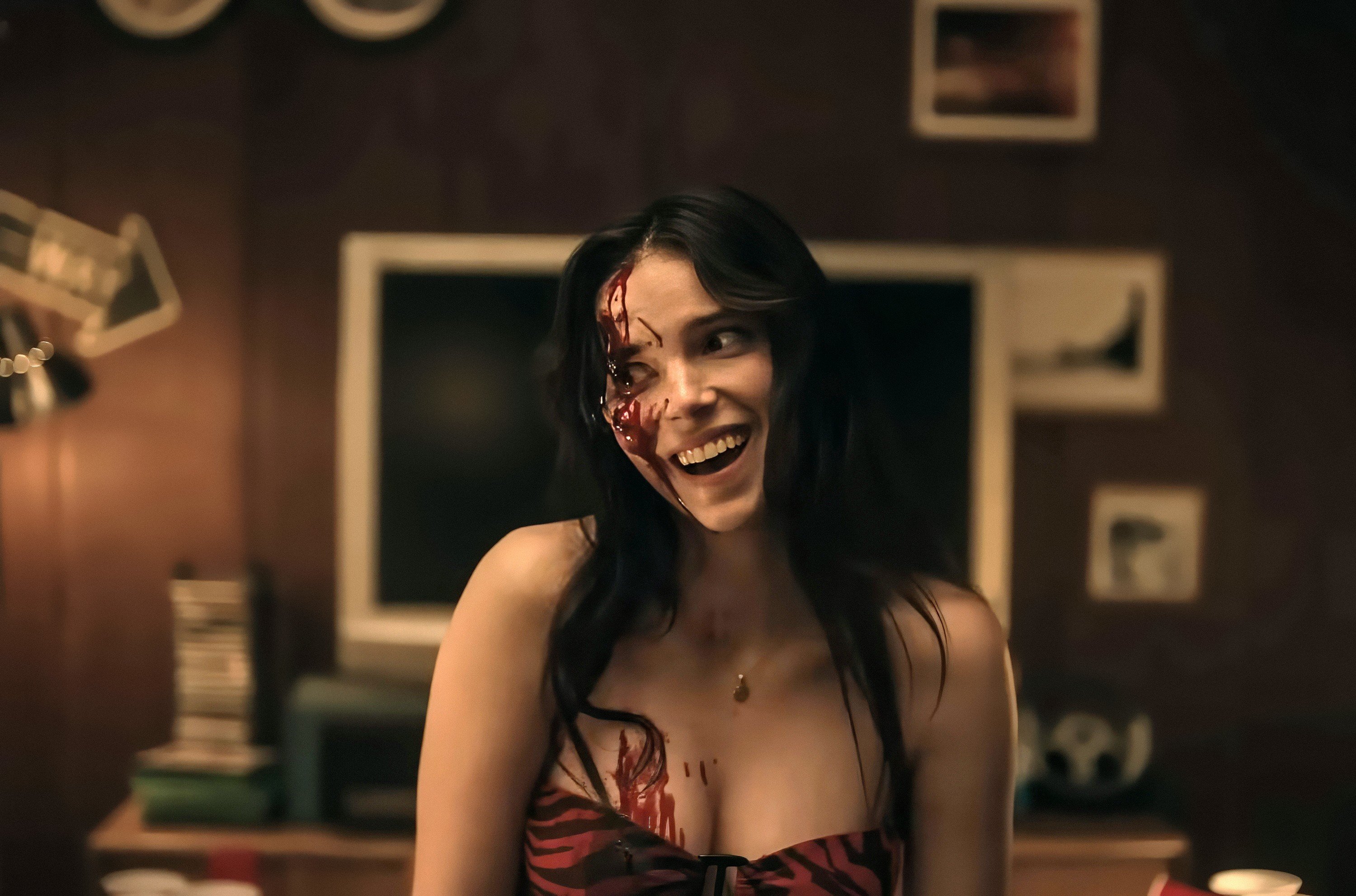
A therapist sits across from a patient, asks a neutral question, and waits. The camera holds on the analyst’s face. Nothing happens. That nothing is the whole story. Across prestige horror of the last few years, the analyst’s couch has migrated from set-dressing to set-piece, and the genre’s most unsettling scenes increasingly take place not in haunted houses or basements but in the antiseptic hush of a forty-five-minute hour.
The wire coverage has tended to frame this as a celebrity roundup: who is starring, who is producing, which A-list shrink is next to take a screen call. Byrne, Foster, the usual marquee. The interesting claim is not who is sitting in the chair. It is what is breaking while they sit there. The talking cure, once a staple of comfortable prestige drama, has become horror’s preferred engine of dread, and the genre is using the analytic frame to do something it could not do as cheaply a decade ago: take the audience inside the act of listening to oneself.
The hour that will not end
Horror’s turn toward therapy is, on the surface, a turn toward the slow. Long takes in dim rooms. A clock that ticks when no one else does. The patient on the couch, or the analyst in her own chair, performing the same ritual gesture that comedy has made comic and that melodrama has made weepy: the ask, the pause, the redirect. The genre borrows the apparatus without inheriting the consolation. Whatever the talking cure promises in ordinary drama, in horror it is reframed as the place where the self finally runs out of places to hide.
Two of the season’s most discussed genre artefacts operate inside that structure. Apple TV+’s Silo, reviewed in the Guardian this week as a "handsomely produced" subterranean drama that "grapples with the big questions" through Rebecca Ferguson’s engineer-protagonist, uses institutional control, including mandatory counselling and memory ritual, as the engine of its slow-burn political horror. The underground society does not survive because its rulers are evil; it survives because its subjects have agreed to be listened to, and the listening is the leash. The therapist in Silo is less a character than a piece of civic plumbing.
Closer to the form’s folk roots is Ann Droid, the madcap comedy-thriller starring Sue Johnston and Diane Morgan that landed on screens this week. Johnston, in interview, described the strangeness of becoming, late in a long career, a "celebrity" for a role that depends on her not performing fame at all. The comedy is built around an elderly woman and a cybernetic companion; the horror-adjacent tension sits in the question of who, exactly, is doing the analysis, and who is being analysed. The robot pal is, structurally, the analyst’s couch inverted: a non-human listener whose neutrality is its threat.
The screen shrinks to two chairs
What the form keeps returning to is the room. Not the haunted house, not the basement, not the woods. Two chairs, often a couch, a window that lets in too much or too little light, a clock. The architecture of the analytic hour has become horror’s most economical container for sustained dread because it carries its own pacing: the rule that someone must wait, and that the waiting is supposed to heal.
The cultural permission for this came, in part, from a decade of mainstreaming the diagnostic vocabulary. Audiences now arrive at a thriller already fluent in projection, attachment, gaslighting, transference. The genre no longer needs to teach the listener what a session is before it can weaponise one. The therapist in the chair is presumed; the audience watches for the moment the presumption cracks.
That crack is the scene. Horror’s recurring payload is the instant the analyst’s neutrality becomes a lie, or a confession, or both. The patient begins to describe the dream. The analyst recognises the dream. The audience recognises the recognition. The room has, by the third beat, become a confessional, a courtroom and a trap.
What the talking cure cannot do
The structural argument underneath the trend is older than the trend. The talking cure was always going to reach a limit; the limit is that speech is finite and the unconscious is not. Horror has been the genre most willing to put that limit on screen.
Compare the therapy room in Silo with the inherited gothic of Abandoned, this week’s real-life mystery documentary in which three grown siblings search for clues about why their parents left them at a Barcelona railway station in 1984. Abandoned is not horror, but it shares with the new analytic horror a deep suspicion of the official story the family told itself. The therapy that did not happen, or that failed, or that was refused, is the engine of both. In Abandoned it is historical; in the horror strand it is fictional, but it is doing the same work: dramatising the moment a self-narrative cannot hold its own weight.
This is also why superhero movies, the genre’s commercial counterweight, are struggling. The Guardian’s culture desk noted this week that Supergirl is heading toward a box-office catastrophe, and asked how Marvel and DC can save the superhero movie by leaning harder on the headline characters. The argument was framed as a business problem. It is also a structural one. The superhero film and the analytic horror have, quietly, swapped jobs. The superhero picture used to dramatise the moment a chosen self discovers its power; the analytic horror dramatises the moment a chosen self discovers it has none. Audiences, the box office suggests, are voting for the harder version.
The star is the silence
The celebrity angle is real, and it is also a deflection. Yes, the marquee casting helps. Yes, A-list shrinks draw prestige coverage. But the genre’s recent run of quietly devastating sequences works precisely because the actor in the analyst’s chair is, by form, being paid not to act. The star is the silence between two lines of dialogue, and the star is the face the camera holds while the patient speaks. Casting Byrne or Foster is not a stunt; it is a wager that a known face will read, on a long take, as a person the audience is willing to sit across from for an hour.
Sue Johnston’s interview this week is, inadvertently, the best evidence for that wager. She is candid about the cost of being watched: the loneliness, the unwanted fame, the slow learning that a role can become a life. The role she is describing, a non-human companion on the other end of a confessional, is also the role the new horror asks its audience to play. We sit on the couch. The screen listens. The trick of the form is that the listening was always the dangerous part.
The interesting question, looking past the celebrity headlines, is whether the genre will let the analyst back into the chair. The structural pressure is to make the analyst the next monster, then the next victim, then the next unreliable witness. The genre has done all three. What it has not yet done, in this cycle, is let the analyst simply be competent, and let that competence be the horror. That film will arrive. The hour, after all, is not over.
Sources
- Guardian Culture, 'Suddenly I was a celebrity. I didn't want to be!' Sue Johnston on fame, loneliness and her new robot pal (3 July 2026): https://www.theguardian.com/tv-and-film/2026/jul/03/suddenly-i-was-a-celebrity-i-didnt-want-to-be-sue-johnston-on-fame-loneliness-and-her-new-robot-pal
- Guardian Culture, Supergirl is a box office catastrophe. How can Marvel and DC save the superhero movie? (3 July 2026): https://www.theguardian.com/film/2026/jul/03/supergirl-box-office-catastrophe-marvel-dc-superhero
- Guardian Culture, Abandoned review – this real-life mystery makes for TV that's a wild helter-skelter ride (3 July 2026): https://www.theguardian.com/tv-and-film/2026/jul/03/abandoned-review-tv-real-life-mystery-barcelona
- Guardian Culture, Silo review – this handsomely produced sci-fi drama grapples with the big questions (3 July 2026): https://www.theguardian.com/tv-and-film/2026/jul/03/silo-review
- Guardian Culture, Forty-one members and counting! Ferg's Imaginary Big Band, the gigantic Leeds jazz group (3 July 2026): https://www.theguardian.com/music/2026/jul/03/fergs-imaginary-big-band-leeds-jazz
Desk note: Monexus framed the therapy-in-horror trend as a structural argument about the talking cure rather than a celebrity roundup; the wire copy this week has tended toward Byrne/Foster headlines. The interesting claim is not who is starring but what is breaking.