Tehran links Hormuz control to any peace deal, reshaping the cost of US-Iran detente
Indirect talks in Doha have stalled on a single demand: Tehran wants formal recognition of its authority over the world's most important oil chokepoint before any broader agreement is signed.
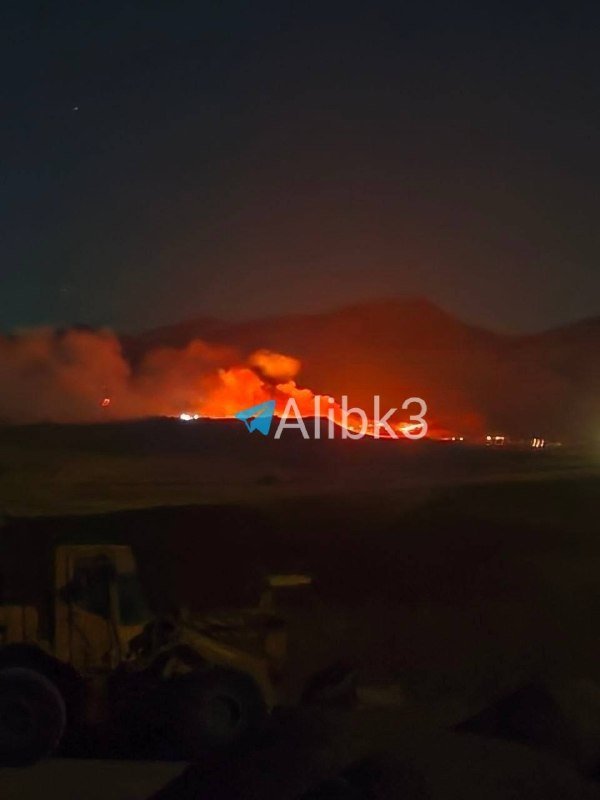
Iranian negotiators have told counterparts in Doha that no other issue in the peace track will be discussed until Washington agrees to recognise Tehran's authority over the Strait of Hormuz, according to reporting on 1 July 2026 by Reuters and Middle East Eye, relayed through the Open Source Intel channel on Telegram. The demand is the clearest articulation yet of a position Tehran has signalled for months: that control of the waterway through which roughly a fifth of the world's traded oil passes is non-negotiable, and that any wider settlement — including the release of frozen Iranian funds — flows from it.
The framing matters because it converts a maritime dispute into the central lever of US-Iran diplomacy. Until now, Hormuz has been treated in Western coverage as a tactical irritant: occasional Iranian harassment of tankers, periodic US Navy escorts, episodic escalation. Under the formula Tehran is pushing, it becomes the price of admission to a deal — the asset Iran will trade for sanctions relief, frozen-assets release and an end to the cycle of strikes that has marked the past year.
What is actually on the table in Doha
According to the 1 July 2026 thread from Open Source Intel citing a senior Iranian official, indirect US-Iran talks in Doha are focused on two narrow items: the release of Tehran's funds and the Strait of Hormuz. The talks began on the evening of Tuesday, 30 June 2026, and continued into Wednesday. A separate Iranian demand, reported on the same day by Reuters, is that Iran retain formal control of the strait — wording that implies legal or treaty recognition rather than the de facto dominance Iran already exercises through its Revolutionary Guard naval posture and its coastline on the northern shore.
The distinction is not cosmetic. De facto control is something Iran can lose to a US carrier strike group; de jure recognition, embedded in a signed accord, cannot be revoked by a single administration. Tehran's negotiating posture is the latter, and it is the part the United States has historically refused to put in writing. The trade Tehran is offering — Hormuz recognition in exchange for sanctions unwind and frozen-funds release — is therefore closer to a grand bargain than to the issue-linkage usually associated with the Joint Comprehensive Plan of Action framework of 2015.
Reuters and Middle East Eye both reported on 1 July 2026 that a US-Iran accord signing is expected in Geneva on Friday, though that timetable now appears contingent on the Hormuz question. The Open Source Intel relay of the Iranian position is explicit: Tehran will not discuss any other item until the Hormuz question is agreed.
Why Iran is pressing now
The leverage Tehran is using did not appear overnight. The strait's geography — 21 miles wide at its narrowest shipping lane, with Iranian territory on the north and Omani territory on the south — gives Iran a structural advantage no Iraqi, Saudi or Gulf-state rival can replicate. Tehran has spent the past decade converting that geography into a layered deterrent: fast-attack craft, anti-ship cruise missiles sited along the coastal mountains in Hormuzgan province, and the occasional seizure of commercial tankers that has driven insurance premiums for Gulf shipping through the corridor. The argument Tehran makes in Doha is that the rest of the world has been free-riding on Iranian restraint, and that restraint should now be priced.
The argument has structural merit. Roughly 20 percent of global crude oil and a comparable share of liquefied natural gas transits Hormuz; a sustained closure would, on most published modelling, push Brent crude above $150 a barrel within weeks. Iran does not need to actually close the strait to monetise the threat — it only needs the threat to be credible. Washington's naval presence in the Fifth Fleet headquarters in Bahrain, and the periodic Combined Maritime Forces patrols, are designed to render that threat less credible. They have not succeeded entirely, and they cannot succeed at zero cost.
The counter-narrative from Washington
The dominant Western framing, reflected in the US Navy's own public posture and in most wire reporting, treats Iran's Hormuz posture as coercive bargaining rather than as a legitimate security interest. Under that framing, the strait is international water; any attempt by a single coastal state to assert exclusive control is incompatible with the freedom-of-navigation principles the United States has enforced since 1949. The US Fifth Fleet's continued presence in Bahrain is the operational expression of that view. Any accord that grants Tehran de jure recognition would, in this reading, be a strategic concession that future administrations would struggle to reverse.
The framing is coherent and has historical precedent. It also has a quieter counter-weight. Iran is not a non-coastal state demanding rights over distant waters; it is the state with the longest coastline on the strait, and its security concerns — including the frequent transit of US carrier strike groups within a few miles of its territorial waters — are not fictitious. The 2015 framework recognised this implicitly by addressing Iran's nuclear program as a security matter, not as a criminal one. A parallel recognition on Hormuz would extend that logic. Whether the current US administration is willing to extend it is the question the Geneva signing, if it happens, will answer.
What the sources do not yet establish
The available reporting is consistent on what Tehran is demanding and on the existence of indirect talks in Doha. It is thinner on three points. First, the exact dollar figure or formula for the release of Iranian funds remains unspecified in the public thread — the senior Iranian official quoted by Reuters frames it as part of the package, not as a priced item. Second, the duration and verification mechanism for any Hormuz arrangement is not on the public record; this publication cannot confirm from the available sources whether Iran is asking for treaty language, a parallel political declaration, or simply an undertaking embedded in a side letter. Third, the timetable for the Geneva signing referenced by Middle East Eye appears to depend on Hormuz resolving first, which means the Friday target is conditional. The sources agree the talks are live; they do not agree on when — or whether — they will close.
What is clear is that the structure of the negotiation has changed. Hormuz was once a tactical pressure point Iran could apply between rounds. Under the Doha formula, it has become the threshold condition for the round itself. That rebalances the negotiation in Tehran's direction, and it does so at a moment when the regional balance — Iran's restored ties with Gulf neighbours, the weakened position of Iranian-armed groups after the Lebanon ceasefire, the sustained sanctions bite on Iran's central bank — would otherwise point the other way. The fact that Tehran is pressing now, rather than waiting, is itself a signal about how its negotiators read the next twelve months.
Desk note: Wire coverage led with the political-rhetoric angle — Iran "insists" on Hormuz, a deal signing is "set" for Geneva. This publication treated the substance first: what specifically Iran is asking for, why now, and what the Doha framing reveals about the price of detente. The Friday Geneva timeline is held lightly because the sources disagree on whether it holds.
Wire provenance
This editorial synthesis draws on the following public wire/social posts:
- http://reut.rs/4eTd5GT
- https://t.me/s/opensourceintel
- https://t.me/s/opensourceintel
- https://t.me/s/opensourceintel