Kyiv Under Fire Again: Reading Russia’s 1 July Hypersonic Barrage
On the evening of 1 July 2026, Russia launched a mixed salvo of Iskander-M ballistic missiles and 3M22 Zircon hypersonic cruise missiles at Kyiv — the kind of strike the war’s public conversation has barely caught up to.
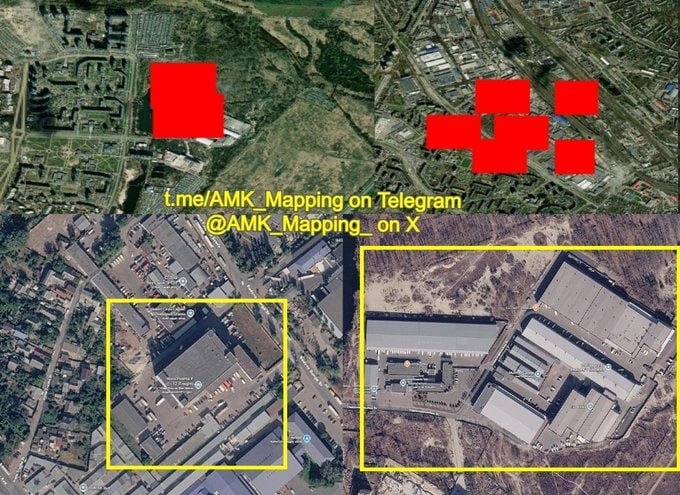
Shortly before 23:00 UTC on 1 July 2026, Russian forces fired a mixed salvo of approximately 26 Iskander-M short-range ballistic missiles and eight 3M22 Zircon hypersonic cruise missiles at Ukraine’s capital. The first launches were tracked from Bryansk Oblast around 22:53 UTC, with subsequent waves hitting the city over the next hour. Smoke was visible over Kyiv within minutes of impact, and open-source monitors began cataloguing the wreckage in real time. By the time the barrage subsided, monitors had confirmed at least six interceptions of Iskander warheads. The rest hit ground that is still being assessed.
This is not a routine night for Kyiv’s air-defence crews. A combined Iskander-and-Zircon package against a single urban target is the kind of salvo the war’s public conversation has barely caught up to. Western commentary still treats hypersonic weapons as a future threat; the operational record of 1 July is the present tense.
What the open-source record actually shows
The most coherent picture of the strike comes from the Telegram channel AMK_Mapping, which has built a reputation over the past two years for granular, timestamped tracking of Russian missile traffic toward Ukrainian cities. The channel’s first alert on 1 July went out at 22:53 UTC, flagging “Iskander-M launch from Bryansk — 2 Iskanders on Kyiv.” Within three minutes, the tally had doubled: “2 Iskanders and 2 Zircons approaching Kyiv.” By 23:07 UTC, the channel was posting overhead imagery of smoke over the city, and by 23:40 UTC the running total had reached roughly 26 Iskander-Ms and 8 Zircons. The closing update logged six confirmed interceptions.
A second channel, IntelSlava, supplied the visual confirmation: CCTV footage timestamped to the strike window showing the arrivals of Iskander-M tactical ballistic missiles and 3M22 Zircon hypersonic cruise missiles over Kyiv. The footage is the kind of low-resolution, ubiquitous city-camera material that has become the staple evidence of late-stage urban warfare — ugly, dispositive, hard to stage.
What the open record does not yet contain is a complete Ukrainian government damage assessment. The Ukrainian Air Force has, in past strikes of this kind, posted preliminary interception tallies and target lists within hours; the definitive count from Kyiv typically takes a day or more as the wreckage is catalogued. As of writing, no Ukrainian official casualty figure for the 1 July salvo is in the source material reviewed here.
The weapons themselves — and why the mix matters
The Iskander-M is Russia’s operational workhorse short-range ballistic missile. It is manoeuvring in the terminal phase, which complicates interception, but it is not in the class that Western defence planners typically describe as hypersonic. The 3M22 Zircon is. Zircon is a sea- or ground-launched cruise missile designed to travel at roughly Mach 8 — fast enough that the engagement window for most Western and Ukrainian air-defence systems is measured in seconds rather than tens of seconds. Ukrainian air-defence doctrine, built largely around Soviet-era and donated Western systems, has historically performed best against subsonic cruise missiles and slower ballistic arcs.
Pairing the two in one package is the operational logic. The Iskanders saturate and saturate again at relatively lower cost per round; the Zircons, fewer in number and far more expensive, force defenders to spend high-end interceptors on a small number of targets that arrive with almost no warning. The economics work in Russia’s favour if even a handful of Zircons penetrate, because each one is built to be hard to kill.
That is the structural reality behind the 1 July salvo. It is not just a strike; it is a test of a tactical doctrine that pairs volume with speed.
What the broader picture is doing
A mixed hypersonic strike against a capital city is not a tactical escalation in isolation. It is the visible surface of a longer campaign. Russian industry has, over the course of the war, expanded its domestic production of both ballistic and cruise missiles at a pace that has surprised Western analysts who in 2022 forecast a rapid depletion of stockpiles. Zircon in particular has moved from a piece of future-force marketing into the routine inventory of strikes on Ukrainian cities, including documented use against Kyiv in earlier salvos over the past 18 months. The 1 July barrage — with its eight Zircons — sits inside that trajectory rather than outside it.
For Ukraine, the operational response has been layered: more Western surface-to-air systems delivered through 2024 and 2025, deeper integration of mobile fire-control radar, and a doctrine that prioritises protecting critical infrastructure rather than attempting 100 per cent coverage of the urban footprint. The six confirmed interceptions on 1 July are consistent with that doctrine — a partial defence, not a denial.
Stakes, and what is still not in the record
The near-term stakes are measured in concrete terms: lives lost in the parts of Kyiv the interceptors did not reach, damage to power and water infrastructure at the height of summer demand, and the political signal sent to European capitals weighing further aid packages. The longer-term stakes are doctrinal. If mixed Iskander-Zircon packages become routine, the air-defence burden on Ukraine — and on any NATO country within range of similar Russian systems — rises by an order of magnitude. The procurement conversation in Brussels, Berlin and Warsaw follows from the operational record on nights like this one.
What remains genuinely uncertain is the full count of what got through. The Telegram-channel record reviewed here gives a confident running tally of launches and a partial count of interceptions, but the sources do not specify Ukrainian government damage assessments, casualty figures from the strike, or the specific Kyiv districts hit. Those numbers, when they land, will probably tell a less ambiguous story than the open-source footage alone.
This piece draws on Telegram-channel open-source monitoring as its primary wire provenance, since the wire services have not yet published full strike tallies at the time of writing. Monexus will update the assessment once Ukrainian official figures and Western wire coverage are available.
Wire provenance
This editorial synthesis draws on the following public wire/social posts:
- https://t.me/s/AMK_Mapping
- https://t.me/s/AMK_Mapping
- https://t.me/s/intelslava
- https://t.me/s/AMK_Mapping
- https://t.me/s/AMK_Mapping
- https://t.me/s/AMK_Mapping