Kyiv endures another night under fire as Russia's ballistic salvo routine hardens
A barrage of at least four Russian Iskander-M launches from Bryansk and Kursk struck Kyiv in the late hours of 1 July 2026, underscoring how ballistic strikes on the capital have become a near-daily feature of the war.
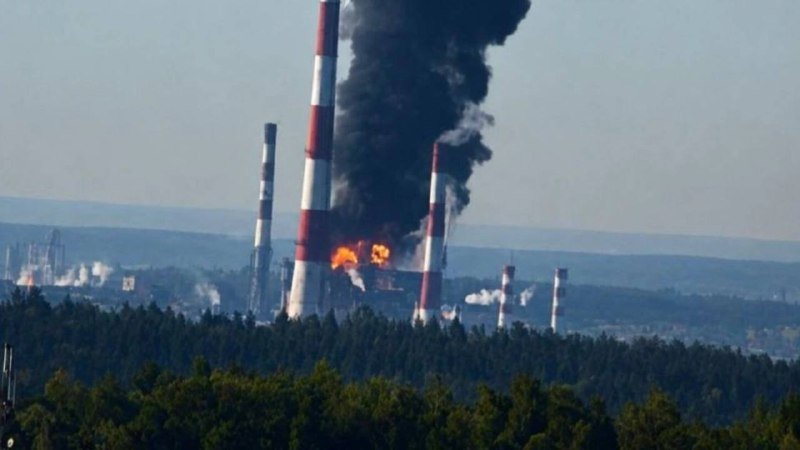
The pattern is now routine enough to be logged by the minute. Between 22:51 UTC and 23:55 UTC on 1 July 2026, the open-source intelligence account AMK_Mapping tracked at least four separate Iskander-M launch threats against Kyiv — two from Kursk Oblast and at least one from Bryansk — with two missiles confirmed airborne and impact warnings issued as projectiles closed on the capital from roughly 60 kilometres out. No Western wire had published a confirmation of damage or casualties within the immediate thread window; the strikes, as recorded, are a tactical event in a much longer war, and the more important fact about them is how unremarkable they have become.
Kyiv is being hit, on most nights now, with ballistic missiles fired from Russian territory. The political significance of that sentence has dulled only because the practice itself has hardened. The job of reporting on it is to keep the dulling from spreading to the reader.
What the thread actually shows
AMK_Mapping, an OSINT channel that monitors missile launches and air-defence activity in Ukraine, recorded the following sequence in a single 64-minute window on 1 July 2026: at 22:51 UTC, an Iskander-M threat originating in Kursk Oblast; at 22:53 UTC, a launch from Bryansk with two Iskanders reported heading for Kyiv; at 22:55 UTC, a second Iskander-M inbound to the capital; at 23:07 UTC, another projectile estimated at 60 km from the city; at 23:28 UTC, two missiles tracked on approach; at 23:55 UTC, a further Iskander-M threat from Kursk. The thread does not specify damage, interception, or casualty figures; it documents the airspace picture, which is the most that open-source monitoring can usually claim in real time.
Two structural points follow. First, the strikes came from Russian soil into a sovereign capital — Ukraine is the invaded party, and ballistic fire across the border is offensive action, regardless of which launcher type delivers it. Second, the geographic spread of the launch points — Bryansk and Kursk oblasts, both Russian, both bordering Ukraine — reflects an effort to complicate Ukrainian air-defence tracking by varying launch azimuths within a single salvo. That is a routine tactical technique, and treating it as routine is precisely the point: it has become one.
What the framing usually gets wrong
Coverage of repeated Russian strikes on Kyiv tends to oscillate between two registers. One treats each barrage as a discrete escalation, a fresh news event warranting dramatic language and headline escalation. The other normalises the strikes so thoroughly that they slide into a footnote. Both fail the reader. A barrage that fires four ballistic missiles at a capital of three million people in under an hour is not a one-off; it is the operating tempo of a war in which the invading force has decided that nightly pressure on Ukraine's urban centres is a sustainable campaign.
The Russian government's preferred framing — that the strikes are aimed at military-industrial and command infrastructure and not civilians — has been a consistent line for the duration of the war. Ukrainian authorities, including the country's air force and the Kyiv City Military Administration, have repeatedly published counter-claims showing damage to residential buildings, schools, hospitals, and energy infrastructure in attacks Moscow has described as targeted. The structural context for both claims is that ballistic missiles of the Iskander-M class have circular error probable figures that do not discriminate between a ministry of defence building and the apartment block behind it, and that Kyiv has been the political centre of gravity for the war since February 2022.
The structural frame in plain terms
What we are watching is the long grind of a war in which one side has air superiority over the battlefield, persistent ISR over Ukrainian rear areas, and an indigenous ballistic-missile production line that turns out Iskander-Ms at a rate Ukraine cannot match and its Western partners have not yet fully backfilled. Ukraine's air-defence picture — supplied in significant part by Western systems including Patriot and IRIS-T batteries, plus shorter-range Gepards and NASAMS — is excellent by any historical standard and still not enough to guarantee interception of every inbound projectile. Each successful strike on Kyiv is therefore, simultaneously, a tactical event, a propaganda event, and an industrial-policy event: it tells Moscow's planners that the production line is working, tells Kyiv's that interceptors are finite, and tells Western capitals that the air-defence bill is recurring and open-ended.
There is no clean parallel in the post-Cold-War European record for a major capital absorbing this volume of ballistic fire over so many months. That matters because the policy debate in donor capitals is now framed around fatigue rather than sufficiency: how many interceptors can be spared, for how long, at what opportunity cost to other commitments. The strikes' value to Moscow is partly that they force that question nightly.
What remains uncertain and what to watch
Three things remain genuinely contested in the available reporting. First, the damage and casualty picture from the 1 July barrage itself: AMK_Mapping's thread documents the launch sequence, not the impact sequence, and Ukrainian official channels had not, in the window covered here, released consolidated figures for the night. Second, the precise mix of warheads — conventional high-explosive versus cluster — is not stated in the open-source tracking and matters a great deal for what the strikes actually destroyed. Third, the question of whether the salvo pattern represents a deliberate escalation or the steady-state tempo the Russian campaign has settled into is, at this point, partly a judgment call. The dominant read across Western wire and Ukrainian reporting is that this is the new baseline; the alternative read, that a particular barrage was a punishment strike for a Ukrainian action, cannot be ruled out from the thread evidence alone.
The point worth holding is simpler. Kyiv is being struck from Russian territory with ballistic missiles, repeatedly, and the war's trajectory — both military and diplomatic — now runs through whether that fact becomes politically tolerable in the donor capitals funding the air defence that stands between those missiles and the city.
— Monexus framed this as a tempo story rather than an escalation story, on the reasoning that a single night's salvo, by July 2026, is data about a pattern rather than a fresh rupture. Western wires that publish the barrage as a discrete event are not wrong; they are simply answering a different editorial question.
Wire provenance
This editorial synthesis draws on the following public wire/social posts:
- https://t.me/AMK_Mapping
- https://t.me/AMK_Mapping
- https://t.me/AMK_Mapping
- https://t.me/AMK_Mapping
- https://t.me/AMK_Mapping
- https://t.me/AMK_Mapping
- https://en.wikipedia.org/wiki/9K720_Iskander