Kyiv under fire: what the barrage of Russian hypersonic claims actually tells us
A cascade of Telegram channels logged at least four Zircon and two Iskander launches on the evening of 1 July 2026 — and the speed of the claims, not the weapons themselves, is the story worth examining.
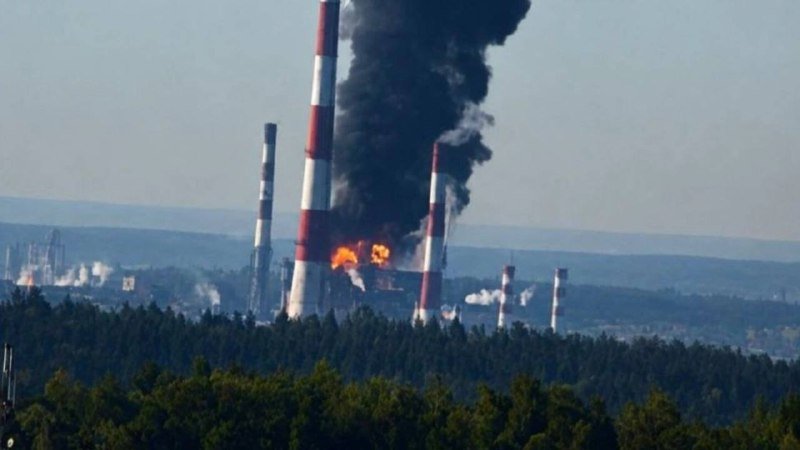
At 22:54 UTC on 1 July 2026, the Telegram channel AMK_Mapping posted a single line: Zircon on Kyiv from the east. By 22:59 UTC, the same channel had escalated to 4 missiles. 11,000 km/h — approaching Brovary, then Kyiv, naming two Zircons and two Iskanders in flight at the same time. A separate channel, war_monitor, logged a jet leaving Kyiv in the direction of Brovary at 22:31 UTC, roughly twenty minutes before the missile claims began.
The sequence — single launch, second launch, third, fourth, all converging on the same city inside a five-minute window — is the kind of real-time, channel-by-channel stenography that has come to define wartime information flows. It is also the kind of stenography that deserves a hard second look.
What we are actually looking at
The Zircon (3M22, NATO reporting name SS-N-33) is a ship- and submarine-launched hypersonic cruise missile Russia has publicly claimed can travel at roughly Mach 8–9, which corresponds to the 11,000 km/h figure circulating in the channel's posts. The Iskander (9K720) is a shorter-range, land-based ballistic system, slower but with a steeper terminal trajectory. AMK_Mapping's claims, taken at face value, describe a mixed salvo: two hypersonic anti-ship missiles reportedly fired inland from Kursk at 22:58 UTC, joined by two Iskanders. The channel gives no interception results; the claim stops at "approaching."
The Ukrainian Air Force and the Armed Forces of General Staff typically release consolidated strike tallies in the early morning hours local time, several hours after the launches themselves. Until that official count lands, the Telegram thread is the only public record. That is by design: open-source channels have become a parallel warning system for civilians, and they have also become the first draft of history — which is precisely why they are worth interrogating.
The information environment, not the weapon
Hypersonic missiles are real, and Kyiv has been hit by Russian long-range systems repeatedly since 2022. The 1 July claims, however, carry a signature that has become familiar to anyone who follows the wartime Telegram ecosystem: cadence, specificity, speed. Channels publish within seconds of one another. Numbers round to memorable figures (11,000 km/h, four missiles). Launch sites are named with geographic confidence (Kursk). Targets are named with city-level confidence (Kyiv, Brovary). The pattern is consistent whether the underlying event is a single missile, a salvo of two, or the eight-missile cluster the channel describes.
This is not a counsel of despair. Open-source tracking has produced genuinely useful work — geolocated launch sites, matched crater photography, flight-path reconstructions. But there is a difference between an OSINT investigator who publishes a corroborable flight path and a channel that broadcasts a hypersonic-speed claim six minutes after launch, with no supporting radar track, no interceptor report, and no ground-impact assessment. The former is journalism; the latter is, at best, situational awareness, and at worst, signal-laundering.
Why the counter-narrative matters
The Ukrainian and Western framing of the war treats Russian long-range strikes as evidence of intent — a way to break civilian morale, degrade air-defence stockpiles ahead of ground operations, and signal resolve to outside audiences. The Russian framing, when it surfaces through official channels, treats the same strikes as calibrated responses to Ukrainian actions, often described in language that elides the question of targeting entirely.
Both framings can be true in part. What neither framing addresses is the third player in the room: the channel layer that sits between the missile and the headline. When a Telegram post at 22:54 UTC becomes an overnight news cycle by 02:00 UTC, the channel's first draft is doing framing work that no wire editor is signing off on. Readers in Kyiv are making decisions — shelter, sleep, evacuation — based on that first draft in real time. Readers in Washington and Brussels are making policy assumptions based on the same text, hours later, after it has hardened into received fact.
What the trajectory looks like from here
The honest reading of the 1 July 2026 thread is narrow. A mixed Russian strike was either launched or reported to have been launched toward Kyiv and Brovary between approximately 22:54 and 22:59 UTC. The hypersonic claim is consistent with what Russian doctrine has publicly attached to the Zircon programme, but the 11,000 km/h figure is a manufacturer's ceiling, not a measured terminal velocity. The Iskander element is more pedestrian and more verifiable: ballistic trajectories are easier to reconstruct from radar and impact data than the glide path of a manoeuvring hypersonic.
The stakes are straightforward. If Telegram channels continue to function as the primary public stenographer of the air war over Kyiv, the burden of corroboration falls on the reader. Ukrainian Air Force statements, General Staff morning briefs, and the handful of Western wire services with staff in the capital are the floor, not the ceiling. The 1 July thread is a useful data point precisely because it is so typical: a chain of single-line claims, escalating inside five minutes, broadcast to an audience that has no way to verify any of them until morning.
What remains uncertain, and what the sources do not specify, is the actual outcome of the salvo — what was intercepted, what landed, what the casualty and damage picture is. That picture will arrive in the next consolidated briefing. Until it does, treat the thread as a starting hypothesis, not a finding.
Desk note: This publication frames the 1 July 2026 episode around the speed and provenance of the claims themselves, rather than the underlying military action, because the underlying action is unverifiable from the source items available at time of writing. The wire services will publish the corroborated strike tally; this piece is about the layer that gets there first.
Wire provenance
This editorial synthesis draws on the following public wire/social posts:
- https://t.me/AMK_Mapping
- https://t.me/war_monitor
- https://en.wikipedia.org/wiki/3M22_Zircon