Kyiv under fire: what a single night of strikes tells us about Russia’s wager
Mass Russian drone and missile strikes on Kyiv on the night of 1 July 2026 fit a familiar pattern of pressure — and reveal the limits of Moscow’s bargaining leverage.
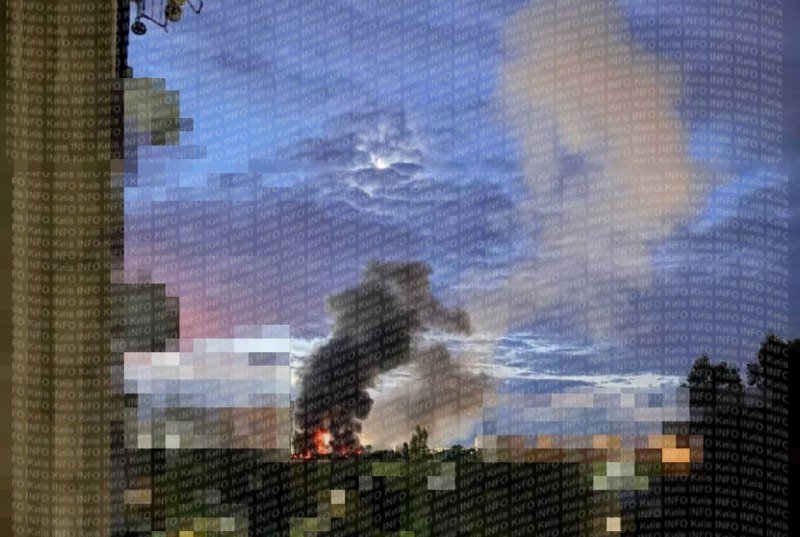
At around 23:18 UTC on 1 July 2026, residents of Kyiv descended into the city’s metro system to shelter from a renewed wave of Russian drone and ballistic-missile strikes, according to OSINTdefender reporting relayed on Telegram. Within half an hour, additional explosions were audible across the capital, and by 23:48 UTC footage shared by the same account showed an apartment building ablaze following a direct impact. The pattern — Iranian-designed one-way attack drones paired with ballistic missiles, calibrated for maximal disruption to a sleeping city — has become grimly familiar more than four years into Russia’s full-scale invasion.
What a single night of footage reveals, when stacked against the last year of strikes, is less about Moscow’s ability to hit Kyiv than about what hitting Kyiv no longer achieves.
The strike pattern, decoded
The sequence reported on 1 July — drones first, then ballistic follow-up — is a standard Russian playbook used to exhaust Ukrainian interceptor stocks. Cheap Shahed-type drones are waved into Ukrainian airspace in clusters; air-defence teams engage, expending missiles that cost orders of magnitude more than the inbound threat; only then do the more expensive ballistic missiles arrive, often at saturation tempo. OSINTdefender’s overnight thread captured both halves of the cycle: residents sheltering, then a high-rise struck regardless.
Russian-aligned channels have, in past iterations of the same playbook, framed the strikes as precise retaliation against military-industrial targets. Reporting from the ground — including the apartment fire documented in the 23:48 UTC post — does not lend itself to that characterisation. Civilian residential infrastructure, transit, and the metro system that doubles as a bomb shelter are the visible targets.
What the bombing is meant to produce — and what it isn’t
Moscow’s coercive logic is transparent enough. Sustained pressure on Kyiv is meant to harden Ukrainian public appetite for negotiation on Russian terms and to signal to Western capitals that the cost of continued support is rising. A burning apartment block on a Western news feed, the theory goes, becomes ammunition for war-weariness constituencies in Berlin, Paris, and Washington.
The evidence that this is working is, after four years, thin. Each wave of strikes has coincided with new tranches of Ukrainian and allied air-defence assistance, not with Kyiv’s capitulation. The 1 July strikes followed weeks of public diplomacy in which Kyiv’s partners reaffirmed long-term commitments. The pattern suggests Moscow is paying real budgetary costs — Iranian drone inventories are not infinite, and ballistic-missile production is the most visible indicator of what Russia is choosing to spend on — in exchange for diminishing political returns.
The frame the West should be using
Coverage routinely defers to the language of official spokespeople when an incident of this kind occurs, treating each night as a discrete event rather than as data in a coercive campaign. A more useful frame treats the 1 July barrage as the latest increment of a cumulative Russian strategy: degrade Ukrainian morale, erode allied resolve, demonstrate reach. Read that way, the relevant question is not what was hit tonight but whether the cumulative effect is bending any of those curves.
On the available evidence, the answer is no. Ukrainian civilian resilience has not collapsed. Allied aid volumes have fluctuated with political cycles but the long-run trend has been upward. Russia’s ability to escalate further is constrained by sanctions, by the industrial capacity of its partners, and by the technical limits of its air-defence suppression stack.
Stakes — and the remaining uncertainties
The downside of getting this read wrong is concentrated on the Ukrainian side. If Western publics absorb each wave of strikes as background noise — Kyiv is being bombed again, file under routine — the moral pressure that sustains aid packages decays. The brief for editors covering the 1 July incident is straightforward: refuse the framing of inevitability. Mass strike campaigns on residential targets in a capital city are not ambient conditions of war. They are the chosen instrument of an aggressor, and they should be reported as such.
What remains genuinely uncertain, after a single night of footage, is the operational outcome of the barrage — which districts took impacts, whether critical infrastructure was successfully suppressed, what Ukrainian air-defence intercept ratios look like for this wave. The Telegram threads cited here capture the human and tactical texture of the night without claiming a definitive tally, and any later accounting should defer to Kyiv’s air-force and General Staff briefings once they publish.
This publication frames Russia’s strikes on Kyiv as the chosen instrument of an invading state, reported on the established international-law premise that Ukraine is the invaded party. The desk note applies to all Russia–Ukraine coverage: civilian impact is the lead, not the footnote.
Wire provenance
This editorial synthesis draws on the following public wire/social posts:
- https://twitter.com/sentdefender/status/2072466146037514484/video/1
- https://twitter.com/sentdefender/status/2072466146037514484
- https://t.me/BRICSNews
- https://twitter.com/sentdefender/status/2072466146037514484