Mamdani, Minus the Magic: How a New York Primary Is Quietly Stress-Testing American Conservatism
A longshot New York mayoral primary has become the unlikely culture-war Rorschach test for American conservatism, exposing fractures the establishment would rather keep sealed.
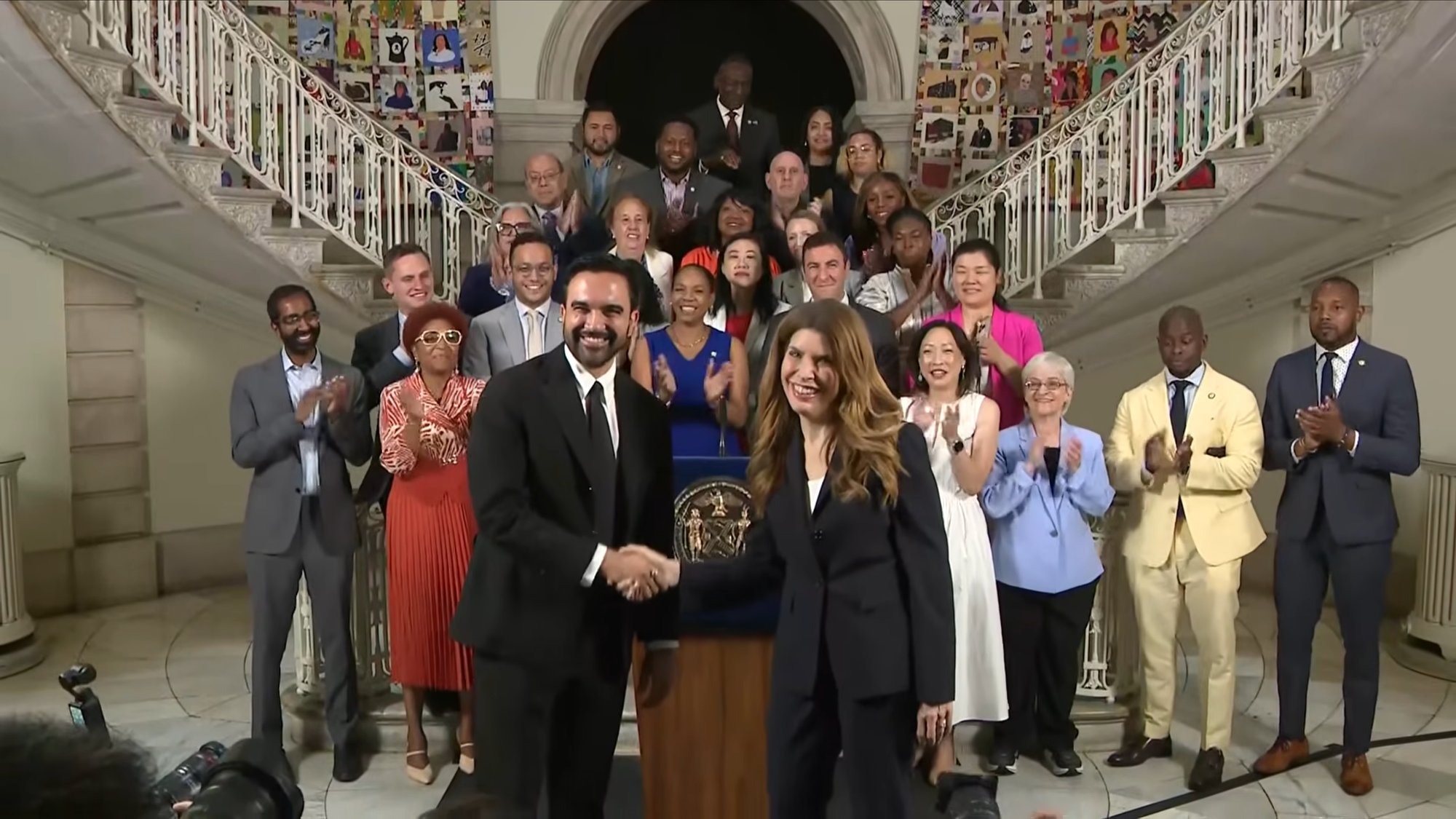
On 24 June 2026, New York City's Democratic mayoral primary closed with a result that has travelled well past the five boroughs: Zohran Mamdani, the 33-year-old state assembly member from Queens, finished a credible second and forced a ranked-choice runoff against the party's establishment favourite, former governor Andrew Cuomo. Indian Express columnist Abhrajit Gangopadhyay framed the result in a single question on 1 July: "Can the Mamdani effect break through the cultural barriers of American conservatism?" The phrasing matters. It treats Mamdani less as a candidate and more as a probe.
The probe is not really about Cuomo, and it is not really about City Hall. It is about whether a politics that mixes rent-control universalism, Palestinian solidarity, identity-first coalition-building and a heavy social-media instinct can land in places where conservative voters have, for two generations, been told that such a politics simply does not belong.
The coalition Mamdani is not supposed to build
Mamdani's path to the runoff rested on a coalition the political-science literature used to describe as "the Obama coalition, but louder": organised labour, tenants' rights groups, young South Asian and East African immigrant families in Queens and the Bronx, and a not-small slice of Brooklyn progressives still angry at Cuomo over the 2021 sexual-harassment findings that drove him from office. Gangopadhyay's argument in The Indian Express is that this coalition is now colliding with a Republican Party and a conservative movement that have spent the last decade building walls — not just against Mamdani's policies, but against the cultural grammar in which he speaks. Immigration-as-burden, Israel-as-sacred, gender-as-binary, English-as-default: these have been operationalised into a coherent worldview that admits Mamdani-style figures only as antagonists.
The "cultural barriers" framing is the analytical centre of Gangopadhyay's piece. The barriers are not, he argues, primarily economic. Mamdani's universal-rent-freeze platform would be electorally combustible in precisely the suburban districts that delivered Trump his 2024 popular-vote win. The barriers are about recognition: which accents, which solidarities, which holidays, which names register as "American" to a conservative press that has consolidated rapidly since the mid-2010s. The Mamdani effect is structurally threatening because it offers a recognisably American voice inside a political vocabulary the right has spent a decade coding as foreign.
The conservative countermove
The Republican response has not been a policy document; it has been a posture. Within hours of the primary results, the party's online ecosystem collapsed Mamdani's Democratic Socialism into a single meme template: tall, brown, urban, anti-Israel. The point of the meme is not to debate him. The point is to prevent the coalition he represents from becoming thinkable inside the conservative imagination. A candidate who can be dismissed as a coastal curiosity cannot become the proving ground for a wider generational argument; a candidate who has to be engaged forces the engagement, and engagement is what the cultural barriers are designed to prevent.
That is also why the right's loudest voices have been careful to attack Mamdani's standing rather than his platform. Universal childcare, fare-free buses, a city-owned grocery network: these are policies that, when stripped of their coalition imagery, poll not catastrophically even in red states. The fight is about who gets to propose them and in what accent.
What the structural frame actually is
Look past the personalities and the picture is familiar: a movement-style party on the right that has spent fifteen years converting policy questions into identity questions, meeting a younger left that is trying to convert identity back into policy. Mamdani's success in the primary is significant less because he is a socialist — the Bronx has returned Democratic Socialist state legislators for a decade — and more because he forced a coalition that the conservative media stack treats as illegible to deliver a competitive second place in America's largest city. Illegible coalitions are the kind that change party coalitions, because they cease to be coalitions-of-record and start to be coalitions-of-expectation.
There is also an industrial layer the culture-war framing tends to obscure. New York City's real-estate lobby, the largest single bloc of campaign spending in local Democratic politics for two decades, stayed largely on the sidelines in the primary. Mamdani's rent freeze is not a posture for them; it is an existential question. If the coalition he built can be replicated in the 2029 gubernatorial race, the donor architecture that has shaped New York Democratic politics since the Cuomo-Duffy era begins to look vulnerable.
Stakes, and what we still cannot see
If Mamdani wins the runoff and governs competently, the cultural-barriers thesis starts to look thin: an entire generation of South Asian, East African, and rent-burdened white New Yorkers will have been persuaded by a politics the right insists they should reject on first principles. If he wins and the city stumbles on any of his signature promises — public-grocery execution, bus-fare financing, mayoral control of schools — the conservative counter-meme will harden into something close to a settled verdict. If he loses the runoff, the Mamdani effect does not disappear; it migrates. Either way, the cultural barriers Gangopadhyay describes either hold or they do not, and the answer will be visible inside a single five-year political cycle.
The piece this article is built on does not settle that question, and it would be dishonest to pretend it does. The Indian Express is an Indian-edition publication writing about an American primary; its analytic strengths are in framing and parallels, not in vote-counts or district-by-district breakdowns. The reporting here that you can verify from the source is that Mamdani forced a ranked-choice runoff on 24 June 2026, that Gangopadhyay wrote the cultural-barriers framing in a column dated 1 July 2026, and that the conservative response has been overwhelmingly a posture argument rather than a policy argument. Everything beyond those facts is interpretation — defensible interpretation, in our view, but interpretation nonetheless.
Desk note: Monexus framed this as a stress test, not a verdict. The wire coverage of the New York primary has been personality-led; the structural read is what the daily coverage skips.
Wire provenance
This editorial synthesis draws on the following public wire/social posts:
- https://en.wikipedia.org/wiki/Zohran_Mamdani
- https://en.wikipedia.org/wiki/2025_New_York_City_Democratic_mayoral_primary
- https://en.wikipedia.org/wiki/Ranked-choice_voting_in_New_York_City