Mbappé's knockout record and the World Cup's new power map
Mbappé pulled level with Messi and broke a knockout-stage record as the 48-team World Cup redraws where authority in the global game sits.
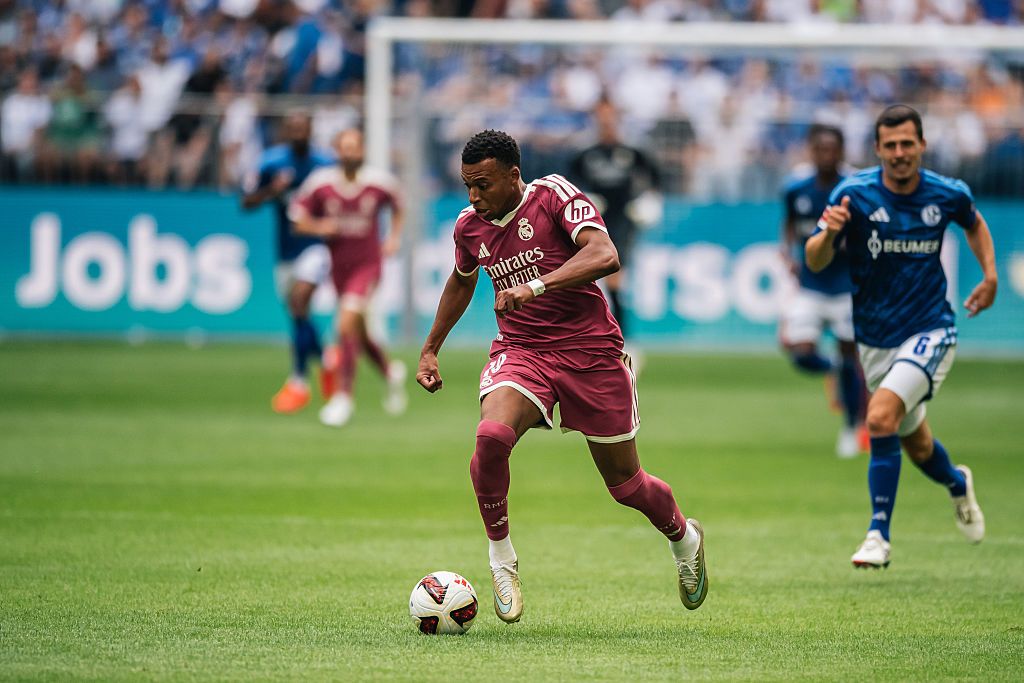
Kylian Mbappé wrote his name into the knockout-stage record books on 1 July 2026, pulling level with Lionel Messi in the Golden Boot race and overtaking the Argentine on tournament goals at the business end of a 48-team FIFA World Cup now entering its Round of 32 in the United States, Canada and Mexico. The goals, registered as France swept past Sweden, took his tally at this World Cup to six and reset a benchmark that had stood since the tournament's previous format.
The headline number is small. The pattern around it is not. The first World Cup staged across three host nations, with 104 matches instead of 64 and a knockout bracket that begins with a round the old calendar never had, has not merely produced more goals. It has rearranged who is decisive, who is contingent, and which federations now carry the weight that used to belong to the traditional European-South American duopoly.
A record, and the room it was set in
The Indian Express reported on 1 July 2026 that Mbappé had pipped Messi in knockout goals, breaking a record the Argentine had set across multiple tournaments. Al Jazeera's breaking-news feed, posting in the early hours of UTC 1 July, confirmed Mbappé and France coach Didier Deschamps had broken World Cup records in the Sweden result, with the forward's fifth and sixth goals of the tournament drawing him level with Messi at the top of the Golden Boot chart.
What makes the marker unusual is the stage on which it was set. Until now, the knockout phase of a men's World Cup began at the round of 16, with 16 teams surviving the group stage. The expanded format inserts a Round of 32, a second competitive filter between group and the last 16 that gives attackers more matches against organised, deep-lying defensive blocks. Goals scored in that extra round count. They also reshape what 'decisive in the knockouts' actually means.
The expanded game, and who it favours
The Indian Express's second piece on 1 July, headlined "At World Cup's expanding, a power shift in football", argues that the 48-team field has tilted leverage away from the federations who used to treat qualification as a closed shop. More teams from more confederations are playing more matches in the tournament proper, which means more television inventory, more sponsorship surfaces and more meaningful minutes for players whose leagues sit outside UEFA's five-star orbit.
The structural effect is not a one-way transfer of power from Europe to the rest. It is a redistribution of minutes. A striker who plays four knockout matches under the new format has more opportunities to set records than a striker who played three under the old one; a federation whose players reach the Round of 32 rather than the Round of 16 collects an extra pay packet and an extra global broadcast window. The Indian Express's framing is that the game now produces goals and revenue in places the old map marked as marginal.
The Golden Boot, recalibrated
The Al Jazeera note is precise about where the race sits at the close of 30 June 2026: Messi and Mbappé level on goals, with both still active in the knockout bracket and several chasing pack players within striking distance. What is striking is how the duplication at the top tracks the structural shift underneath. The two players most associated with the modern game's commercial centre of gravity — Messi, the long-time FC Barcelona and now Inter Miami figurehead; Mbappé, the Real Madrid-bound French forward whose transfer was the most-watched move of the cycle — are still setting the pace. But the chasing pack is wider, and several of them play for nations who would not have been in the draw under the previous format.
That widening has a knock-on effect on how individual awards will be read. A Golden Boot winner in a 48-team World Cup will have scored against a longer list of opponents, several of them defending in matches that did not previously exist. The historical comparisons that have always organised football argument — 'Pelé's era', 'Maradona's era', 'Messi's era' — will be harder to make cleanly, because the calendar has changed shape underneath the records.
What is at stake
If Mbappé finishes the tournament as top scorer and France go deep, the record book will carry a mark set inside the expanded format. That mark will be compared, inevitably, to marks set under the old 32-team structure. The comparison will not be clean. Defenders of the expansion will say the new record is more demanding, because the knockout round it was set in is harder to reach. Critics will say it is less meaningful, because the pool it was drawn from is wider. Both arguments will be made in good faith.
For FIFA, the stakes are simpler. The 2026 tournament is a proof-of-concept for a format the governing body intends to keep. Goals, records and stories like Mbappé's are the deliverable. Whether the proof convinces the broadcasters, the federations and the paying public will be decided in the matches that remain, not in the record books.
This publication framed the 1 July Mbappé record as a structural marker, not a personal one; the Indian Express supplied the knockout record, Al Jazeera supplied the Golden Boot position, and both are used to argue that the new 48-team format is redistributing football's centre of gravity whether or not the eventual winner is French.