Netanyahu's 'ethnic cleansing' remark lays bare the Gaza endgame no one wants to read aloud
A recorded statement from the Israeli prime minister, paired with a US-backed security force rolling vehicles toward the Strip, signals that voluntary-return rhetoric is being operationalised in real time.
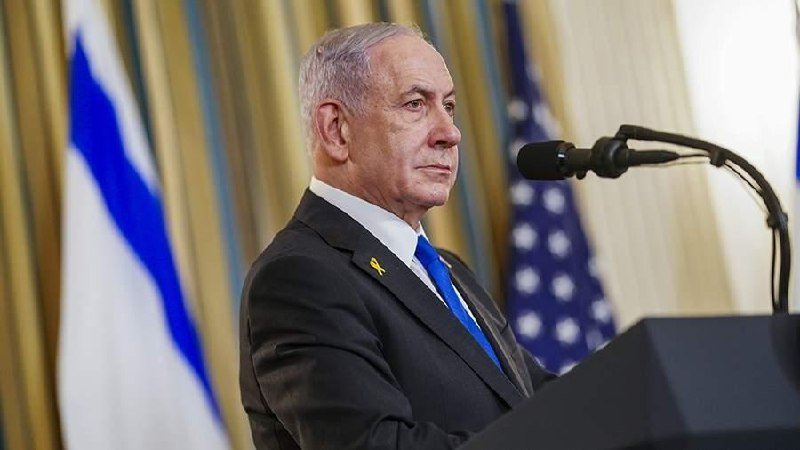
On 1 July 2026, with US and Iranian negotiators preparing to sign a long-trailed accord in Geneva, the Israeli prime minister told a cabinet meeting that moving Palestinians out of Gaza remains an open objective of the war. The remark, carried by Middle East Eye's live blog covering the Geneva ceremony, was not a slip; it was a confirmation, captured on the record, of a policy that has been implied for two years and denied for two years.
The timing is the story. While Washington's diplomats were arranging photo-ops around a Middle East détente, the government they fund and arm was spelling out, in plain words, the demographic outcome their Western backers publicly disavow. The dissonance is no longer deniable.
What Netanyahu actually said
According to Middle East Eye's live coverage of the 1 July 2026 political and diplomatic developments, Netanyahu told ministers that "Gaza ethnic cleansing" remained on the Israeli agenda. The phrasing, sourced to Middle East Eye's correspondent monitoring the meeting, is unusually direct for an Israeli prime minister speaking in a formal setting. Israeli security concerns — hostage recovery, weapons smuggling, the persistent threat from armed groups — are real and must be taken seriously. So is a sitting prime minister saying the quiet part out loud.
The remark lands against two years of displacement already executed. Israeli ground operations, evacuation orders, and the sustained bombardment that followed 7 October 2023 have emptied large corridors of northern Gaza and the Rafah border zone of their pre-war population. The remaining 2.1 million people, by UN OCHA tracking, are concentrated in shrinking central and southern areas. Saying "ethnic cleansing" attaches a label to a trajectory the international aid system has been documenting in figures for months.
The plausible counter-read is the one Israeli spokespeople will offer: that Netanyahu was speaking aspirationally about long-term demographic arrangements, not announcing tomorrow's operations; that policy in Israel runs through the cabinet and the IDF general staff, not through a prime-ministerial aside. That defence holds in a courtroom. It does not hold on the front page of every wire in the region.
The security force nobody voted for
Minutes before Netanyahu's remarks cleared Middle East Eye's live blog, the same feed reported that a Trump-backed Gaza security force announced tactical vehicles had reached the perimeter of the Strip. The framing — "Trump-backed" — is itself the headline. It signals that the external guarantor of any postwar arrangement is no longer the United Nations, the Palestinian Authority, or an Arab League monitors mission; it is a US-assembled militia under American political sponsorship, with Israeli vetting.
This is the third pillar of the endgame. First, an Israeli prime minister on record endorsing demographic reordering. Second, a US-backed force on the ground with the equipment to police it. Third, the simultaneous packaging of a regional peace deal with Iran that gives Washington political cover to keep doing it. Whoever signed the Geneva accord on 1 July was not signing a Gaza ceasefire; they were ratifying the diplomatic weather under which Gaza's reorganisation proceeds.
The serious version of the Israeli defence is that without an external security architecture, Hamas reconstitutes, weapons flow resumes, and Israeli communities near the perimeter absorb the cost. That case is reasonable. It does not require endorsing ethnic cleansing as an end-state, and it is the case Netanyahu could have made if he wanted to keep allied governments comfortable.
What the WHO evacuation tells you
In the same hour as the Netanyahu remark and the Trump-force deployment, the World Health Organization evacuated 85 patients and companions from Gaza for treatment abroad, per Middle East Eye's live blog. Three numbers matter here: the smallness of 85 against the medical backlog in the tens of thousands, the bureaucratic grind that produces that number per week, and the confirmation embedded in the WHO statement that a population considered captive by its own government is also being slowly bled out by airlift.
Each evacuated patient is a public admission that Gaza's health system — which once ran its own cancer and cardiac surgery — is no longer reconstructible inside the Strip under current conditions. The Geneva track accelerates the diplomatic normalisation of that fact while the medical airlift documents it, one stretcher at a time.
Stakes, plainly
If the trajectory holds, the winners are clear: an Israeli government that has stated its objective out loud and found that the diplomatic calendar eventually moves around it; a US administration that secures a marquee Iran deal without paying the domestic price on Gaza. The losers are the population being reorganised, the Palestinian Authority whose relevance the architecture is designed around, the Arab governments whose populations will absorb refugees and whose capitals will absorb the criticism, and the European governments whose rhetorical commitments to international humanitarian law now visibly mean nothing.
What remains genuinely uncertain is whether Netanyahu's remark opens a split inside the Israeli coalition or hardens a national consensus. The reporting so far shows neither a cabinet resignation nor a Knesset revolt. And whether the Trump-backed force becomes a permanent occupation regime under a different flag, or a transitional authority that hands back to something Palestinian, is the question 2026's Geneva accord will not answer on the day it is signed.
This publication is not neutral about mass forced displacement. It reports it; it does not euphemise it.