"Nirvanna the Band the Show the Movie" turns slacker nostalgia into a small, sharp trick
Matt Johnson and Jay McCarrol's feature-length expansion of their cult web series lands as a goofy, surprisingly tender time-travel comedy about friendship and the 2000s.
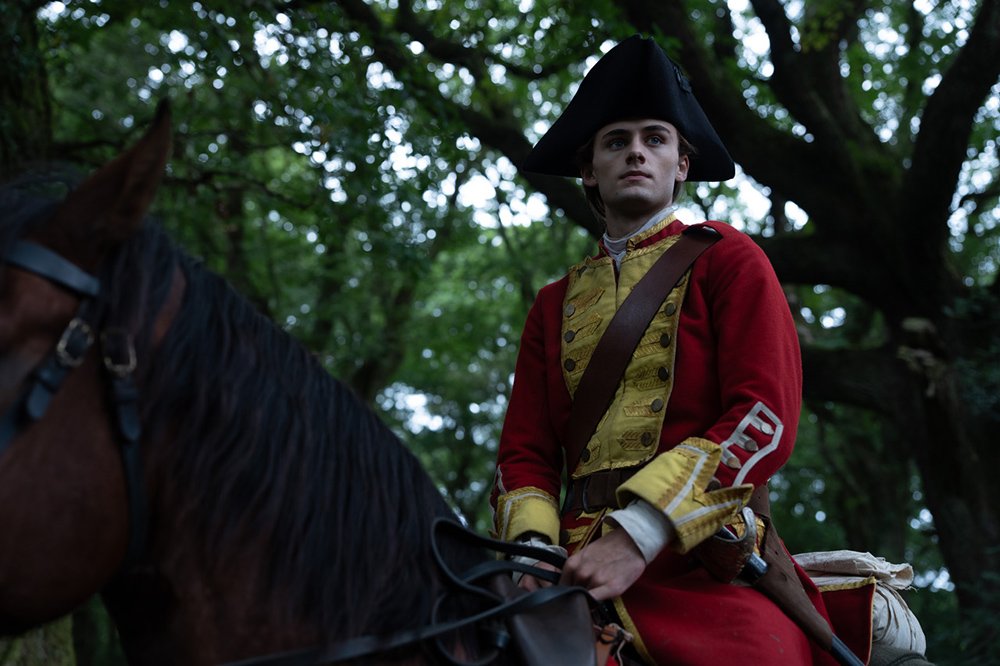
A feature-length film built from a two-decade web series is, on paper, a hard sell. The premise does not help. Two Toronto slackers — best friends, perpetual underachievers, would-be rock stars — accidentally invent a time machine in 2008 and use it to try to land a gig. That, roughly, is the engine of Nirvanna the Band the Show the Movie, which arrived in cinemas on 1 July 2026 after a long gestation that began, in effect, on a public-access cable channel and YouTube. The result is shaggy, low-budget, and closer in spirit to a late-1990s indie than to anything the summer 2026 slate has so far produced.
The film is, in the plainest sense, a goofball comedy with a time-travel chassis bolted onto it. The two leads — Matt Johnson and Jay McCarrol, who also co-wrote and co-directed — play versions of themselves, a pairing that has anchored the project since 2007. Their chemistry, built across nearly twenty years of shorts, music videos, and a Viceland television series, is the asset the film trades on. It is also the reason the picture works at all: the banter is loose enough to feel improvised, and the friendship is believably frayed without ever tipping into cruelty.
A Bill and Ted chassis, with a longer fuse
Critics have reached for the obvious comparison. The Guardian's 1 July 2026 review frames the film as channelling Bill and Ted — two well-meaning idiots stumbling through history with a half-built machine, leaving small psychic messes behind them. That description is fair as far as it goes, though the new film is slower and more melancholy than the Keanu-Reeves template. The time machine, in this case, is less a DeLorean than a malfunctioning teleporter built from a thrift-store receiver and a Casio keyboard. Its range is limited. Its consequences are not.
The 2008 setting is doing real work. By parking the protagonists in the late-Bush, pre-Obama, pre-iPhone moment, the film is able to mine a very specific kind of nostalgia — the last gasp of the analog city, the last summer of MySpace, the last gasp of an indie music ecosystem that has not yet been flattened by streaming royalty rates. Johnson and McCarrol, both now in their late thirties, are visibly playing younger versions of people they have already been. The hair is a giveaway. So is the wardrobe. So is the band's unironic belief that a Tuesday night residency at a Leslieville bar might, eventually, lead somewhere.
A psychic wound, opened on purpose
What lifts the picture above its premise is the second-act turn. The time machine does not, as the first act suggests, simply deposit the pair in a series of comic set-pieces. It opens something the pair had spent years papering over. The "psychic wound" the Guardian review points to is the death of a third friend, sketched in flashback, who died in the years between the web series and the present-day frame. The film is not especially explicit about the grief, and it resists the easy catharsis the trailer hints at. What it does, instead, is use the time loop as a way of circling the loss without ever resolving it.
That structural choice — grief as the engine, not the payoff — is what separates the film from the comedies it superficially resembles. The 2008 setting becomes a place the pair keep returning to because it is also the last place the three of them were all together. The time machine is, in effect, a denial-of-service attack on the present.
Counter-narrative: why the goodwill may not transfer
There is a counter-read worth taking seriously. The film is built almost entirely on the goodwill generated by the web series, and that goodwill is concentrated. Nirvanna the Band the Show ran from 2007 in various forms, was picked up by Viceland in 2017, and has accumulated a devoted, if modest, audience. For viewers arriving cold, the picture's improvisational energy can read as undisciplined. Several early reviews noted the long middle section, in which the pair attempt to reverse-engineer the teleporter from memory, plays as flat. The film's budget, reportedly in the low single-digit millions, is visible on screen in a way that is occasionally charming and occasionally merely cheap.
It is also a film that asks a lot of its audience's tolerance for Canadian indie-rock. The fictional band's songs are not the point. But they occupy enough screen time that a viewer with no prior investment in the duo's music may start to wonder when the plot is going to resume.
Structural frame: the long tail of the cult web series
What the film documents, more than anything, is a small-business model of stardom that the platform era has not yet finished off. The Nirvanna project is the product of nearly two decades of compounding attention, accumulated through a public-access cable show, a YouTube channel, a Viceland pickup, music releases, and live shows — each step converting a slice of one audience into a slice of the next. The feature film is the cash-out on that long tail. It is, in that sense, a working argument that the much-mourned death of the mid-list indie career is overstated: the economics are tighter, the windows are shorter, but the scaffolding is still there for creators willing to spend twenty years on it.
That is also, plainly, a story about Toronto. The film wears its city hard. Leslieville, the Annex, the late-night TTC, the dive bars that have already been replaced by condovilles — these are not set decoration. They are the third lead. The Canadian specificity, which has occasionally been a liability for the duo in trying to cross south of the border, is here rendered as texture rather than gag.
Stakes: a small bet on a longer game
The commercial stakes for Nirvanna the Band the Show the Movie are modest. The picture does not appear aimed at a summer tentpole audience. Its likeliest outcome is a respectable per-screen average in the cities that already know the duo, a quick expansion to a wider Canadian release, and a streaming deal of the kind that has absorbed most of Viceland's alumni projects. The cultural stakes are slightly larger. A film that runs at 96 minutes, costs less than a single Marvel VFX sequence, and turns a profit on a few hundred thousand ticket-buyers is, in 2026, a small proof-of-concept for a different kind of release calendar.
What remains genuinely uncertain is whether the time-travel register lands for viewers without a personal history with the series. The 2008 nostalgia is the most legible part of the picture; the grief underneath it is the part that requires patience. The film's defenders — and the early critical consensus is broadly on its side — argue that the patience pays off. Its detractors will note that 96 minutes is a long time to spend on a joke that does not, in the end, deliver a punchline so much as a shrug.
Either way, Nirvanna the Band the Show the Movie is the rare 2026 release that does not seem to be in conversation with anything else currently in cinemas. That is either a recommendation or a warning, depending on the viewer.
— Monexus framed this as a study of how small, two-decade indie projects get cashed out in the platform era. Most wire coverage leaned on the Bill and Ted comparison; Monexus is more interested in what the film says about the long tail of cult attention in 2026.
Wire provenance
This editorial synthesis draws on the following public wire/social posts:
- https://en.wikipedia.org/wiki/Nirvanna_the_Band_the_Show
- https://en.wikipedia.org/wiki/Matt_Johnson_(filmmaker)
- https://en.wikipedia.org/wiki/Viceland