Poltava comes under ballistic fire: what the early reporting tells us, and what it doesn't
A pre-dawn Iskander-M strike on Poltava Oblast adds another data point to a long summer of Russian missile pressure on Ukraine's interior — and exposes the limits of real-time verification.
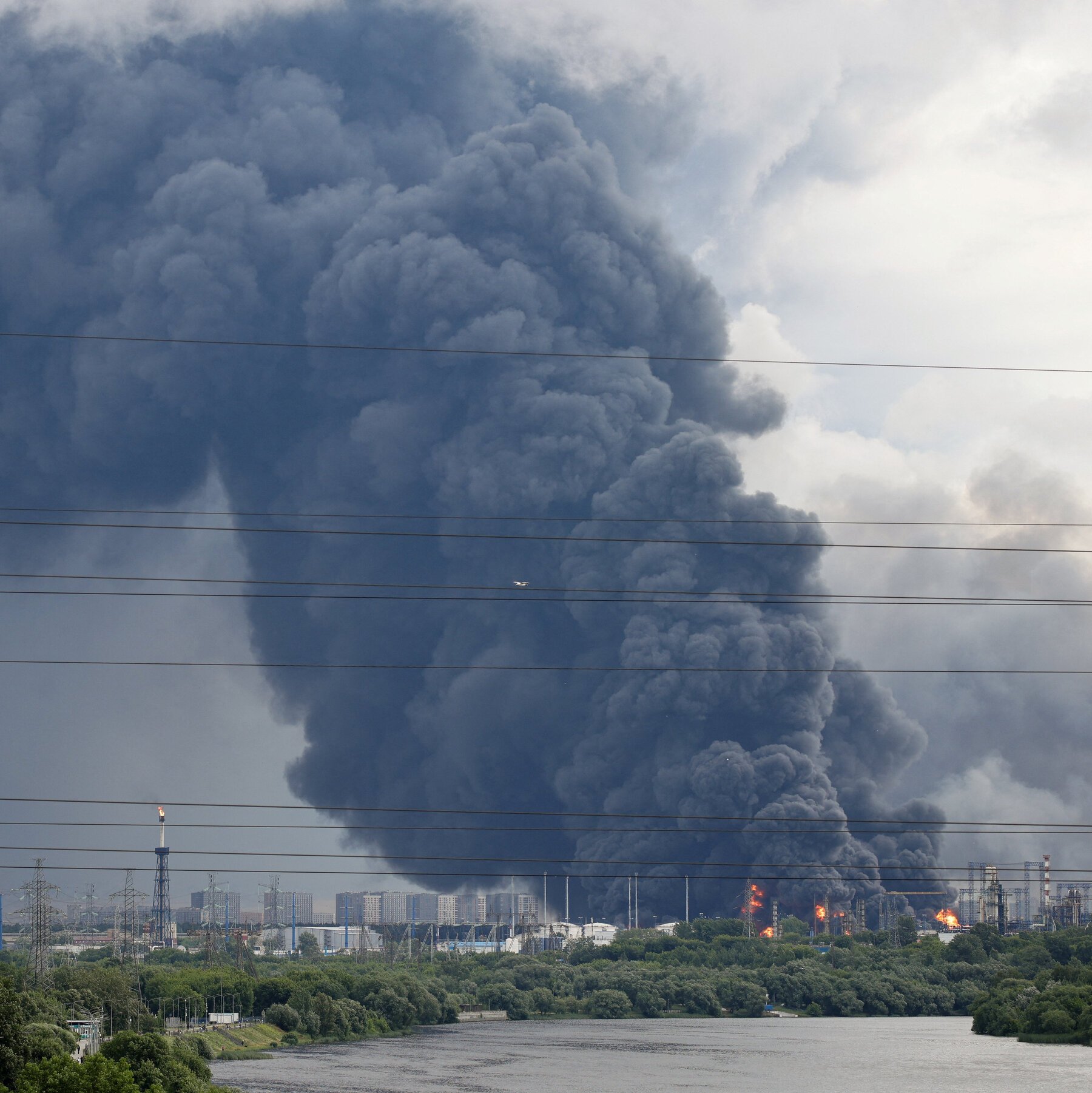
Smoke rose over Poltava City shortly after 05:58 UTC on 1 July 2026, when the Telegram channel AMK_Mapping reported an Iskander-M ballistic missile impact on Poltava Oblast. The channel posted a follow-up at 05:59 UTC flagging the impact location near the city, and a third message at 06:04 UTC carried an image of smoke drifting above the skyline. The three dispatches are the entirety of what is publicly verifiable in the first hour of reporting. They are also a useful case study in how thin the informational floor remains during a missile strike on a Ukrainian city, and in how easily speculation fills the gap.
The pattern is familiar. A Russian short-range ballistic missile — the 9K720 Iskander-M, with a stated range of up to roughly 500 kilometres and conventional warhead options — is a precision weapon optimised for fixed infrastructure and concentration areas. Poltava, a regional capital in central-eastern Ukraine, is the kind of target where such a system is most useful: a city with military, logistics and rail significance, far enough from the front line that an Iskander salvo can arrive with little warning. The weapon itself is not new to this war. What is new, on this July morning, is simply that it was used here, now, against a population centre in the country's interior.
What the early reporting actually establishes
Three things, and only three. First, AMK_Mapping, a Telegram channel that has documented strikes across Ukraine since the early months of the full-scale invasion, asserts that an Iskander-M was launched at Poltava Oblast. Second, the channel identifies the impact zone as near Poltava City, a phrasing that suggests ground proximity without confirming a direct hit on the urban core. Third, the channel published a smoke plume photograph as the strike's visual evidence.
What the early reporting does not establish is at least as important. It does not specify which district, facility or infrastructure was struck. It does not give a casualty count, an injury count, or a damage assessment. It does not say whether this was a single missile or a salvo. It does not identify the intended target — military, energy, transport, residential. It does not cite the Ukrainian Air Force, the regional military administration, or any municipal authority. In the first hour, the only source on the record is a Telegram channel that aggregates open-source signals; the corroborating voices that usually ground a strike story in verifiable fact have not yet spoken.
Why Telegram moves first, and why that matters
Russia's full-scale invasion of Ukraine has been a Telegram war as much as a war on the ground. Channels like AMK_Mapping, Rybar and Two Majors post strike notices within minutes of impact, often before official Ukrainian briefings, often before Western wire services have a correspondent on the line. The result is a reporting environment in which the first version of any event is shaped by a small number of channels, each with its own sourcing network and its own editorial posture. The speed is genuine; the verification is often absent.
There is no reason to treat AMK_Mapping's three dispatches as fabricated. The channel has a track record on strike geography. But a strike notice is not a strike account. The distance between "impacted near Poltava City" and "a missile hit a school in the Kirov district" is the distance between a fact and a story, and the gap gets filled, on social media, in the minutes before any of the official actors weigh in. Readers who see a Telegram photograph and assume the rest of the picture is also in evidence are misreading the source.
What corroboration will look like, when it arrives
The verifiable version of this strike will arrive through a different set of channels. The Ukrainian Air Force publishes regular strike inventories, usually via Telegram and Facebook, listing incoming missile and drone types and the regions targeted. The Poltava Oblast Military Administration, run by the regional state administration in cooperation with the Office of the President, typically posts on casualties and infrastructure hits within hours. The State Emergency Service issues damage reports. The National Police of Ukraine logs impact sites. Kyiv Post, Ukrainska Pravda, Suspilne and the BBC's Ukrainian service all maintain correspondent capacity in the region. The Reuters and AP wires, when their correspondents file, provide the cross-checked version that an international audience reads.
If the pattern of previous strikes holds, by mid-morning UTC a fuller picture will be on the record: target type, casualty count, infrastructure damage, and — often — a Ukrainian assessment of the launch site based on flight data and debris analysis. Russian state-adjacent channels may also publish, with their own framing. The Iskander-M itself, a road-mobile system, makes launch-site attribution difficult; the wreckage analysis is what eventually narrows the field.
Stakes, and the trajectory this fits
A single Iskander-M strike on a regional capital is not, on its own, a strategic event. What gives it weight is the pattern. Russia has spent 2026 pressing a campaign of attrition against Ukraine's interior, combining Shahed-type one-way attack drones, Kh-101 cruise missiles, and short-range ballistic systems like the Iskander-M. The intent is twofold: to degrade the military-industrial and logistics capacity that supports Ukraine's front-line defence, and to impose a steady, low-grade civilian cost that erodes domestic will. The two objectives are not separable. A missile that lands near a city is, in this campaign logic, also a message to the cities that haven't been hit yet.
Ukraine's response operates on a different clock. Air-defence intercept data, published in near-real time by the Air Force, shapes the Western discussion of Western-supplied systems — Patriots, IRIS-T, NASAMS, SAMP/T — and of the consumption rate of interceptor munitions. A strike that lands is, in that frame, a strike that air defence did not stop. The accountability flows in two directions: Russia for launching, Ukraine and its partners for failing to intercept. Both readings are partial, and both will appear in the next 24 hours of coverage.
What remains uncertain, at the time of writing, is everything the three Telegram dispatches did not say. The number of missiles in the salvo. The target. The casualty and damage picture. Whether the strike is part of a wider overnight package — Iskander-Ms are rarely launched alone — or an isolated shot. The early reporting gives the silhouette. The shape of the event, and the policy weight it carries, will be set by the reporting that follows.
This piece was written from a single Telegram source thread; it will be updated as Ukrainian official channels and wire services publish corroborating detail.
Wire provenance
This editorial synthesis draws on the following public wire/social posts:
- https://t.me/s/AMK_Mapping