Robin Byrd's body of work: a half-century of refusing to be looked away from
A Variety interview surfaces HBO's pickup of a Sarah Jessica Parker-produced documentary on Robin Byrd, the bisexual former porn actress who built a cult public-access empire and now has something more durable to say than 'clit.'
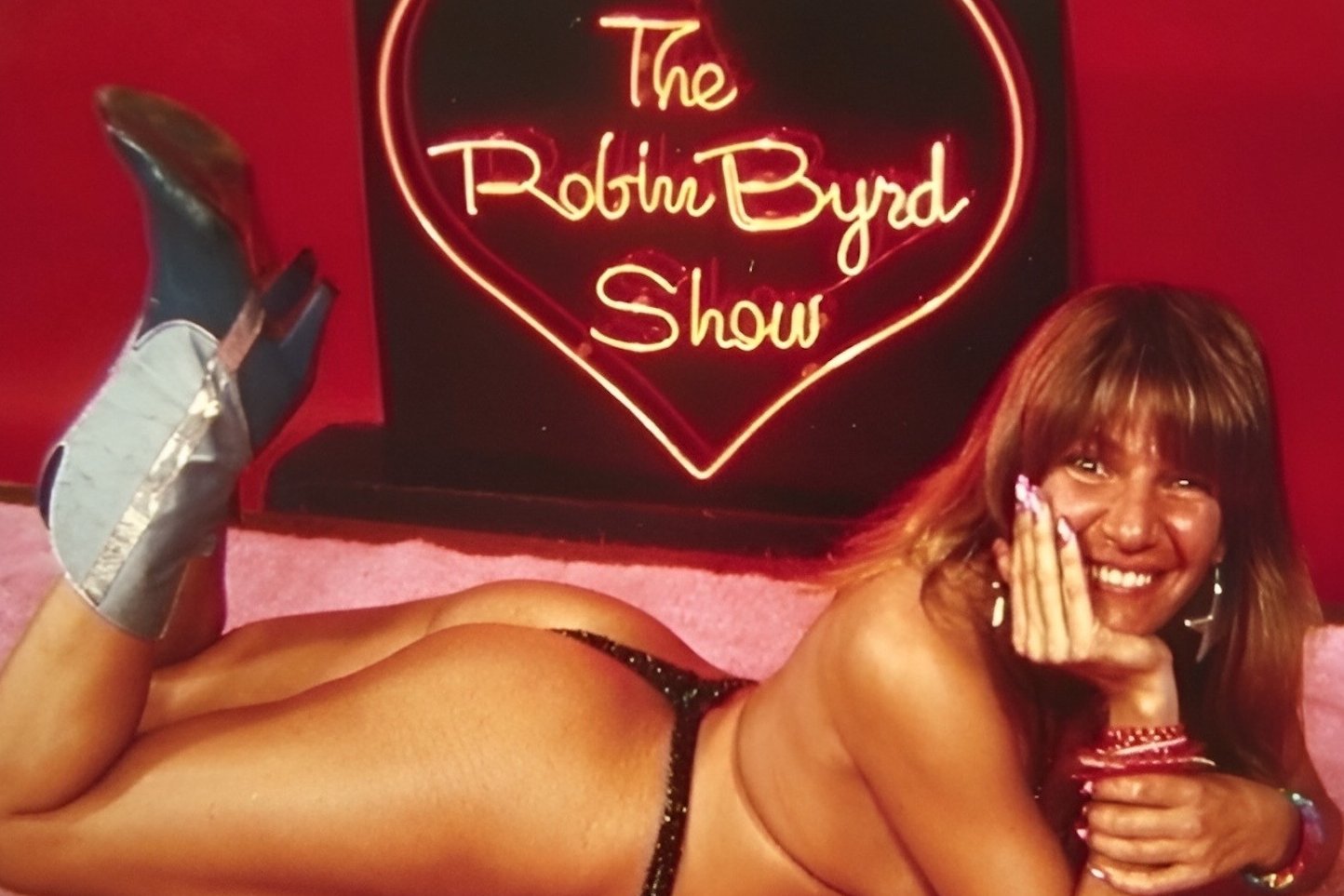
On the morning of 30 June 2026, Variety published an interview with Robin Byrd, the 73-year-old former adult-film performer turned cult public-access television host, in which the New Yorker's half-century of refusing genre decorum came into unusually sharp focus. The piece, framed around an HBO documentary produced by Sarah Jessica Parker, treats Byrd less as a prurient artefact than as a programming entrepreneur who outlasted every network that tried to contain her.
The documentary is the news; Byrd's catalogue of contradictions is the context. For nearly fifty years she has performed simultaneously as sex worker, late-night host, advocate for AIDS visibility, and the operator of one of the most resilient small businesses in American independent media. An HBO pickup for a figure who built her audience on a public-access channel in Manhattan amounts to a quiet institutional admission: the people who once could not say her name on air are now paying to tell her story.
A public-access empire that refused the obvious pivot
Byrd's late-night programme, which she hosted in various forms from the late 1970s onward, became a Manhattan institution by leaning into the material that broadcast television would not touch. Variety's profile, published on 30 June 2026, frames her career as a long exercise in converting stigma into a brand asset — a structure more familiar from stand-up comedy or punk rock than from adult entertainment, which tends to shed its most distinctive on-camera talent once they cross forty. Byrd treated her own body and her own voice as the same instrument.
She also, the interview notes, moved early onto OnlyFans once the platform proved durable. That detail matters because it complicates the standard trade-press reading of creator-economy platforms as a fallback for performers displaced by mainstream pornography's tube-site collapse. Byrd was not displaced. She arrived at OnlyFans with a half-century of audience equity already on her books, and used it as a distribution upgrade rather than a rescue.
The SJP production as institutional reconciliation
The documentary's executive producer, Sarah Jessica Parker, is the newsworthy wrinkle. Parker's brand is built on a particular kind of tasteful post-feminist glamour — HBO's own flagship of that register, Sex and the City, made her a household name. Her involvement signals that HBO is willing to platform a subject that, even five years ago, would have lived exclusively in the prestige-cable margins. It is the same choreography that brought adult-industry figures into documentaries from After Porn Ends onward: the mainstream acquirer borrows the subject's edge while the subject borrows the acquirer's legitimacy. Both sides know the deal is being made; both sides pretend it isn't.
Variety's profile leans into Parker's seriousness of purpose and treats the documentary as biographical inquiry, not prurient rescue. That framing matters. It positions Byrd's queer and adult-industry identity as material for a serious portrait rather than as a transgression to be managed. The risk in any such project is the inevitable footnote-ification of the subject — a career reduced to its most scandalous early chapters. The interview suggests Byrd and Parker are aiming higher.
What the doc can and cannot deliver
The structural pattern in these productions is well-established by now. The subject gets a feature-length platform; the platform gets credibility-by-association; the audience gets a smoothed-over version of a life whose actual jaggedness made it interesting. Byrd's case is unusually complicated because the jaggedness is the product. Her on-camera bluntness about bodies, desire, and disease — the AIDS-era work in particular, which Variety nods to without deep quotation — is not incidental colour around a more respectable story. It is the story. A documentary that flinches from that material in order to win a festival slot or an HBO-acceptable tone will produce a profile of a brand, not a person.
There are reasons for cautious optimism. Byrd is alive, articulate, and evidently in a mood to talk. Variety's interview suggests she has opinions about the current creator economy, the regulatory threats to platforms like OnlyFans in various US states, and the long arc of queer representation on American television. If Parker and the filmmakers let her deliver those opinions in her own register — and Variety's quotations suggest Byrd has not softened — the documentary could land as an unusually frank artefact.
The honest counter-reading is that HBO has a long track record of domesticating exactly the kind of adult-industry figure Byrd represents. The same apparatus that turned Real Sex into a respectable occasional series, that turned adult-film performers into talking heads between car commercials, will be tempted to do the same here. Byrd's half-century of refusing that domestication is the only credential the production actually needs.
The larger stakes for adult-industry documentation
Beyond Byrd personally, the documentary arrives at a moment when the adult industry's relationship with mainstream Hollywood is openly in flux. Streaming platforms have spent the last five years renegotiating which bodies, which acts, and which verbal references to sex work they will tolerate. OnlyFans's category-creator status has given performers direct-to-audience economics that reduce dependence on legacy studios. The result is a genre of documentary about performers who are no longer, strictly speaking, dependent on the gatekeepers making the film about them.
That shift makes Byrd a useful prototype. She has been operating outside the studio system for decades, building audience equity that travelled intact onto a platform (OnlyFans) that did not exist when she started, and is now the subject of a prestige-cable feature whose producers cannot pretend they discovered her. Variety's interview closes a loop that adult-industry documentation has been circling for years. The interesting question is whether the documentary itself will close it, or reset it.
What the sources do not specify, and what no one outside the production can currently answer, is how much of Byrd's adult-industry work the documentary actually shows. The interview gestures toward her AIDS-era advocacy and her unflinching on-camera persona, but stops short of describing archival footage in detail. The film's relationship to its own X-rated material will determine whether it lands as a portrait or as a tribute.
Desk note: Variety's interview positions Byrd as a serious biographical subject rather than a provocation. Monexus treats her adult-industry and queer work as primary material, not as controversy to be managed, while reporting the HBO pickup as the institutional news it represents.