Russia pounds Kyiv with ballistic barrage as strikes intensify in the capital
Two waves of Iskander-M launches and a reported Zircon salvo hit Kyiv within hours, part of a tempo of strikes that residents and monitors say is closing the city's air-defence margins.
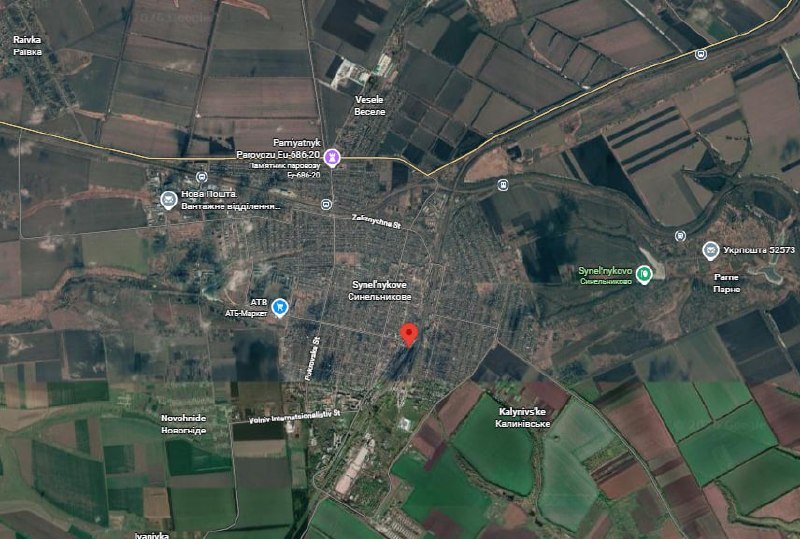
Two waves of Russian ballistic missiles struck Kyiv within roughly八十 minutes on the night of 1 July 2026, opening with Iskander-M launches from Bryansk Oblast and closing with what Telegram war monitors identified as Zircon-class cruise missiles inbound on the capital. The tempo, not the payload, is the story.
Reports from open-source monitors began at 21:46 UTC, when the Telegram channel AMK_Mapping logged an Iskander-M salvo on Kyiv. By 21:48 UTC the same channel reported three to four missiles had been used in that strike, with explosions audible across multiple districts. A second wave followed at 22:53 UTC, again from Bryansk, with another two Iskanders on the same trajectory. Five minutes later the channel reported a third wave — two Iskanders and, for the first time in this cluster, two Zircons — descending toward the city, with two confirmed impacts logged at 22:54 UTC. The separate Telegram channel war_monitor corroborated the 22:53 UTC event with a single line: descent of ballistics over Kyiv.
This is what a missile tempo looks like when one side is trying to drain the other's intercept budget. Iskander-M is a mobile short-range ballistic system with a manoeuvring re-entry vehicle, designed in particular to stress air defence by varying its terminal phase; the Zircon is a scramjet-powered cruise missile nominally capable of hypersonic flight at low altitude, and harder to track on radar than a ballistic arc. Combining them in a single evening forces Kyiv's defenders to engage two distinct threat profiles simultaneously, which is precisely the kind of pressure that erodes interceptor stocks faster than peacetime procurement can replace them.
The pattern, not the novelty
Ballistic strikes on Kyiv are not new; what stands out about 1 July is the cadence. Three waves in roughly two hours — Bryansk-origin Iskanders, then a repeat Bryansk launch, then the mixed Iskander/Zircon package — is closer to a raid than a punitive strike. The Iskander is launched from mobile transporter-erector-launchers inside Russian territory, with the Bryansk launch axis pointing roughly south-southwest toward Kyiv across the border regions of Sumy and Chernihiv oblasts. Zircons, by contrast, are typically sea- or air-launched; their appearance here, if confirmed by independent reporting, would mark a notable escalation in launch-platform diversity against the capital.
The cluster as documented also illustrates the limits of what open-source monitors can say with confidence. AMK_Mapping is a Telegram channel that aggregates eyewitness reports and acoustic signatures; war_monitor does similar work at shorter latency. Neither substitutes for the kind of debris analysis the Ukrainian air force or an international body would publish. The channel's own language is hedged — "2 Iskanders and 2 Zircons approaching Kyiv" — and that hedge should travel with the claim. Readers should treat the Zircon identification as preliminary until the Ukrainian Air Force or a wire service confirms it on the record.
The counter-narrative, and why it doesn't hold
The Russian framing of these strikes, when it surfaces in Russian state media, treats them as targeted action against military infrastructure; that framing is hard to sustain once multiple districts of a city of three million people are recording explosions within an hour of each other, and harder still when Iskander-M is fielded as an area-denial weapon rather than a precision antitank round. Kyiv has been hit repeatedly since the full-scale invasion began in February 2022, and the city's air-defence coverage has been credited by Western analysts with keeping casualties well below what unchallenged strikes would produce. That does not make the strikes less aggressive; it makes Kyiv's defenders more competent, and the cost of letting that competence lapse correspondingly higher.
The argument that the tempo reflects Russian battlefield pressure elsewhere — that Moscow is pulling Iskanders off the Donbas line to compensate for losses there — is structurally plausible but unsupported by the public evidence in this cluster. The launches are coming from Bryansk, deep inside Russian territory and hundreds of kilometres from the active front; redistributing launchers to a strategic axis is not the same as redeploying them to the tactical fight. If anything, the salvo structure suggests an attempt to overload Kyiv's engagement cycle rather than to substitute for attrited frontline fires.
Structural frame: interceptor economics
The deeper story is not which missiles hit Kyiv but how many interceptors Kyiv has left. Western-supplied Patriot and IRIS-T batteries are finite; the cumulative effect of repeated Iskander and Zircon salvos is to force a defender to spend expensive missiles against cheap ones. This is the same arithmetic that wore down Soviet air defence in Afghanistan and Iraqi air defence in 1991 — the side shooting interceptors burns through inventory faster than the side shooting ballistic missiles can build them. The Ukrainian Air Force has not, in the public reporting available as of this writing, confirmed interceptor expenditure for the 1 July strikes; the gap is itself informative, because real-time expenditure figures would tell Russian planners exactly how much pressure to apply next time.
For Kyiv's partners, the operational question is therefore not whether to send more air defence — that has been the consistent ask — but whether to send it at the rate Kyiv is being forced to expend it. A tempo that allows three waves in two hours will not slow on its own.
Stakes
If the Zircon identification holds up under independent reporting, the practical stakes are immediate: Kyiv's defenders must now assume that hypersonic-class cruise missiles can be folded into the same raid package as conventional ballistic salvoes, raising the cost of every engagement cycle. The longer stakes are political. Repeated successful strikes on the capital, even partially intercepted, harden the case inside European capitals that air defence is the single most urgent line item, and they harden the case inside Washington that the inventory is being drawn down faster than it can be replenished. Both pressures point in the same direction: a faster, not slower, build-out of interceptor stockpiles — and a continuing argument about who pays for it.
What remains uncertain is the Zircon identification itself. Open-source monitors working from acoustic and trajectory data are good at confirming that something flew and something landed; they are less good at distinguishing a sea-launched hypersonic cruise missile from an air-launched Kh-47M2 Kinzhal at terminal phase, because both look similar on civilian-grade sensors. Until the Ukrainian Air Force publishes a strike summary with debris photographs or trajectory plots, the more cautious read is that the capital was hit by a mixed Iskander-and-Kinzhal package, with the Zircon label unconfirmed. Either way, the message from Bryansk to Kyiv on the night of 1 July 2026 was the same: three waves, two hours, no gap.
This publication has framed 1 July's strikes as a tempo problem rather than a single-event story, in line with our standing coverage of Russia's invasion of Ukraine — the invaded party — and the documented pattern of Russian salvo tactics against Ukrainian cities.
Wire provenance
This editorial synthesis draws on the following public wire/social posts:
- https://t.me/AMK_Mapping
- https://t.me/AMK_Mapping
- https://t.me/AMK_Mapping
- https://t.me/war_monitor
- https://en.wikipedia.org/wiki/9K720_Iskander
- https://en.wikipedia.org/wiki/3M22_Zircon