Supreme Court Upholds Birthright Citizenship, Closing One Front in Trump's Deportation Architecture
A 6-3 majority rejected the administration's bid to redefine birthright citizenship on 1 July 2026, handing Donald Trump a legislative instruction rather than a judicial one.
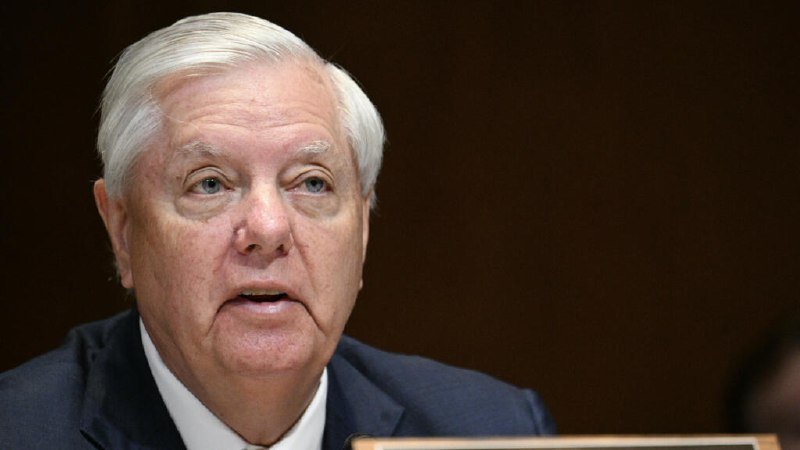
On 1 July 2026 the US Supreme Court upheld the constitutional guarantee of birthright citizenship, dealing a sharp but narrow defeat to the second Trump administration's signature immigration doctrine. The 6-3 majority opinion, handed down in Washington on the first day of the court's summer term, reaffirmed the original reading of the Fourteenth Amendment and told the White House that any change would have to come from Congress — not from the bench, and not from the executive branch's reinterpretation of who counts as an American at birth.
That instruction is doing real political work. The court did not vindicate birthright citizenship as a moral imperative; it returned the fight to the legislature, where the administration now has a defined, finite battlefield. President Donald Trump, speaking to reporters the same day, called the ruling "too bad" and urged Congress to act. The result is a constitutional question that has been, for the moment, settled — and a political question that has just been opened.
What the court actually decided
The ruling is narrow in form and wide in reach. The majority held that the administration's proposed reinterpretation of the Citizenship Clause — the section of the Fourteenth Amendment that grants citizenship to anyone born on US soil and subject to its jurisdiction — exceeded executive authority. According to Reuters legal reporter Jacey Fortin, writing for the Reuters World News podcast on 1 July, the court "found this was a pretty open and shut case." The administration had argued, in essence, that children of undocumented immigrants and certain temporary visa holders were not "subject to the jurisdiction" of the United States at birth. Six justices disagreed.
That doctrinal answer is the easy part. The harder question is what the ruling does not do: it does not bind Congress. The Constitution's text, in the court's reading, is not the only thing that protects birthright citizenship — it is also the default position against which any statute must be measured. A future Congress, with a future president signing, could in principle legislate around it. The majority's framing of "subject to the jurisdiction" leaves room for statutory definitions, even if it forecloses executive redefinition. That is the seam the administration will now pull at.
The counter-frame: Trump's legislative path
The White House read the ruling as an instruction manual. Trump's response — characterising the decision as "too bad" and immediately calling on Congress to pass a statute ending birthright citizenship by law — shows the administration's pivot is already underway. Reporting from LiveMint on 1 July 2026 carries the president's statement urging lawmakers to use their Article I powers to achieve what the executive could not.
This is not a fringe position inside the Republican caucus. A statutory path to restricting birthright citizenship has been discussed openly since the early months of the administration, and polling suggests a meaningful minority of the electorate is receptive. The administration's bet is that the court has handed it something useful: a defined legal question for which a legislative answer exists. Whether Congress delivers that answer is a question of mid-term math, not constitutional law.
There is a counter-reading worth taking seriously. Some immigration-restriction advocates argue that the ruling, by foreclosing the executive route, actually weakens the broader anti-immigration project — because the legislative path is slower, more visible, and more vulnerable to court challenge on equal-protection grounds than a quiet reinterpretation by an obliging attorney general. On that view, the administration has lost the most efficient tool it had, and any future restriction will arrive years later and cost more political capital than an executive order would have.
The structural frame: deportation architecture and the limits of unilateralism
Read against the administration's other immigration moves — the deportation posture, the detention contracting, the third-country removal deals — the ruling reveals a structural pattern: when an administration tries to relocate immigration policy from the legislature into the executive, the courts keep pushing it back. That is not because the federal judiciary is reflexively pro-immigrant. It is because the Constitution's architecture still treats immigration as a place where Article I powers and Article III review both have something to say. The administration's preference has been to concentrate discretion in the executive; the court's preference, in this term, has been to keep immigration law where it has always lived — in the statute, not the regulation.
The political economy of that friction matters. A great deal of the deportation programme's budget and operational tempo depends on executive discretion over enforcement priorities, detention standards, and removal categories. Birthright citizenship is downstream of all of that: it determines who is a citizen in the first place, which determines who can be deported, which determines the size and shape of the entire enforcement architecture. The court's ruling doesn't shrink the deportation state; it just refuses to let the executive unilaterally redefine the boundary between citizen and non-citizen.
Stakes and the road to November
For immigrant families, the practical effect is immediate and significant. The administration cannot, as a matter of executive policy, deny citizenship to children born on US soil to undocumented parents or most temporary-visa holders. That was the central operational goal of the reinterpretation effort, and it is now foreclosed without legislation.
For the administration, the ruling is a setback and a directive. It does not change the underlying political incentive structure that produced the executive order in the first place; it just relocates the fight to Congress. If Republicans hold the House and retake the Senate in November, a statutory restriction becomes a real possibility. If they do not, the question stays where the court left it.
There is one thing the sources do not resolve and that this publication cannot resolve from the materials in front of it: the precise composition of the majority, the names of the dissenting justices, and the exact vote count. Reuters' reporting characterises the ruling as a defeat for the administration and implies a clear majority; LiveMint characterises Trump's reaction as immediate and combative; Polymarket's pre-ruling projection on 30 June had given the administration a 5% chance of prevailing. What the wire materials do not give us is the formal citation, the opinion's full text, or the named author of the majority opinion. Until those are published, the doctrinal scaffolding is necessarily partial. The political effect, on the other hand, is already legible: a constitutional question closed, a legislative question opened, and a president publicly telling Congress to do something the courts just told him he could not.
Wire provenance
This editorial synthesis draws on the following public wire/social posts:
- https://x.com/reuters/status/...
- https://x.com/polymarket/status/...