Crypto, the Court, and the Presidency: Reading Trump's First Year Back
A crypto windfall north of $1bn, a Supreme Court rebuke on birthright citizenship, and an AI export ban quietly reversed — the second term is already producing its own template.
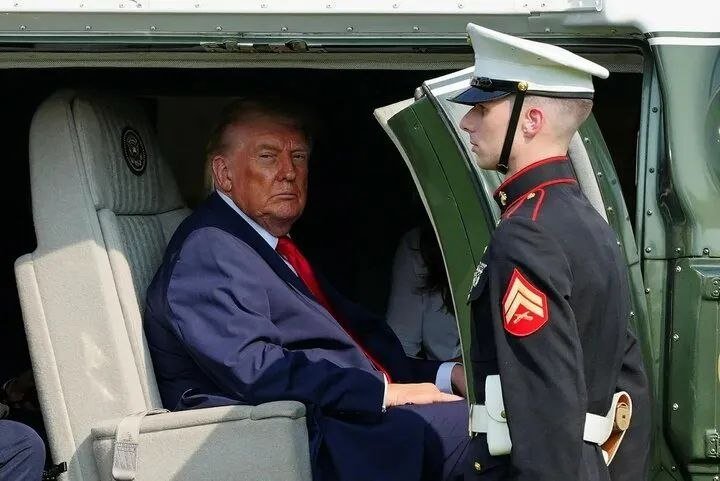
The numbers landed before the White House press office had even briefed on them. Reporting carried by BBC World on 1 July 2026 puts Donald Trump's crypto earnings in his first year back in office above $1bn, layered on top of millions more from real estate, Trump-themed Bibles, watches and branded merchandise. The figure is striking less for its novelty than for what it normalises: a sitting president with a personal financial exposure to a volatile asset class that his own regulators are tasked with overseeing.
Three weeks earlier, on 30 June 2026, the US Supreme Court closed its term with a pair of decisions that look contradictory until you read them together. The justices upheld birthright citizenship, delivering what BBC framed as a "major setback" to the administration's immigration agenda and drawing praise from civil rights groups. The same court, in the same term, also handed the president powers his predecessors did not enjoy — a pattern BBC described as "heavy defeats to Trump, while expanding his power." The architecture of the second term is being built, brick by brick, in the courts.
Layered on top is a quieter story: the US lifting, in late June 2026, an export ban on Anthropic's advanced AI tools — models named Fable and Mythos that had been suspended earlier in the month over concerns they could be misused by hackers. The reversal is the kind of decision that gets filed away as procedural and rarely revisited. It shouldn't be.
The crypto question no one on the Hill wants to answer
A presidential balance sheet that includes digital assets is no longer hypothetical. The BBC's reporting describes Trump earning "millions more" from real estate and branded goods alongside the crypto windfall, but it is the crypto line that breaks new ground. The structural problem is straightforward and unresolved: the executive branch sets the tone for the Securities and Exchange Commission, the Commodity Futures Trading Commission, and a Treasury that already commands the levers of stablecoin policy. A president with material exposure to the asset sits on the same side of the negotiating table as the industry's lobbyists.
The counter-frame is that prior presidents have held diversified portfolios and divested upon taking office. The Trump Organisation's retained stake — whatever its exact structure, which BBC's reporting does not specify — appears to function differently. The disclosure question is not whether the president broke a law; it is whether the existing disclosure regime is built for an asset class that can move ten percent in a session.
Birthright wins, executive power expands
The 30 June 2026 birthright ruling was, in BBC's telling, "welcomed by civil rights groups" and represents a hard limit on the administration's ability to redefine citizenship by executive order. That is a real win for the constitutional baseline. But the same Supreme Court term produced rulings in the other direction — what BBC characterised as "key victories" for the president.
The takeaway is not that the court is split down the middle. It is that the institution is sorting its doctrine: hard limits on the most visible immigration moves, broader latitude on the procedural machinery of executive power. A president denied on citizenship can still govern more freely on everything the citizenship ruling does not touch. That is the trade the American public appears to have accepted, whether consciously or not.
AI on a leash — then off it
Anthropic's Fable and Mythos were "abruptly suspended in June" over concerns they could be "used by hackers," per BBC's reporting, and the export ban was lifted before the month was out. The episode reads as a stress test of the new regime's AI posture: willing to act, willing to walk it back. Whether the reversal was driven by commercial pressure from US cloud customers, by allied governments asking for the tools, or by internal reassessment is not in the public record. What is in the record is that the levers moved, and quickly.
The shape of the year
Strip the headlines away and three patterns remain. First, the personalisation of presidential finance has crossed into a new asset class. Second, the courts are drawing bright lines on individual rights while leaving the administrative state wider than they found it. Third, the AI export regime is being administered case by case, with the suspensions and the reversals both happening inside a single month.
What remains genuinely uncertain is how these threads connect. The crypto exposure could be a one-term anomaly or a template; the court's twin rulings could harden into a stable equilibrium or invite confrontation; the AI reversals could become routine or could be followed by new restrictions on a different vendor. The sources do not specify, and it would be irresponsible to pretend they do. But the direction of travel — a presidency that is more financialised, more litigated, and more permissive on its own tooling — is now legible enough to name.
Monexus framed this as a structural read of the second term's first year, where three otherwise unrelated stories share a common feature: the institutions around the president are being asked to absorb new kinds of pressure that did not exist a decade ago. The wire coverage reported each item in isolation; the connective tissue is the editorial work.
Wire provenance
This editorial synthesis draws on the following public wire/social posts:
- https://t.me/BBCWorldoffl
- https://t.me/BBCWorldoffl
- https://t.me/BBCWorldoffl
- https://t.me/BBCWorldoffl