Ukraine pushes long-range strikes past 1,300 km, hitting Ufa refinery and a Penza missile-components plant
Ukrainian drones and missiles reached a lubricants refinery in Ufa and a missile-components site in Penza overnight, marking the second confirmed Ufa strike and the deepest series of attacks yet on Russia’s strategic depth.
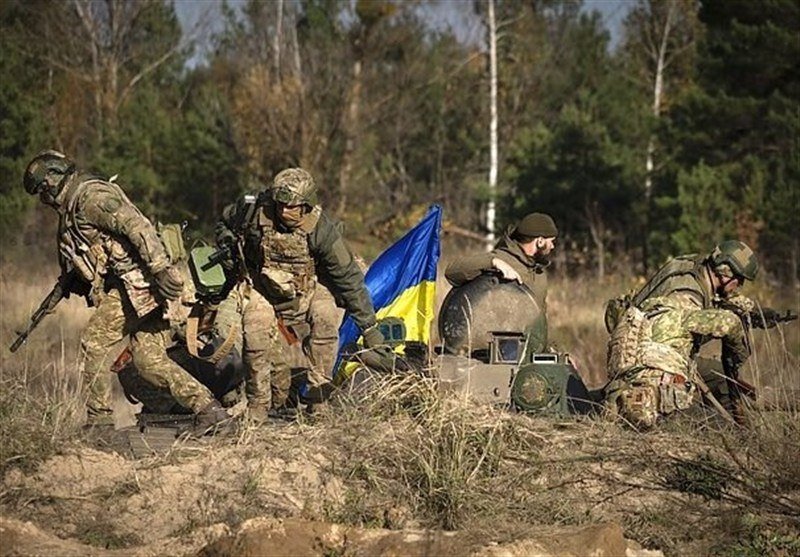
At 08:22 UTC on 1 July 2026, Kyiv Post's official channel reported that Ukrainian long-range weapons had, in President Volodymyr Zelensky's phrasing, hit "long-range sanctions" deep inside Russia overnight: a lubricants refinery in the republic of Bashkortostan and a missile-components plant further west. The Ufa site sits more than 1,300 kilometres from the front line. The Penza facility lies around 600 kilometres back. The pair of strikes, confirmed by Zelensky and corroborated by independent open-source trackers within the hour, mark a further escalation in Ukraine's reach and a second consecutive hit on one of Russia's largest lubricant producers.
The operational logic is now visible in the geography. Lubricants and missile components are not symbolic targets; they are bottlenecks. A successful strike on either one slows the manufacturing loop that feeds Russian front-line aviation and ground systems. Kyiv's choice of dual targets in a single overnight window reflects a campaign that has moved from harassment of nearby airfields to systematic pressure on the deeper industrial base.
What was hit, and how Kyiv framed it
The Ufa refinery is the more politically resonant of the two. Zelensky, writing overnight and quoted by Kyiv Post, said the plant is one of Russia's largest producers of lubricants and sits more than 1,300 km from the contact line. Noel Reports, an independent open-source account, confirmed the second strike on the same facility, suggesting Kyiv is not content with a single demonstration hit. The Penza target, by contrast, is a missile-components site roughly 600 km from the front; it sits inside the second ring of Russia's strategic depth rather than the third. The two attacks together describe a deliberate geometry — one strike on the country's energy-industrial base in the Urals, another on its missile-supply chain in the Volga Federal District.
Clash Report, an open-source channel that monitors strike footage, listed both sites in its 07:47 UTC summary and treated the campaign as a single coordinated action. The framing matters: when Kyiv talks about "long-range sanctions," it is borrowing the vocabulary of economic pressure and applying it to physical infrastructure. The implicit message is that the deeper the cost to Russian industry, the more credible any future ceasefire terms become.
How the strikes compare to earlier waves
The depth of the 1 July strikes is the headline. Previous Ukrainian campaigns have hit refineries in the Krasnodar region, the Rostov region, and a series of sites within roughly 800 km of the front. Ufa, in Bashkortostan, places the campaign more than 500 km further east than those earlier benchmarks. Penza, while closer, is a different category of target — a missile-components facility is a chokepoint on the production of the very weapons Russia uses against Ukrainian cities.
The cumulative effect is that Ukraine's deep-strike capacity is no longer episodic. Kyiv Post's overnight language treated the strikes as routine, listing them alongside a portfolio of recent long-range actions rather than as a one-off spectacle. That is a significant shift in tone: the war's geography of risk for Russian industry is widening faster than the Western discussion of it.
What remains uncertain
Several elements of the overnight strikes are not yet verifiable. The thread sources confirm the targeting of the Ufa refinery and the Penza missile-components plant, and Zelensky's office has named both. They do not specify the weapon systems used, the scale of damage at either site, or whether Russian air defences engaged incoming munitions. Noel Reports' confirmation that this is the second Ufa strike implies the refinery has been hit before, but the earlier attack's date and outcome are not in the source material. Independent commercial-satellite confirmation of damage at Ufa and Penza typically follows in the 24 to 48 hours after such strikes and is not yet in the record.
There is also a question of attribution that the Western wire services will scrutinise: while Zelensky and Ukrainian outlets have claimed the strikes, the chain of custody from launcher to target is not yet established in public. Russian state media, as of this writing, has not produced its standard denial-and-reframe cycle in the thread sources, and the Russian Ministry of Defence has not been cited. The default assumption, given the precedent set by earlier Ukrainian deep strikes, is that the claims will hold, but the verification ledger is still thin.
The structural frame
A long war between a heavily sanctioned state and a defended industrial neighbour tends, in time, to evolve into a contest of depth: who can impose cost furthest into the other's rear. Ukraine's overnight action is best read as the latest move in that contest rather than a single dramatic event. The Russian state can absorb an isolated refinery strike; it cannot indefinitely absorb a campaign that reaches 1,300 km into Bashkortostan while also pressing on missile-components sites in the Volga. The economic logic of war-fighting — that production capacity is as legitimate a target as troops at the line — is now being applied at a range that would have seemed aspirational in 2023.
The political logic is sharper still. Kyiv is signalling, in strikes, what it cannot yet secure at the negotiating table: that the cost of continuing the war is rising on Russian soil, and that the longer the conflict runs, the steeper that cost becomes. Whether that signal produces a policy shift in Moscow is the open question of the second half of 2026. The geography of the answer will be drawn in places like Ufa and Penza.
Forward view
The next 72 hours will tell whether the overnight strikes are the start of a sustained Ufa campaign or a calibrated single demonstration. The trackers to watch are Noel Reports and Clash Report, which have so far run ahead of the wire services in confirming Ukrainian claims, and Kyiv Post's official channel, which carries Zelensky's framing. If satellite imagery in the coming days confirms significant damage to the Ufa refinery and the Penza components site, the conversation in Western capitals will shift from whether Ukraine can strike at this depth — a question the war has now answered — to whether the West will help it do so more often.
This piece was framed by Monexus as a strategic-depth story, not a tactical one. The wire services tend to lead on individual strike reports; we lead on what the cumulative geography of strikes tells us about the war's industrial centre of gravity.
Wire provenance
This editorial synthesis draws on the following public wire/social posts:
- https://t.me/Kyivpost_official
- https://t.me/ClashReport
- https://t.me/Kyivpost_official
- https://t.me/noel_reports